Art therapy/painting therapy - Individual advice/support (Reinach):
1 Provider - 1 Training locations



Immediately to the right training
Ruchti-Weg 5
4143 Dornach

 Download info
Schools with certified educational counseling

Sites in the region Basel and Reinach:
Education location / Reinach schools
Questions and answers
What career prospects does continuing education, further training in art therapy open up?
Continuing education, further training in art therapy opens up new fields of activity in the health, social and education sectors. It is suitable for people who are already working in related professions and would like to expand their skills through creative, therapeutic methods. Typical areas of employment after continuing education, further training include
- Support for people with mental or physical illnesses
- Work in schools, clinics, rehabilitation centers or social institutions
- Support in prevention and personal development
- Activities in a freelance context or in medical practices
What do you learn in a painting therapy course?
Painting therapy training teaches artistic techniques as well as psychological and therapeutic principles. The aim is to use the healing effect of colors, shapes and creative expression in a targeted way when working with people. Such training usually includes the following learning content:
- Basics of art and expressive therapy
- Perception training and creative methods
- Interviewing and therapeutic relationship management
- Practical exercises and self-awareness
The painting therapy course is suitable for people who are interested in creative forms of therapy and (would like to) work in educational, social or therapeutic contexts.
What opportunities does continuing education, further training in art therapy offer for experienced professionals?
Continuing education, further training in art therapy is often aimed at professionals from the social, psychological, medical or artistic fields who wish to expand their skills in a targeted manner. Depending on previous training, continuing education, further training can serve as a deepening, specialization or preparation for self-employment. Possible specializations are, for example
- Art therapy in psychiatry or gerontology
- Integration of artistic methods into counseling
- Specialization in certain target groups such as children or senior citizens
- Supervision and self-awareness
Continuing education, further training in art therapy can be offered in various formats - from weekend courses to modular courses. If you would like to find out more about suitable further education courses, you will find a good overview on the following page or you can book an educational consultation with us.
For whom is movement therapy training in the field of art therapy suitable?
Movement therapy training in the context of art therapy is aimed at people who want to combine body-oriented approaches with creative processes. It is particularly suitable for people who work with children, young people or adults in the fields of prevention, rehabilitation or psychotherapy. Typical target groups for this training are
- Professionals from dance, theater or education
- Employees in the health and social services sector
- People with an interest in body-centered therapy work
The movement therapy course teaches the basics of body therapy as well as creative forms of expression, group processes and self-awareness.
How is art therapy training structured?
Art therapy training is practice-oriented and combines artistic methods with psychological and therapeutic principles. The focus varies depending on the chosen specialty - such as painting therapy, movement therapy, speech therapy, music therapy or intermediate therapy. A typical training program includes
- Theoretical foundations in psychology, education and therapy
- Practical exercises with various artistic media
- Self-awareness and reflection
- Internships in facilities such as clinics, schools or social institutions
Can I actually study at a University of Applied Sciences with an Advanced Federal Diploma of Higher Education (Achtung: Engl.) in art therapy?
In a related subject area, you can enter the UAS (University of Applied Sciences) without an examination with the Advanced Federal Diploma of Higher Education (Achtung). Usually after an admission procedure sur dossier. Each school decides on this at its own discretion.
What are the advantages of part-time art therapy training?
Part-time art therapy training makes it possible to combine theoretical knowledge directly with professional practice while continuing to work in your current field. This training model is particularly suitable for people who are already working in the social, therapeutic or artistic field or would like to gain initial experience. The advantages of part-time training include
- Flexible time management through weekend or block teaching
- Direct application of what has been learned in everyday working life
- Financial security through continued employment
- Continuous acquisition of skills without interrupting the career path
What are the requirements for training as an art therapist?
Training to become an art therapist generally requires an intermediate level of education, supplemented by professional experience or previous training in the social, artistic or educational field. Depending on the form of training, personal aptitude interviews or creative work samples may also be required. Frequently mentioned requirements are
- Interest in artistic-therapeutic work with people
- Mental resilience and ability to reflect
- Good communication skills
- Experience in the creative or social sector (an advantage)
Different admission criteria apply to training as an art therapist, depending on the provider. If you would like to find out which paths are open to you, you should check your personal requirements (you can also contact the providers directly using our contact form) and compare suitable offers.

 Error found? -
Experiences, evaluations and opinions on training / further education
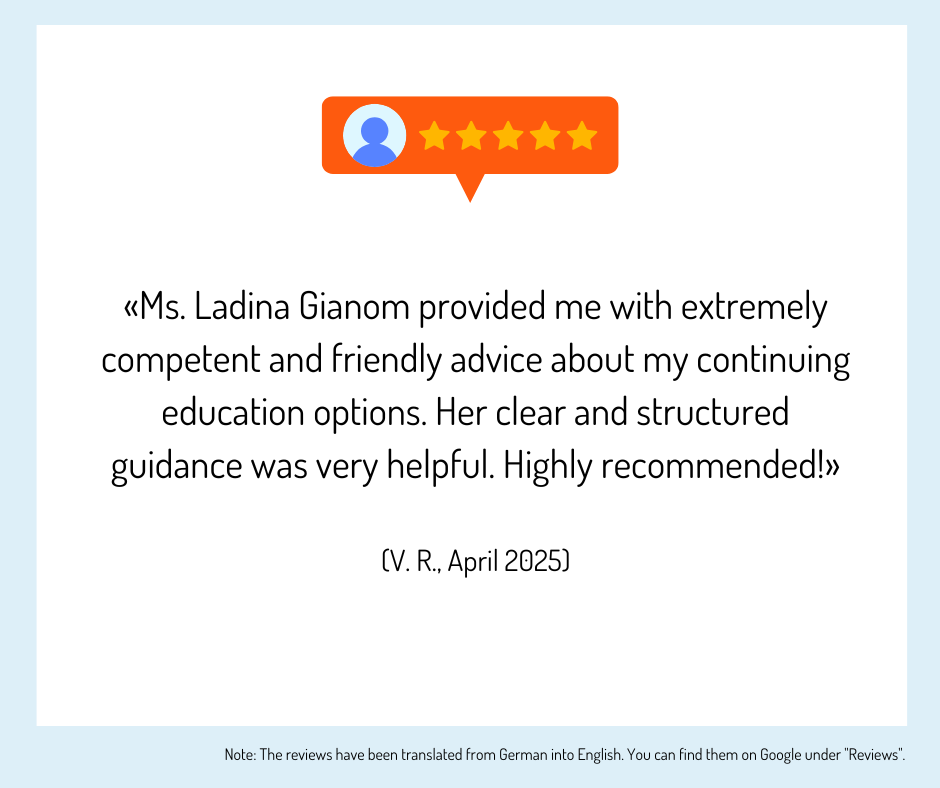
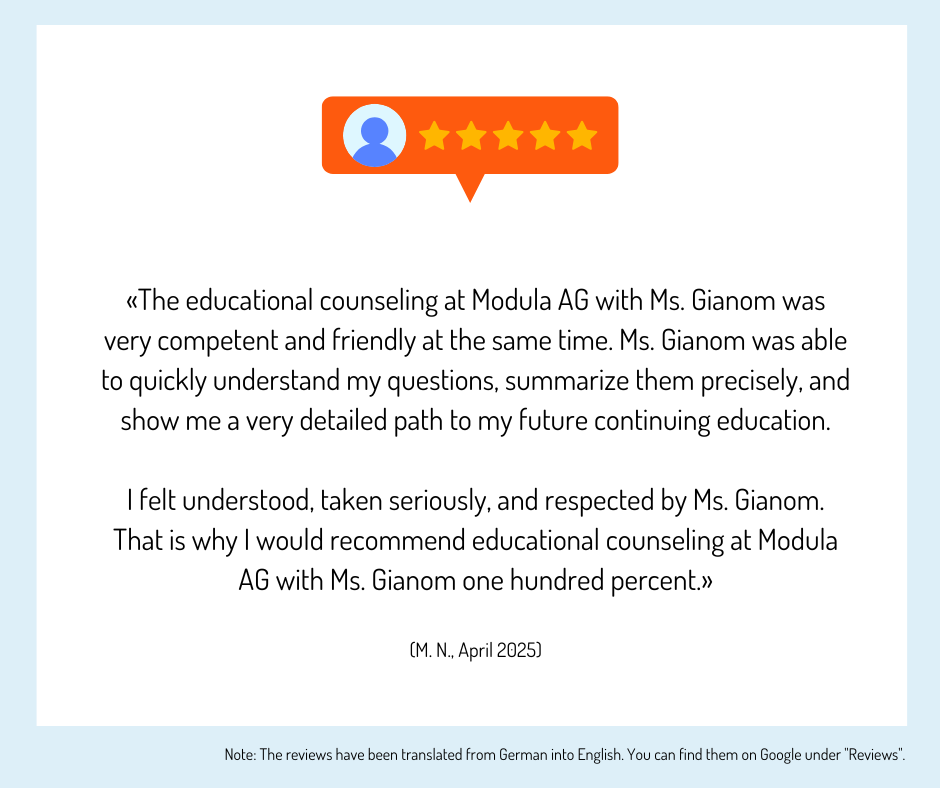
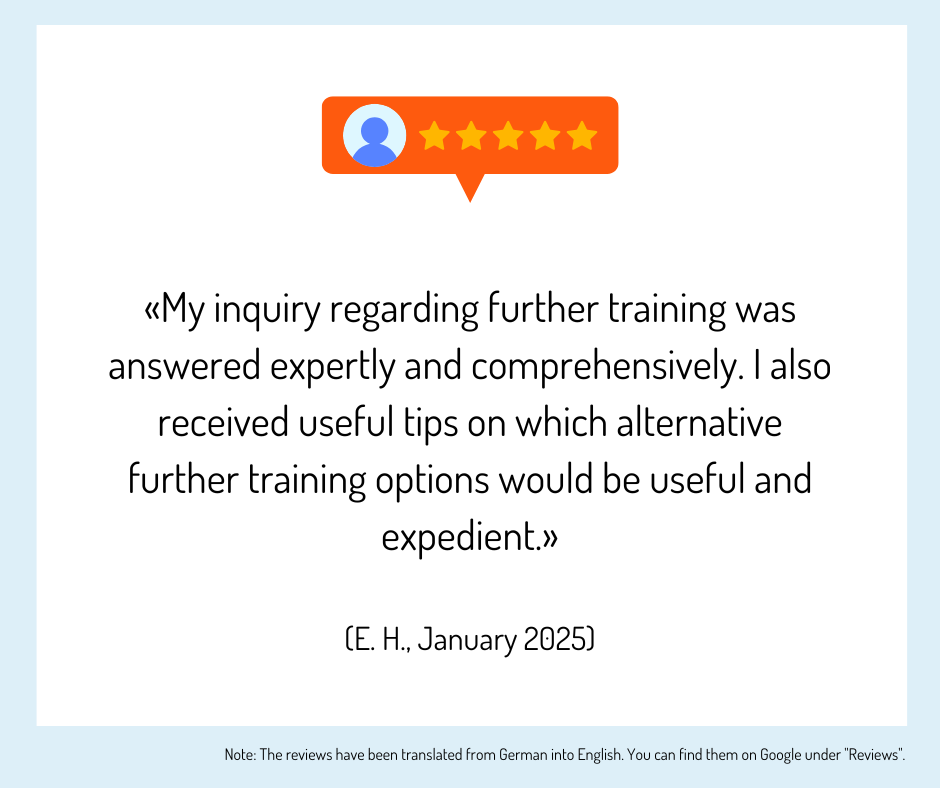
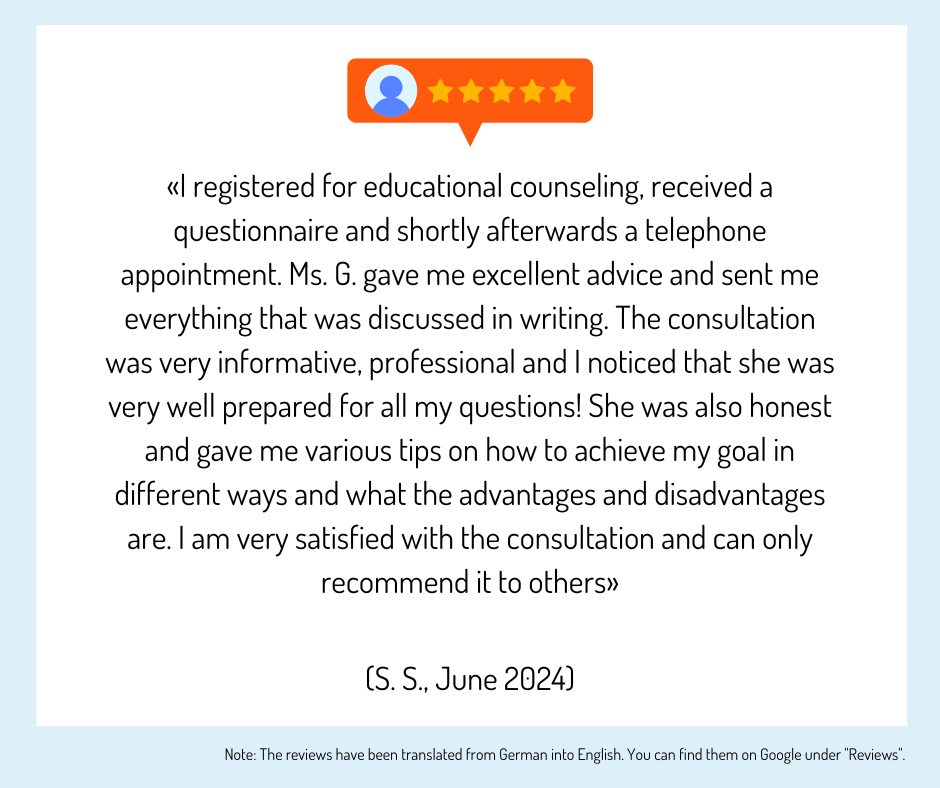
Haven't found the right training or further education yet? Benefit from educational advice now!
Further training is not only important in order to maintain or increase professional attractiveness, investing in training or further training is still the most efficient way to increase the chances of a pay rise.
The Swiss education system offers a wide range of individual training and further education opportunities - depending on your personal level of education, professional experience and educational goals.
Choosing the right educational offer is not easy for many prospective students.
Which training and further education is the right one for my path?
Our education advisory team will guide you through the "education jungle", providing specific input and relevant background information to help you choose the right offer.
Your advantages:
You will receive
- Suggestions for suitable courses, seminars or training programs based on the information you provide in the questionnaire
- An overview of the different levels and types of education
- Information about the Swiss education system
We offer our educational counseling in the following languages on request: French, Italian, English
Register now and concretize your training plans.


Attraktive Services für Swisscom Mitarbeitende
Kostenlose Services
» Bildungsberatung (Wert: CHF 150.–)
Bildungs- und Businessratgeber (Wert: CHF 175.–)
» Rabatte
Attraktive Rabattierungen seitens der Bildungsanbieter.
» Massgeschneiderte Bildungsangebote
Ohne grossen Zeitaufwand den besten Trainer, Coach oder Schulungsanbieter finden
Bildungsangebot Schweiz
Aus über 700 Bildungsanbietern das richtige Bildungsangebot finden