Swiss German Sign Language (DSGS) (Cert.) (Region Virtuelles Klassenzimmer):
1 Provider


Immediately to the right training
Thunstrasse 8
3005 Bern
 Strengths:
Individual support, a pleasant learning atmosphere, practical implementation and high-quality teaching; privately or in small groups. Free conversation courses and events for our participants.
Strengths:
Individual support, a pleasant learning atmosphere, practical implementation and high-quality teaching; privately or in small groups. Free conversation courses and events for our participants.


Schools with certified educational counseling

Questions and answers
Is it possible to learn Swiss Sign Language while working?
Yes, learning Swiss Sign Language part-time is possible in many regions. If you want to learn Swiss Sign Language while working, you can benefit from evening or weekend courses. These are specially designed for working people. Lessons are often taught in fixed modules with clearly defined learning objectives. The advantages are
- Plannable learning times
- Direct practical application in everyday working life
- Gradual development of expertise
The duration depends on the intensity and training objective. Find out now about flexible course models and request detailed information without obligation.
What opportunities does sign language training in Switzerland offer?
Sign language training in Switzerland enables an in-depth exploration of the language and culture of the deaf community. Sign language training can be completed as continuing education, further training, a certificate course or modular training. It is aimed, for example, at people working in education, social work, therapy or care. Typical course contents are
- Language skills at several levels
- Interpreting basics
- Communication ethics
- Intercultural sensitization
The entry requirements vary depending on the level and objective. Some courses require basic knowledge, others start at beginner level. Find out now which type of training is right for you and request further information on learning objectives and requirements.
Is learning sign language the same as learning sign language?
The term "sign language" is often used colloquially. However, the technically correct term is "sign language". Anyone who wants to learn sign language usually means learning a recognized sign language such as Swiss German Sign Language (DSGS).
Sign languages are independent, visual-spatial languages with their own grammar, syntax and cultural background. They consist not only of hand signs, but also systematically incorporate facial expressions, body posture and spatial structure.
How long does it take to learn DSGS?
A basic sign language course lasts between a few weeks and several months, depending on the provider. Learning Swiss German Sign Language (DSGS) usually involves regular lessons with learning objectives that build on each other. Basic forms of communication, simple vocabulary and initial dialogs are taught. The duration depends on:
- Teaching intensity
- Weekly lessons
- Learning objectives
- Practical part
Many basic "Learn DSGS" courses conclude with a certificate of attendance. They form the basis for further modules. Find out now about course duration, content and entry options and request documents using our contact form.
How much does Swiss Sign Language cost?
Swiss Sign Language costs vary depending on course duration, level and provider. Swiss Sign Language costs also depend on the course format and the scope of the certificate. Simple introductory courses are cheaper than multi-level courses. Influencing factors include:
- Course duration
- Level
- Number of lessons
- Group size
- Face-to-face or online format
- Certificate or examination fees
In some cases, there are support options depending on the professional context. It's worth comparing the offers. Find out now about prices, services and requirements and request non-binding information using our contact form.
What career prospects does DSGS offer?
Knowledge of Swiss German Sign Language can enhance professional profiles - especially in:
- Schools
- social institutions
- Counseling centers
- Therapy areas
- Care facilities
- public administrations
- Customer service areas
DSGS strengthen intercultural competence, enable barrier-free communication and improve career prospects. However, a specialized university education is required to work as a professional interpreter.
A comparison of qualifications in Swiss German Sign Language and the associated learning content is recommended.
What is Swiss Sign Language and how can you learn it?
There is no standardized national sign language in Switzerland, but three regional variants:
- Swiss German Sign Language (DSGS)
- Sign language in French-speaking Switzerland
- Italian sign language in Ticino
The variants of Swiss sign languages differ in vocabulary, expression and sometimes grammar. It is therefore important to learn the Swiss sign language that suits your own region.
Find out now about course content, course formats and requirements and request further documents without obligation using our contact form.
How is Swiss Sign Language continuing education, further training structured?
Swiss Sign Language continuing education, further training is usually structured in modules. Swiss Sign Language continuing education, further training often begins with a basic level and can lead to in-depth modules. Typical learning areas are
- Basic vocabulary
- Grammar and sentence structure
- Dialog training
- cultural aspects of the deaf community
Many continuing education, further training courses are organized on a part-time basis. Practical relevance plays a central role. Depending on the provider, examinations or certificates of competence are provided. Find out now about the structure, learning objectives and conditions of participation and request documents using our contact form.
Is there an official sign language certificate?
A sign language certificate is usually issued by the respective training provider. The sign language certificate confirms participation or the level of competence achieved in a course or training program. In Switzerland, there is no uniform state-regulated qualification for general sign language courses. The certificates differ in terms of scope, proof of performance and duration - this is fundamental when assessing offers. What a certificate confirms is also important:
- Competence level achieved
- Examinations passed, if applicable
- Lessons completed
- Practical part
A certificate can be particularly relevant in a professional context. Find out now about degree options and request detailed information on learning objectives and requirements.
Is it possible to learn sign language online?
Yes, learning sign language online is generally possible, especially as part of blended learning or live online courses. However, if you want to learn sign language online, you should pay attention to interactive elements such as video exercises and live feedback. Sign languages are visual languages, which is why direct interaction plays an important role. Online courses are well suited for:
- First insights
- Repetition and consolidation
- Flexible learning times
Supplementary practical exercises are recommended for lasting learning success. Many training providers combine online and face-to-face teaching. Find out now about suitable course formats and request detailed information.
DSGS and DGS difference: What is the difference?
Swiss German Sign Language (DSGS) is not identical to German Sign Language (DGS) from Germany. The difference between DSGS and DGS concerns vocabulary, grammar and cultural context. Both are separate national sign languages. They are not identical, even if there are certain similarities.
Differences exist in particular in:
- Vocabulary
- grammatical structure
- regional dialects
- cultural context
It is crucial for professional practice to have a command of the correct national sign language. The course should therefore be specifically geared towards the respective region. Find out about suitable courses now and request further information on course content and requirements if required.
What do you learn in a Swiss German Sign Language course?
A Swiss German Sign Language course teaches the visual-spatial language of the deaf in German-speaking Switzerland. The Swiss German Sign Language course focuses on vocabulary, grammar and dialog training. The language is independent and not a translation of spoken language. Typical course contents are
- Everyday communication
- Question forms
- Sentence structure
- non-verbal forms of expression
The lessons are practice-oriented and divided into levels. Many Swiss-German sign language courses build on each other in stages. Find out about learning objectives now and request further information using our contact form.
Who is a DSGS course suitable for?
A DSGS course is suitable for anyone who wants to learn Swiss German Sign Language systematically. The DSGS course is aimed at both private individuals and professionals who work with deaf or hearing-impaired people.
Continuing education, further training is particularly relevant for:
- Teachers
- Social workers
- Nursing and healthcare professionals
- Public authority and administrative staff
- HR and consulting specialists
Continuing education, further training deepens existing knowledge and promotes language confidence and intercultural competence. Many courses combine theory with practical exercises and interaction.
Find out now about specific course content, course models and conditions of participation in the DSGS course and request further information without obligation. Use our contact form to do so.

 Error found? -
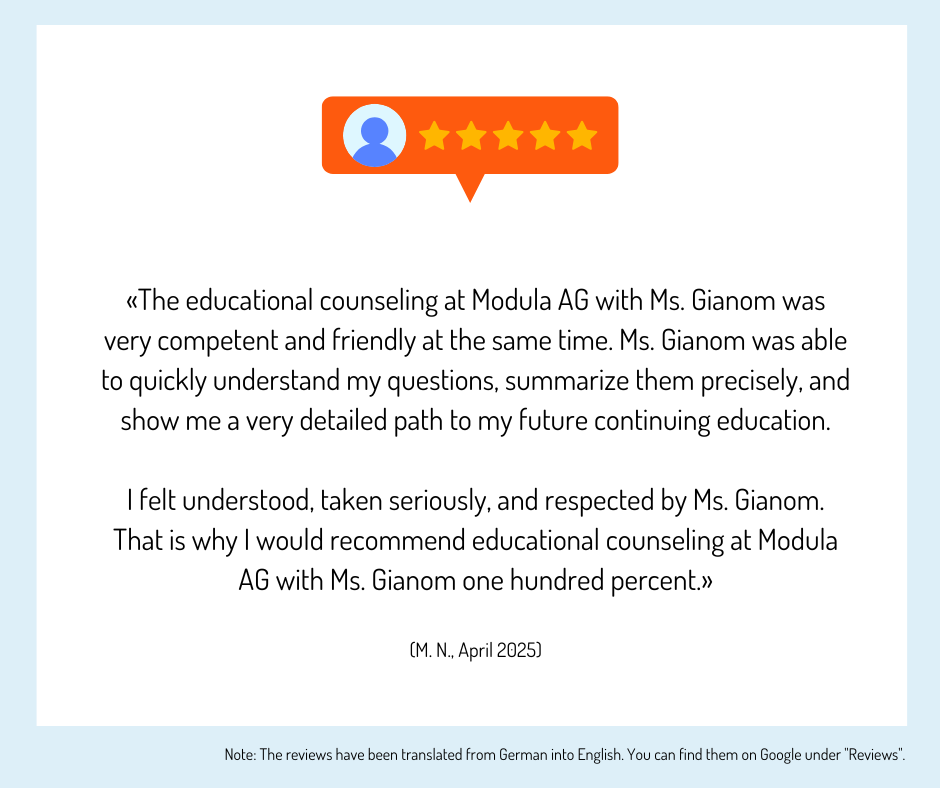
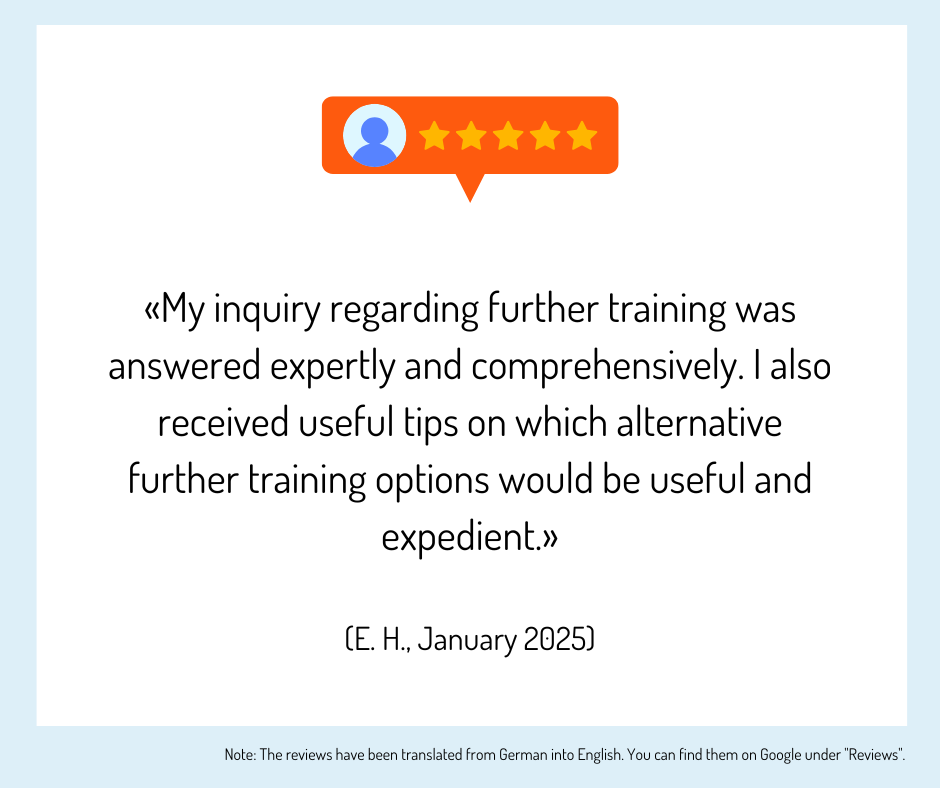
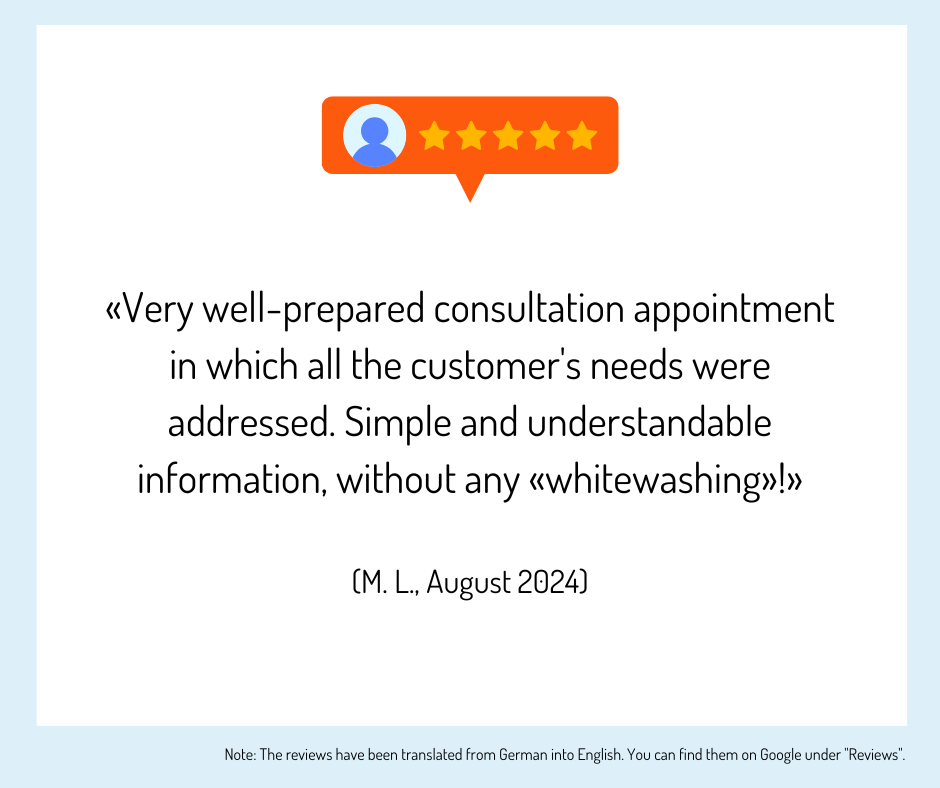
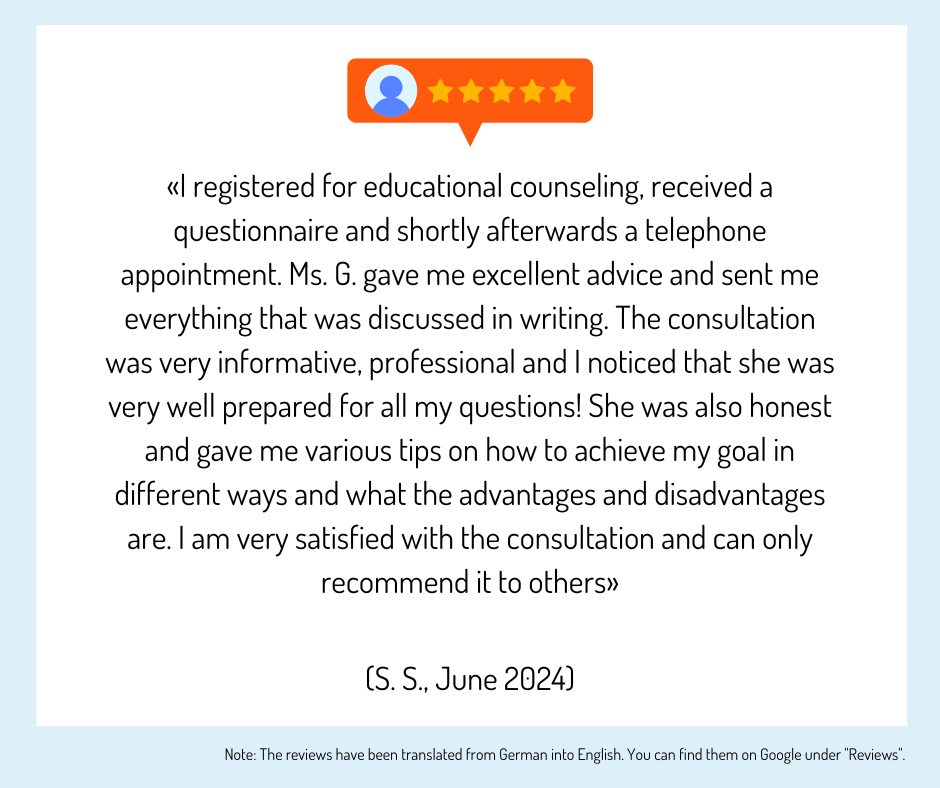
Experiences, evaluations and opinions on training / further education
Haven't found the right training or further education yet? Benefit from educational advice now!
Further training is not only important in order to maintain or increase professional attractiveness, investing in training or further training is still the most efficient way to increase the chances of a pay rise.
The Swiss education system offers a wide range of individual training and further education opportunities - depending on your personal level of education, professional experience and educational goals.
Choosing the right educational offer is not easy for many prospective students.
Which training and further education is the right one for my path?
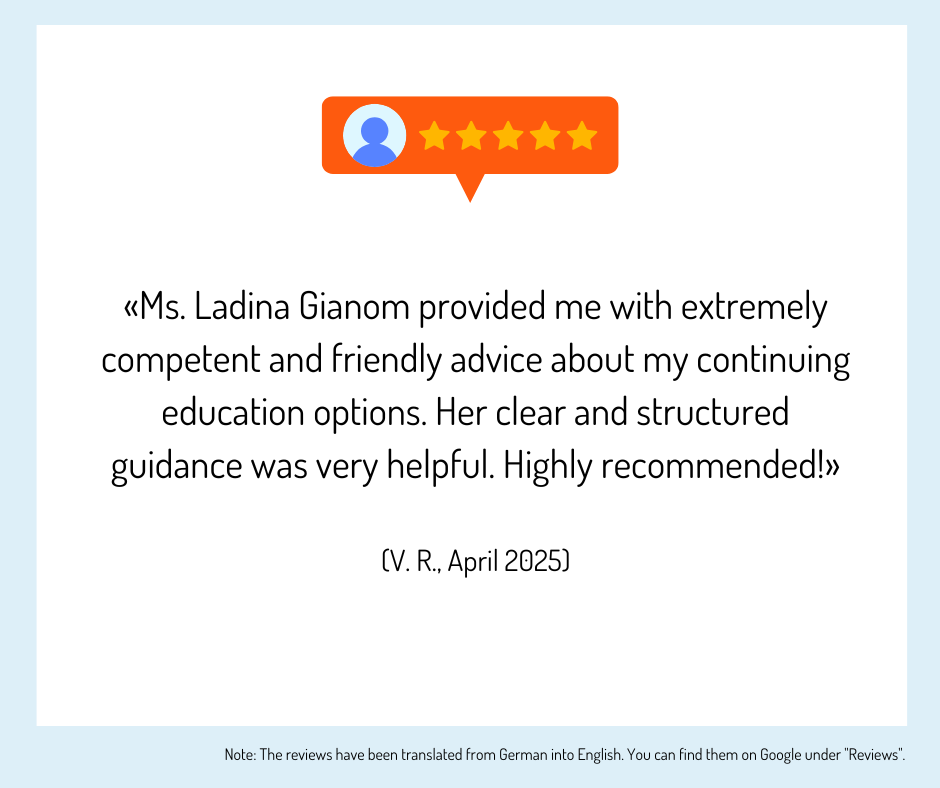
Our education advisory team will guide you through the "education jungle", providing specific input and relevant background information to help you choose the right offer.
Your advantages:
You will receive
- Suggestions for suitable courses, seminars or training programs based on the information you provide in the questionnaire
- An overview of the different levels and types of education
- Information about the Swiss education system
We offer our educational counseling in the following languages on request: French, Italian, English
Register now and concretize your training plans.
Attraktive Services für Swisscom Mitarbeitende
Kostenlose Services
» Bildungsberatung (Wert: CHF 150.–)
Bildungs- und Businessratgeber (Wert: CHF 175.–)
» Rabatte
Attraktive Rabattierungen seitens der Bildungsanbieter.
» Massgeschneiderte Bildungsangebote
Ohne grossen Zeitaufwand den besten Trainer, Coach oder Schulungsanbieter finden
Bildungsangebot Schweiz
Aus über 700 Bildungsanbietern das richtige Bildungsangebot finden