Certified Pastoral Counselor (Region Westschweiz):
1 Provider



Immediately to the right training
Brunnenstrasse 6
8575 Bürglen
 Strengths:
Inspiring locations in Switzerland and abroad! Come experience for yourself how a comfortable atmosphere can positively impact your learning experience.

 Download info
Schools with certified educational counseling

Questions and answers
What does the training program for pastoral counselors involve?
Training to become a pastoral counselor combines theoretical instruction, practical exercises, and personal exploration of the topics of pastoral care and counseling. The exact structure depends on the educational provider and the chosen training model. Currently, for example, the program is offered through blended learning and lasts approximately 18 to 19 months. Typically, such a program consists of the following elements:
- Teaching foundational and specialized knowledge
- Exercises in Conversation Skills and Support
- Analysis of Case Studies
- Reflection on One's Own Attitudes and Experiences
- Exploring Spirituality and Existential Questions
- Applying What Has Been Learned to Practical Guidance
- Depending on the program, course assessments or a final thesis
Before enrolling, you should therefore check how many days of in-person instruction are required, what academic performance is expected, and exactly how the program is structured. This will help you better assess whether the program is compatible with your job and personal commitments.
What do you learn in pastoral care training?
In the pastoral care training program, you will learn to professionally support people in a variety of personal, emotional, and existential life situations. This involves not only conducting conversations but also exploring spirituality, life questions, crises, and personal boundaries. Possible topics of study include:
- Fundamentals and Forms of Pastoral Care
- Conversation Skills and Active Listening
- Support During Crises and Difficult Life Stages
- Dealing with Illness, Aging, Dying, and Saying Goodbye
- spiritual and existential questions
- Awareness and Reflection on One's Own Attitude
- Professional Closeness and Boundaries
- Practical exercises and case studies
Depending on the educational provider, the areas of focus and methods may vary. The program thus equips you with both theoretical knowledge and practical skills for providing personalized support to people.
Who is the pastoral care training program suitable for?
The pastoral care training program is suitable for:
- People who want to support others in difficult, stressful, or life-altering situations.
- It may be of particular interest to people in social work, healthcare, education, counseling, or caregiving professions.
- For those changing careers, this training program can also be a way to gain specialized knowledge in counseling.
Empathy, communication skills, openness, and a willingness to engage in self-reflection are particularly important. You should also enjoy interacting with people and be able to handle emotionally challenging topics. The specific admission requirements depend on the individual educational provider. Therefore, it’s worth checking what educational background and professional experience are required for the program before applying.
Where can I work as a pastor?
As a pastoral counselor, you can work in various areas of personal counseling, depending on your training and field of practice. Potential places of work include, in particular, settings where people are facing personal, health-related, or existential challenges. These include, for example:
- social and care services
- Retirement and Nursing Homes
- Hospitals and Healthcare Facilities
- Palliative Care Facilities
- church or religious institutions
- Counseling and Support Services
- Facilities for People in Special Life Situations
Depending on your education and personal qualifications, it may also be possible to pursue this as a supplementary activity alongside an existing career. The specific career opportunities available to you depend on your educational background, the type of environment in which you’d like to work, and the requirements set by the respective employer. The certificate program provides a professional foundation for personal counseling but does not automatically replace church-based or state-regulated vocational training.
What is the difference between pastoral care and psychological counseling?
Pastoral care and psychological counseling both aim to support people in stressful life situations, but they differ in their approach.
With thePastoral CareThe focus is often on personal, spiritual, religious, or existential questions and a person's individual life circumstances.
Psychological CounselingIn contrast, it focuses more on psychological factors, personal resources, and coping with specific challenges.
Depending on the training program, however, the fields of practice may overlap. Pastoral care training, in particular, equips students with the skills needed for empathetic conversations and personal guidance. However, it is not equivalent to training as a psychologist or to psychotherapy training. If you want to provide professional support to people, you should therefore pay close attention to which skills and professional activities the respective program actually covers.
What are the day-to-day responsibilities of a pastoral counselor?
As a pastoral counselor, you support people as they grapple with personal, emotional, and existential questions and navigate difficult life situations. Your work often centers on conversation, through which you provide those you’re helping with a space to express their thoughts, feelings, and personal concerns. Depending on your area of practice, your responsibilities may include, for example:
- one-on-one conversations and supportive guidance
- Support during crises, illness, or personal changes
- Support for questions about meaning, life choices, and spirituality
- Supporting People in Stressful or Challenging Situations
- Conversations with Family Members
- Support During Goodbyes, Dying, and Grief
- Collaboration with professionals in the social, health, or care sectors
Pastoral care does not mean providing others with ready-made solutions or advice. Rather, it involves listening attentively, offering guidance, and supporting people in their individual situations. The specific tasks one can take on depend on the particular field of work and one’s own training.

 Error found? -

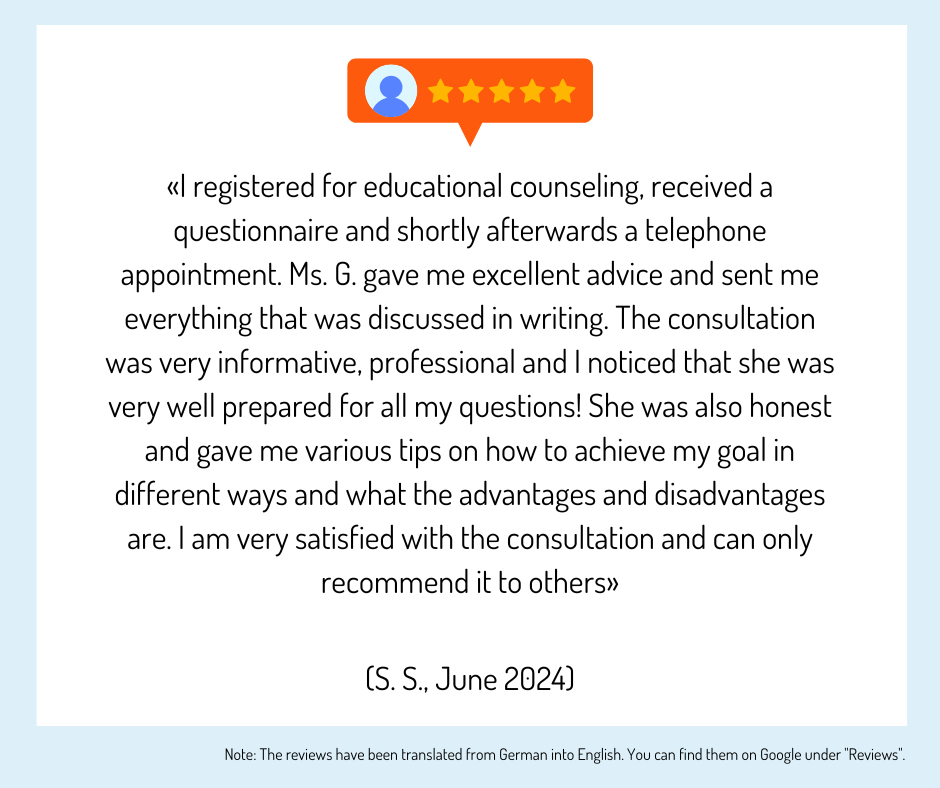
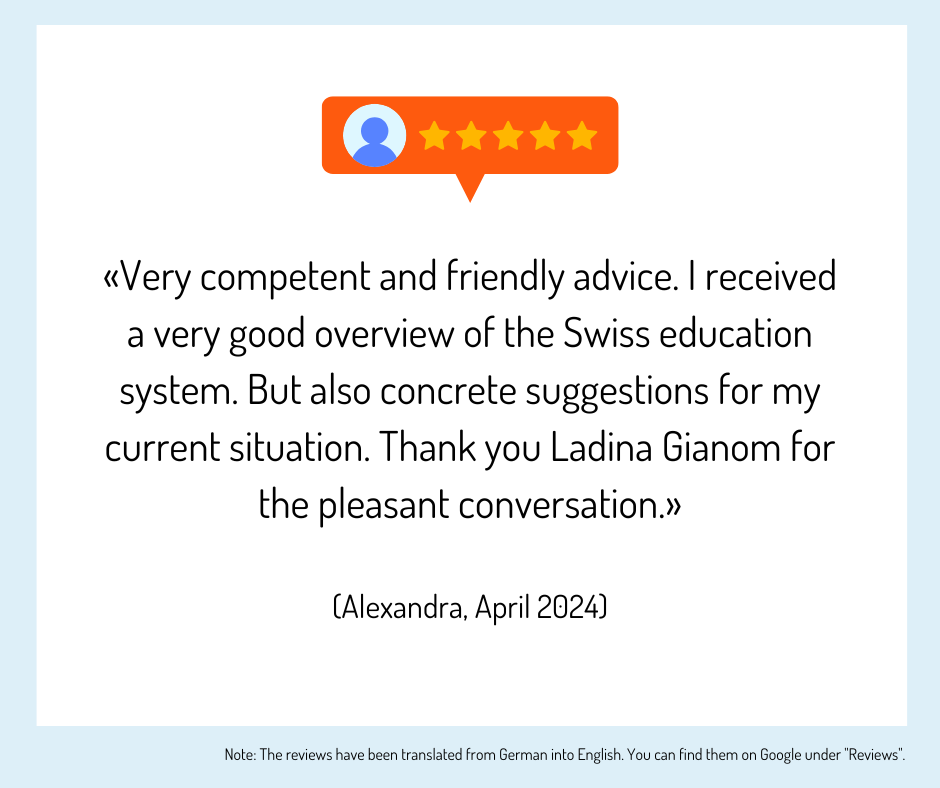
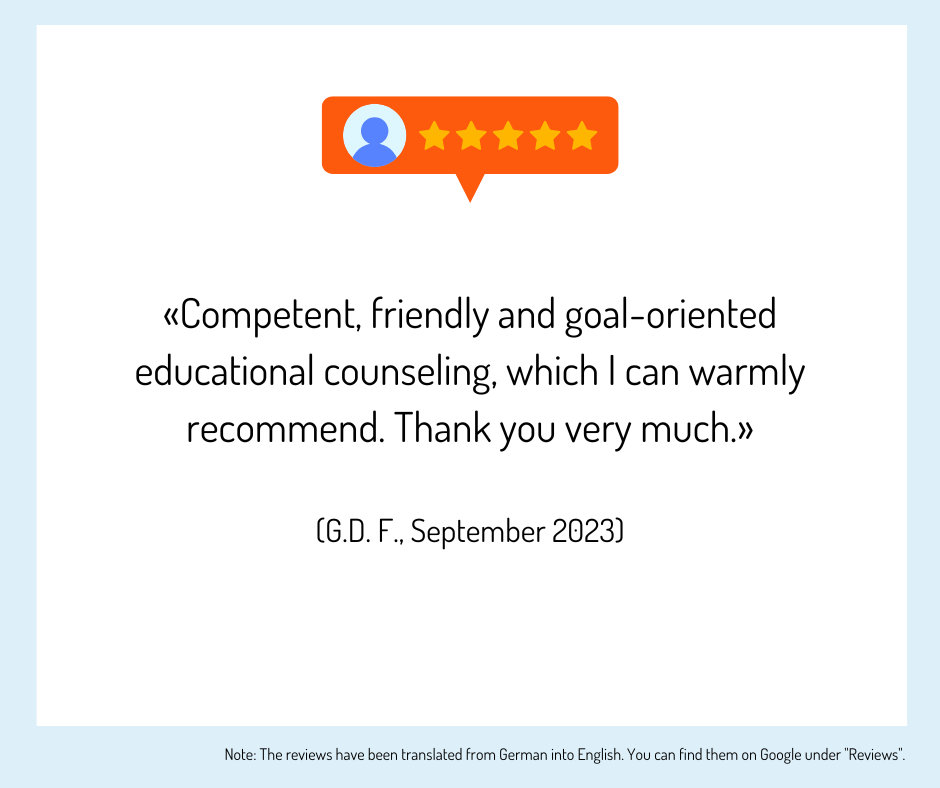
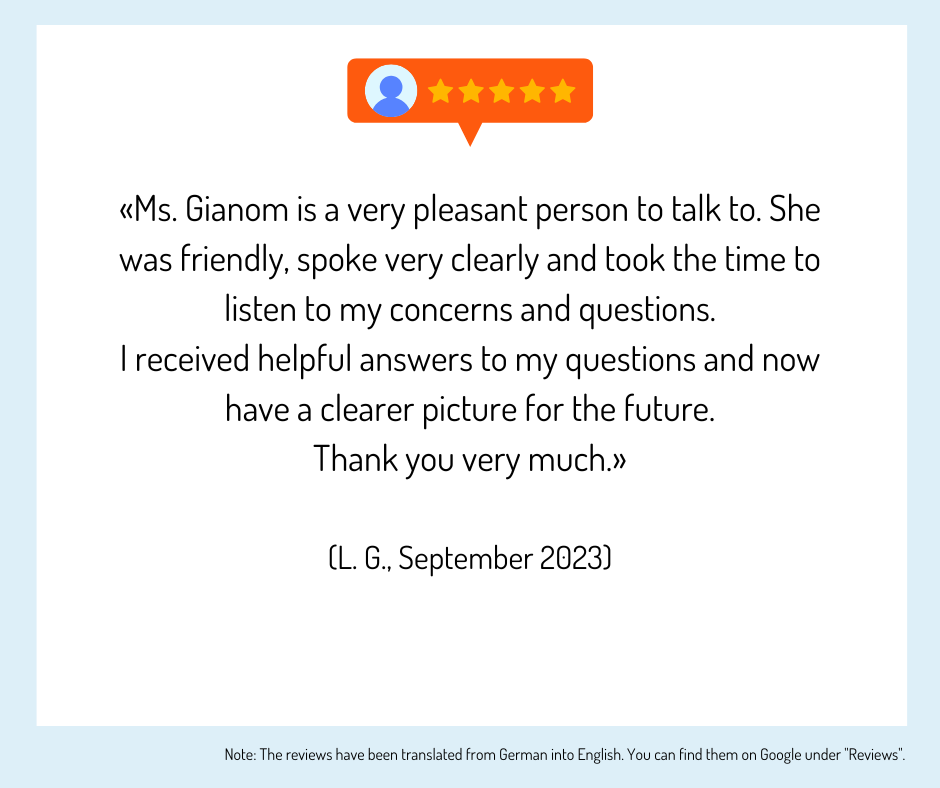
Experiences, evaluations and opinions on training / further education
Haven't found the right training or further education yet? Benefit from educational advice now!
Further training is not only important in order to maintain or increase professional attractiveness, investing in training or further training is still the most efficient way to increase the chances of a pay rise.
The Swiss education system offers a wide range of individual training and further education opportunities - depending on your personal level of education, professional experience and educational goals.
Choosing the right educational offer is not easy for many prospective students.
Which training and further education is the right one for my path?
Our education advisory team will guide you through the "education jungle", providing specific input and relevant background information to help you choose the right offer.
Your advantages:
You will receive
- Suggestions for suitable courses, seminars or training programs based on the information you provide in the questionnaire
- An overview of the different levels and types of education
- Information about the Swiss education system
We offer our educational counseling in the following languages on request: French, Italian, English
Register now and concretize your training plans.
Attraktive Services für Swisscom Mitarbeitende
Kostenlose Services
» Bildungsberatung (Wert: CHF 150.–)
Bildungs- und Businessratgeber (Wert: CHF 175.–)
» Rabatte
Attraktive Rabattierungen seitens der Bildungsanbieter.
» Massgeschneiderte Bildungsangebote
Ohne grossen Zeitaufwand den besten Trainer, Coach oder Schulungsanbieter finden
Bildungsangebot Schweiz
Aus über 700 Bildungsanbietern das richtige Bildungsangebot finden

