Further education, further training in naturopathy (Wetzikon):
1 Provider - 1 Training locations



Immediately to the right training
Militärstrasse 90
8004 Zürich
 Strengths:
10 minutes from the main train station, next to Europaallee / one of the leading training centers in TEN since 1988 / own internship places / naturopathy and conventional medicine = integrative medicine / monthly information evenings
Strengths:
10 minutes from the main train station, next to Europaallee / one of the leading training centers in TEN since 1988 / own internship places / naturopathy and conventional medicine = integrative medicine / monthly information evenings

 Download info
Schools with certified educational counseling

Sites in the region Zurich and Wetzikon:
Education location / Schools Wetzikon
Questions and answers
What is important in therapy?
Therapy is about accompanying and supporting people professionally and facilitating change. Certain basic principles are required for therapy to be effective.
The most important points in therapy:
- Trust & relationship:
A stable, respectful relationship between therapist and client is the basis. - Empathy:
Being able to empathize with the person's feelings and perspective without being judgmental. - Professional competence:
Good training and sound knowledge of methods and disorders. - Clear objective:
Jointly defined goals provide orientation and structure. - Individual customization:
Every person is different - therapy must be adapted. - Confidentiality & data protection:
Everything discussed remains confidential. - Structure & Methodology:
Use of suitable therapeutic methods and a clear process. - Patience & understanding of the process:
Change takes time and often happens in small steps.
Conclusion:
Trust, empathy, specialist knowledge and a clear, individual approach are important in therapy. This is the only way to provide lasting and effective support.
What do you learn in a therapist training program besides the therapy method?
Sound therapist training involves much more than just learning a specific therapy method. Therapist training also teaches important fundamentals and practical skills that are essential for successful work in the therapeutic field. These include, among other things
- Building a trusting and appreciative relationship with clients
- Professional recording of complaints, clinical pictures and functional impairments
- Identification and promotion of personal resources
- Development of individual therapy goals and structured therapy plans
- Support in the process of self-awareness and awareness
- Stimulating new perspectives and possibilities for action
- Support in implementing solution- and motivation-oriented changes in everyday life
This learning content complements the respective therapy method and strengthens the professional attitude and practical implementation skills in everyday life.
Depending on the training, specialist content such as legal principles, practice management or the basics of interviewing can also be added. In this way, participants are comprehensively prepared for working as a therapist.
Important to know: Each educational institution determines its training content individually. The exact curriculum can therefore vary. For binding information, our platform offers a practical contact form. This can be used to contact the respective school directly and ask specifically about the current training content.
Find a suitable school now and contact us directly.
What personal requirements should you meet to train as a therapist?
For training in the therapeutic field, it is not only educational or professional requirements that are important, but above all personal qualities. These play a major role in determining whether someone is suitable for this profession.
Important personal requirements:
- Empathy & sensitivity:
You should be able to put yourself in other people's shoes. - Communication skills:
Listening, speaking clearly and reacting sensitively are key. - Emotional stability:
You also need to be able to deal with stressful stories and difficult situations. - Patience:
Changes in clients take time. - Ability to reflect:
Being able to critically question your own thoughts, feelings and reactions. - Sense of responsibility:
You work with sensitive personal issues. - Demarcation capability:
Allow closeness, but remain professionally distant. - Interest in people & development:
Motivation to help others and support development processes.
Important in addition:
Many training courses in the therapeutic field also require this:
- Willingness for self-awareness
- Openness to personal development
- Basic knowledge of psychology or communication (depending on training)
Conclusion:
Above all, social skills, emotional stability and a high level of self-reflection are crucial for training as a therapist. Anyone who enjoys working with people and wants to accompany them professionally has a good foundation.
Therapist: What kind of therapists are there?
The term "therapist" is very broad. There are many different specialties that differ depending on the problem, method and target group.
Important types of therapists:
- Mental health
- Psychotherapist (treatment of mental illnesses)
- Psychotherapy specialists (e.g. behavioral therapy, depth psychology)
- Psychological counselor / coach (no curative treatment, rather support)
- Body & Movement
- Physiotherapist (movement, rehabilitation after injuries)
- Occupational therapist (everyday life training for people with disabilities)
- Sports therapist (rehabilitation & training)
- Language & Communication
- Speech therapist (speech, language and swallowing disorders)
- Medical therapy
- Psychiatrist (medical treatment of mental illnesses including medication)
- Social therapist (social integration and support)
- Alternative & complementary approaches
- Art therapist (creative forms of therapy)
- Music therapist
- Naturopath / complementary forms of therapy
Conclusion:
There are many different types of therapists - from psychological and medical treatment to body or creative-based therapies. Which type is appropriate depends largely on the individual problem and goal.
How long does a therapist's continuing education, further training take?
Continuing education, further training for therapists takes different lengths of time depending on the direction and type of degree. However, good and well-founded therapist training usually takes three to six years. As a rule, the aim is to learn about people, their health, various disease diagnoses and therapeutic approaches in a mixture of theory and practice. Depending on the specialty, the medical basics must be learned first. Acquiring therapeutic knowledge takes a long time and is important in order to be able to provide good therapeutic work. The training providers provide information on the exact duration of their training courses.
How can I find therapists?
You can find therapists via online directories, GPs, clinics, recommendations or online platforms.
Detailed options:
- Online search directories
Many specialists are listed in official or specialized directories.
You can filter by location, topic and specialization (e.g. anxiety, stress, pain). - General practitioner
The family doctor is often the first point of contact and can:- give an initial assessment
- recommend suitable therapists
- Issue a referral if required
- Hospitals and clinics - suitable for more severe or complex complaints
- Psychiatric clinics
- Rehabilitation centers
- Outpatient clinics
- Private practices
Many therapists work independently, e.g. in:- psychotherapeutic practices
- Physiotherapy centers
- Counseling centers
- Online therapy & coaching
- Sessions via video (e.g. Zoom)
- Flexible dates
- Supra-regional offers also possible
- Recommendations from the environment
- Friends, family or colleagues
- Personal experience helps with the selection
What should you look out for?
- Training and recognition
- Specialization on your request
- Sympathy and trust
- Costs and health insurance participation
Conclusion:
There are various ways to find a therapist - but it is particularly important that you choose a specialist with whom you feel comfortable and who fits your needs.
What kind of therapist professions are there in Switzerland?
In Switzerland, for example, there are the following therapist professions at different levels:
- Certificate (Cert.)
- Learning therapist
- Riding instructor
- Federal Professional Examination
- Work educator with Federal Diploma of Higher Education
- Advanced Federal Professional Examination (AFPE)
- Counselor in the psychosocial field with a federal diploma
- Complementary therapist with federal diploma
- Art therapist with federal diploma
- Animal physiotherapist with federal diploma
- College of Higher Education
- Activation specialist
- University professions
- Occupational therapist
- Speech therapist
- Physiotherapist
- Psychomotor therapist
- Various specialization professions
Switzerland offers a very broad spectrum of therapy professions - from medically recognized professions (e.g. psychotherapy, physiotherapy) to complementary and creative forms of therapy. Compare the corresponding training courses.
What are systemic therapists?
Systemic therapists look at problems not only in an individual person, but also in the context of their environment (e.g. family, partnership or work).
Explanation:
They assume that difficulties often arise through relationships and communication in the "system" and work to understand and change these patterns.
Conclusion:
The aim is to find new solutions in the social environment and improve relationships.
If you would like to find out more about forms of therapy, find out about the different approaches or enquire using our contact form.

 Error found? -
Experiences, evaluations and opinions on training / further education
Haven't found the right training or further education yet? Benefit from educational advice now!
Further training is not only important in order to maintain or increase professional attractiveness, investing in training or further training is still the most efficient way to increase the chances of a pay rise.
The Swiss education system offers a wide range of individual training and further education opportunities - depending on your personal level of education, professional experience and educational goals.
Choosing the right educational offer is not easy for many prospective students.
Which training and further education is the right one for my path?
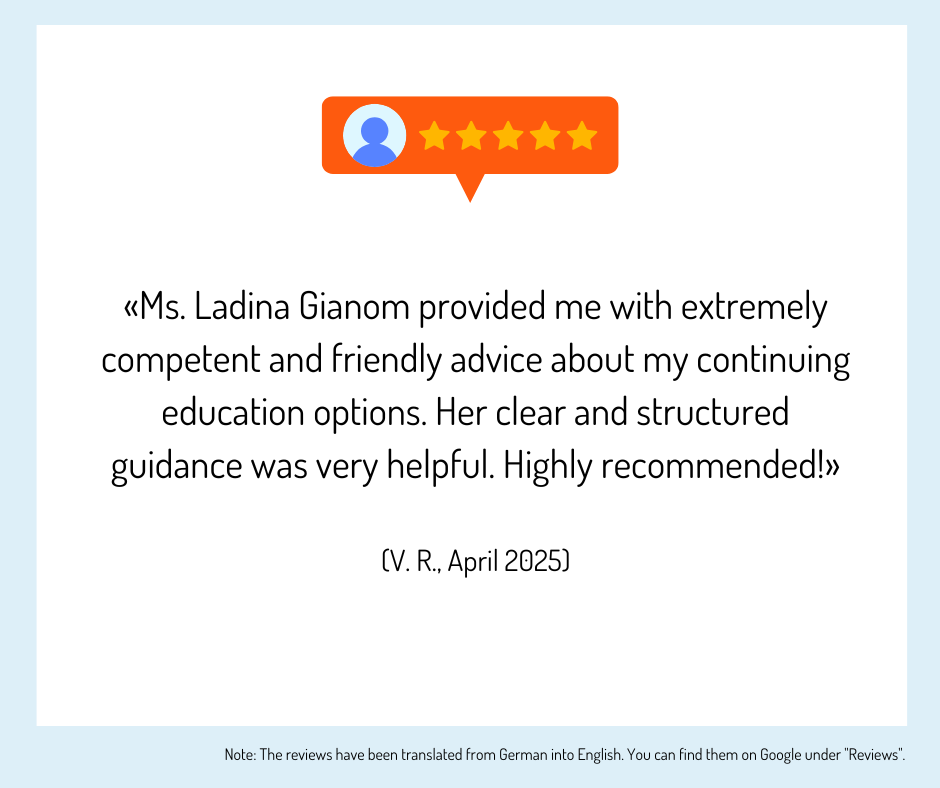
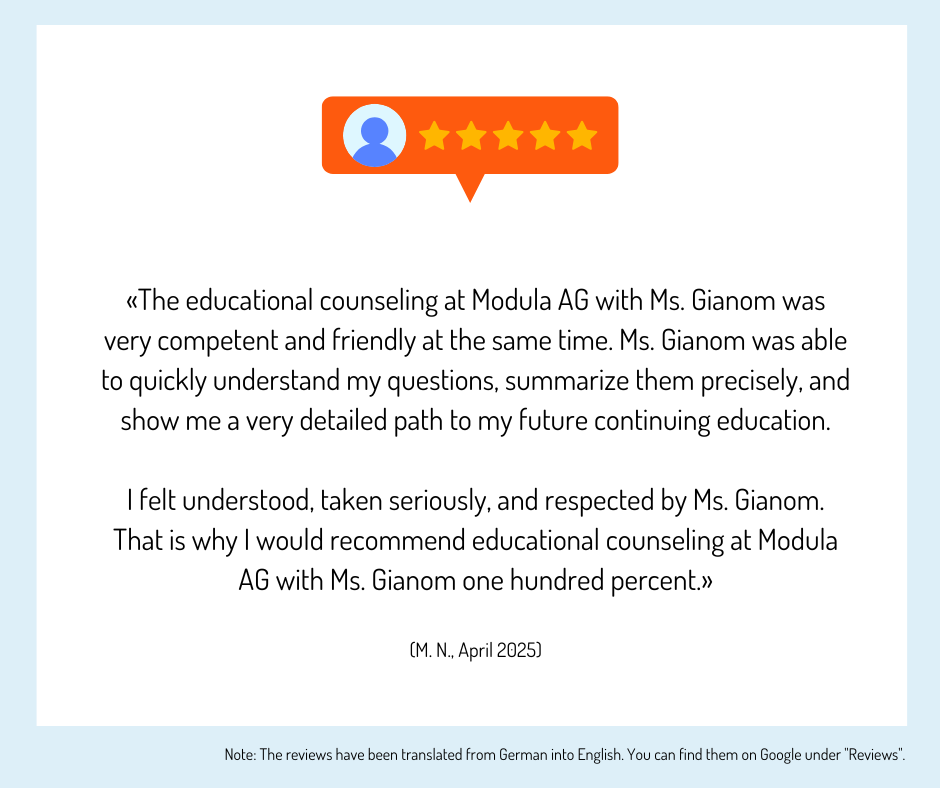
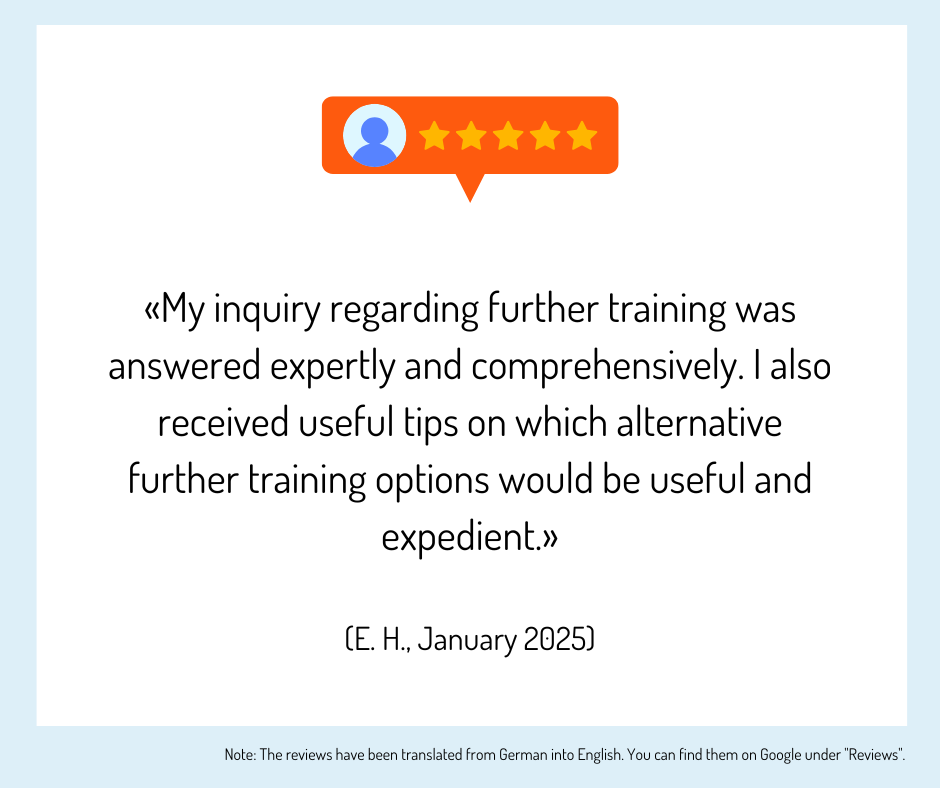
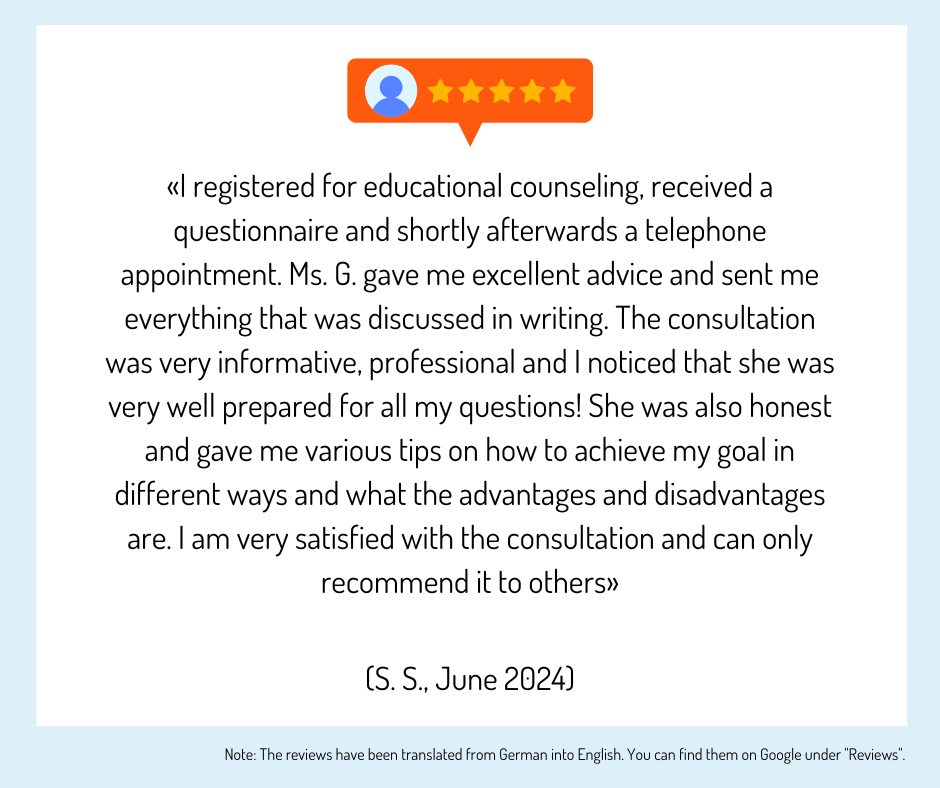
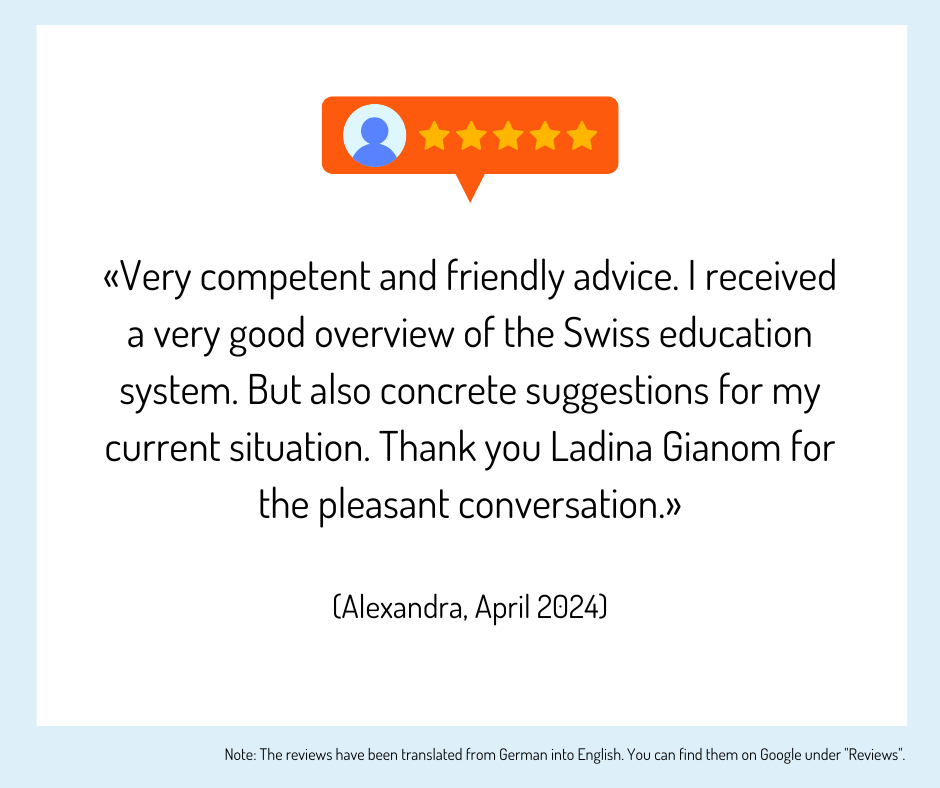
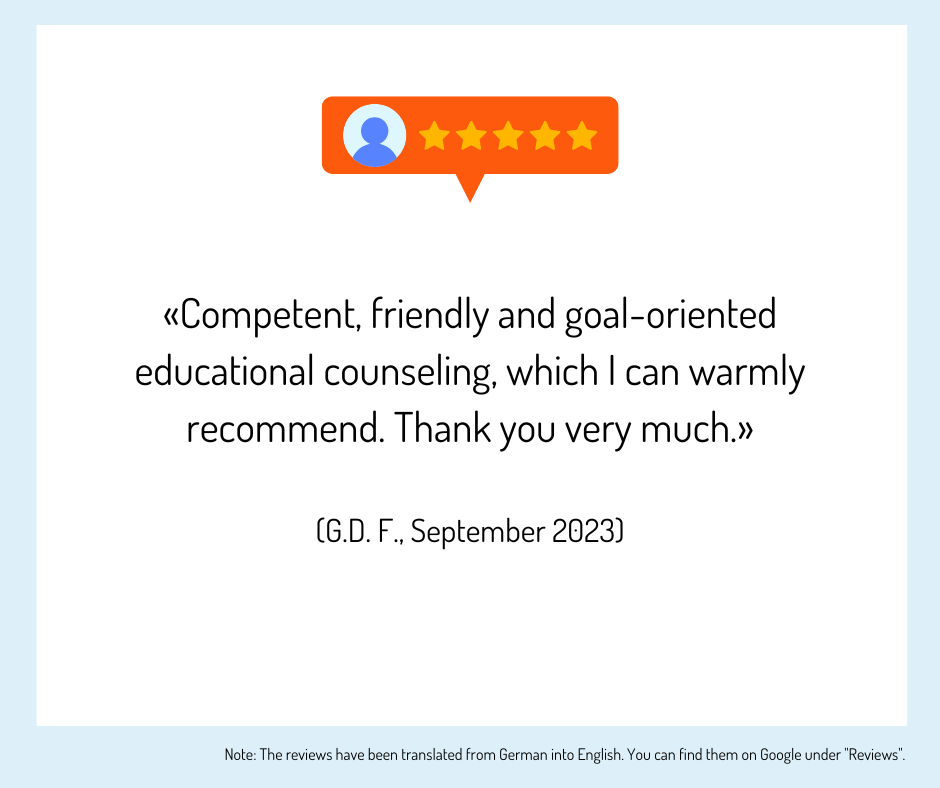
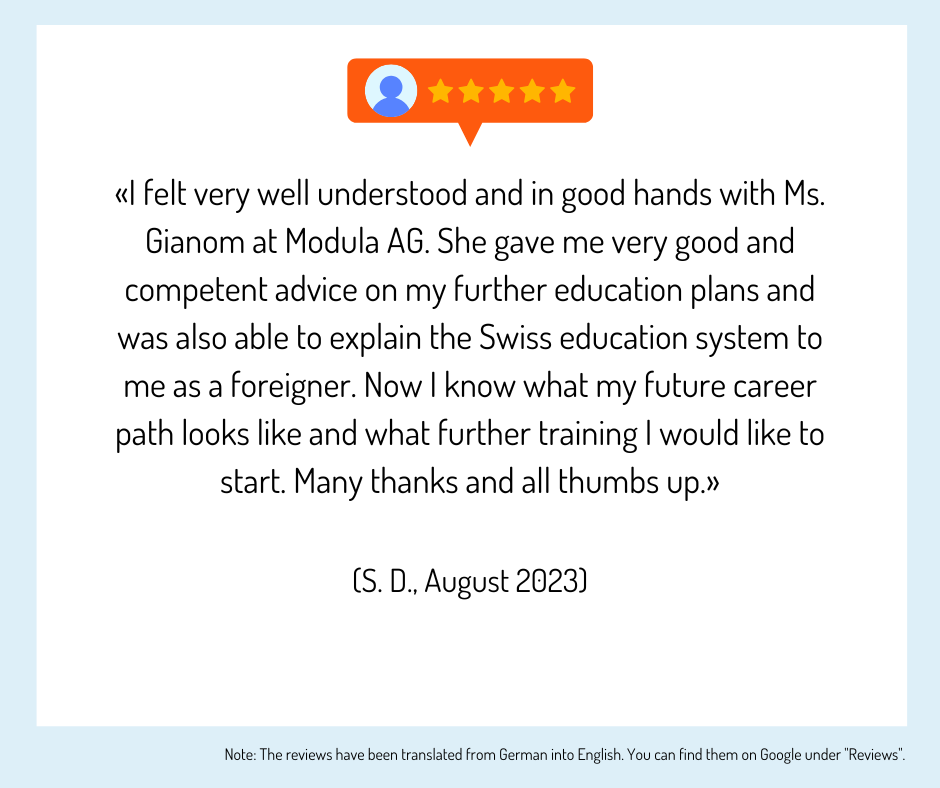
Our education advisory team will guide you through the "education jungle", providing specific input and relevant background information to help you choose the right offer.
Your advantages:
You will receive
- Suggestions for suitable courses, seminars or training programs based on the information you provide in the questionnaire
- An overview of the different levels and types of education
- Information about the Swiss education system
We offer our educational counseling in the following languages on request: French, Italian, English
Register now and concretize your training plans.



Attraktive Services für Swisscom Mitarbeitende
Kostenlose Services
» Bildungsberatung (Wert: CHF 150.–)
Bildungs- und Businessratgeber (Wert: CHF 175.–)
» Rabatte
Attraktive Rabattierungen seitens der Bildungsanbieter.
» Massgeschneiderte Bildungsangebote
Ohne grossen Zeitaufwand den besten Trainer, Coach oder Schulungsanbieter finden
Bildungsangebot Schweiz
Aus über 700 Bildungsanbietern das richtige Bildungsangebot finden