Digital construction: Training, further education, schools, information



Digital construction - creative, innovative and sustainable
Questions and answers
Can I attend all CASs for the MAS in Digital Construction at the same time?
No. The individual CASs of the MAS in Digital Construction are spread over three semesters with different start dates. For this reason, the CASs cannot be attended in parallel, but are generally completed one after the other.
This structure allows for a gradual deepening of the content and a good compatibility with professional obligations.
For further information, you can contact the provider directly - quickly, easily and without obligation using our contact form.
Is it possible to remain fully employed while studying digital construction?
The Master's degree program in Digital Construction is generally designed to be completed alongside work, but this does not necessarily mean that it is possible or advisable to continue working 100%. Depending on your working hours, you may have to reduce your workload or postpone your working hours. If you have any questions, please contact the relevant Universities directly. This can be done quickly, easily and without obligation via our contact form for the respective school.
What is the duration of the Master in Digital Construction?
The Master's degree course in Digital Construction can generally be completed either part-time or full-time. The part-time course lasts up to 6 semesters, while the full-time course lasts 3 semesters. It concludes with a Master's thesis, which is usually completed at the end of the course and comprises 30 ECTS credits.
Comprehensive information can be obtained directly from the provider - conveniently and without obligation using our contact form.
What are the requirements for training in digital construction?
The admission criteria for training in digital construction can vary from provider to provider.
As a rule, a Bachelor's degree is required for a consecutive Master's program, e.g. in the following areas:
- Landscape architecture
- Civil engineering
- Architecture
- Geomatics
- Facility Management
- Building technology
- Energy and environmental technology
- or related disciplines.
Is there only an MAS or also a CAS Digital Construction?
There are both CAS and MAS programs in the field of digital construction. Continuing education, further training in digital construction is often modular and comprises several certificate levels.
Typically, the education system is structured as follows:
- CAS (Certificate of Advanced Studies): short, specialized continuing education, further training on individual topics such as BIM, digital planning or processes
- DAS (Diploma of Advanced Studies): Combination of several CAS with an in-depth focus
- MAS (Master of Advanced Studies): comprehensive continuing education, further training at university level, consisting of several CAS modules
Continuing education, further training in digital construction allows you to get started flexibly. You can often start with a CAS and then gradually build up to an MAS. This modular structure is particularly attractive for professionals.
Conclusion: There is not only an MAS, but also numerous CAS programs in digital construction. Find out about specific programs or request non-binding documents to find the right course for you.
What do I need to consider when applying for training in digital construction?
In addition to the admission criteria, an admission procedure must also be completed, depending on the digital construction provider.
The admission criteria often relate not only to general admission to the course, but are also a condition for participating in the admission procedure. As a rule, a portfolio, letter of motivation and curriculum vitae (CV) must be submitted for the admission procedure. This is followed by an aptitude interview with the assignment of the task to be solved. This is then presented in a further aptitude assessment. The decision on admission or rejection is then communicated.
Is the course in digital construction an apprenticeship?
In most cases, a course in digital construction is not a classic basic training course, but a continuing education, further training or degree course. A digital construction training course or continuing education, further training in digital construction is often aimed at people who have already completed an apprenticeship or degree in construction.
In detail, there are various forms of education in the field of digital construction:
- Continuing education, further training (e.g. CAS, MAS): for professionals in architecture, construction or technology
- Degree programs (Bachelor/Master): as independent academic training
- Courses and certificates: for targeted in-depth study of individual topics such as BIM
Many courses are deliberately designed as continuing education, further training, as they build on existing specialist knowledge. For example, Master's degree courses often require a Bachelor's degree in a related field. At the same time, however, there are also Bachelor's degree courses that are considered initial training in digital construction.
Digital construction training or continuing, further training in digital construction is therefore a collective term for various educational paths - from studying to continuing, further training. The decisive factor is your current level of education and your career goal.
Conclusion: In most cases, it is a case of continuing education, further training, but depending on what is on offer, it can also be a complete training course. Find out about specific courses or request non-binding documents to find the right educational path for you.
What can I do after training in digital construction?
After training in digital construction, you can work in various areas of the construction and planning industry. Digital construction training or continuing education, further training in digital construction qualifies you for modern, technology-supported fields of work related to the planning, implementation and operation of construction projects.
Typical employment opportunities after digital construction training or continuing education, further training in digital construction are, for example:
- BIM management (Building Information Modeling) - digital planning and coordination of construction projects
- Project management or project assistance in construction
- Digital building planning and construction with specialized software
- Coordination between architects, engineers and construction companies
- Optimization of processes in the construction and real estate sector
Due to the increasing digitalization of the construction industry, specialists with the relevant skills are in high demand. You will work at the interface between technology, planning and organization and help to implement construction projects more efficiently and transparently.
Conclusion: Training in digital construction opens up a wide range of career opportunities in a future-oriented industry. Find out about specific training courses or request non-binding documents to help you plan your next career move.
What are the main topics in training for digital construction?
Training in digital construction provides comprehensive skills for the planning, execution and operation of buildings using digital methods. The focus of the content may vary slightly depending on the training provider. As a rule, the following topics are among the central components:
- Information modeling and information management
The basics and methods of digital modeling of buildings (Building Information Modeling, BIM) and the efficient handling of building data are taught. This also includes the structured exchange of information between all project participants and the automation of recurring work steps. - Collaboration and process design
The course content covers key aspects of interdisciplinary collaboration. Among other things, modern process models, suitable forms of communication and the coordination of project teams in digital construction processes are covered. - Technologies and digital tools
Participants learn about various software solutions and digital tools that are used in the construction industry. These include applications for modeling, simulation, project management and data analysis. - Legal and organizational framework conditions
Legal principles and organizational issues in connection with digital construction are also part of the training. The aim is to gain an understanding of contracts, data responsibility, copyrights and standards in a digital context.
These modules not only impart technical knowledge, but also promote an understanding of strategic and communicative requirements in modern construction and digital construction.
As each school designs the learning content individually, it is advisable to clarify the specific topics directly with the desired educational institution. Using our contact form, the question can be forwarded simply and directly to the relevant school.

 Error found? -
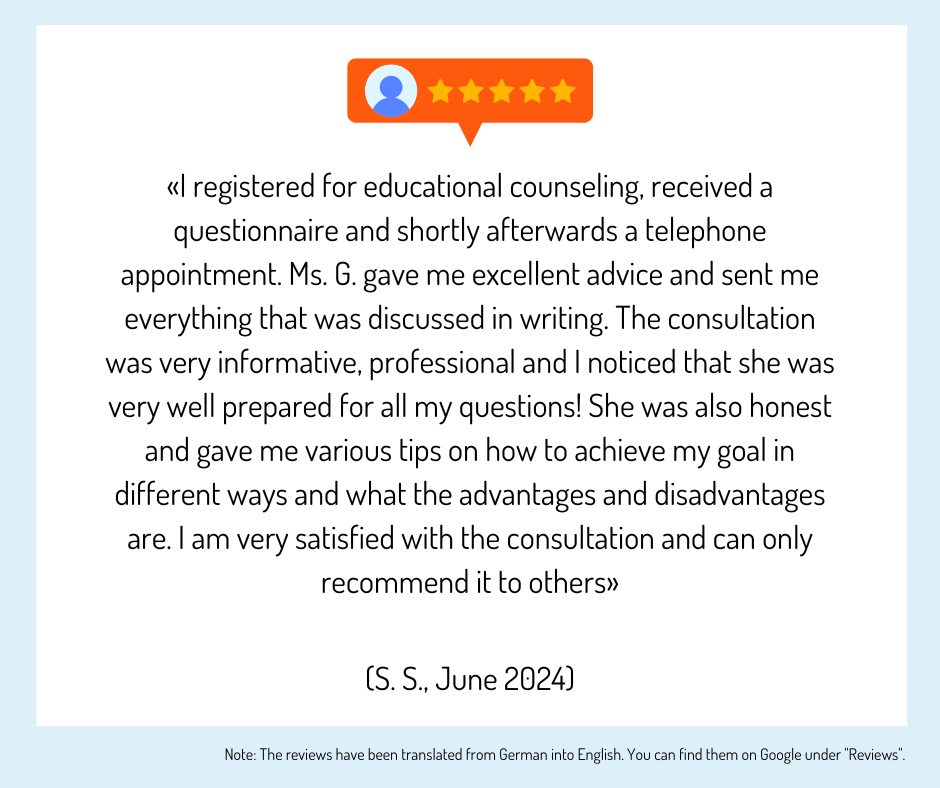
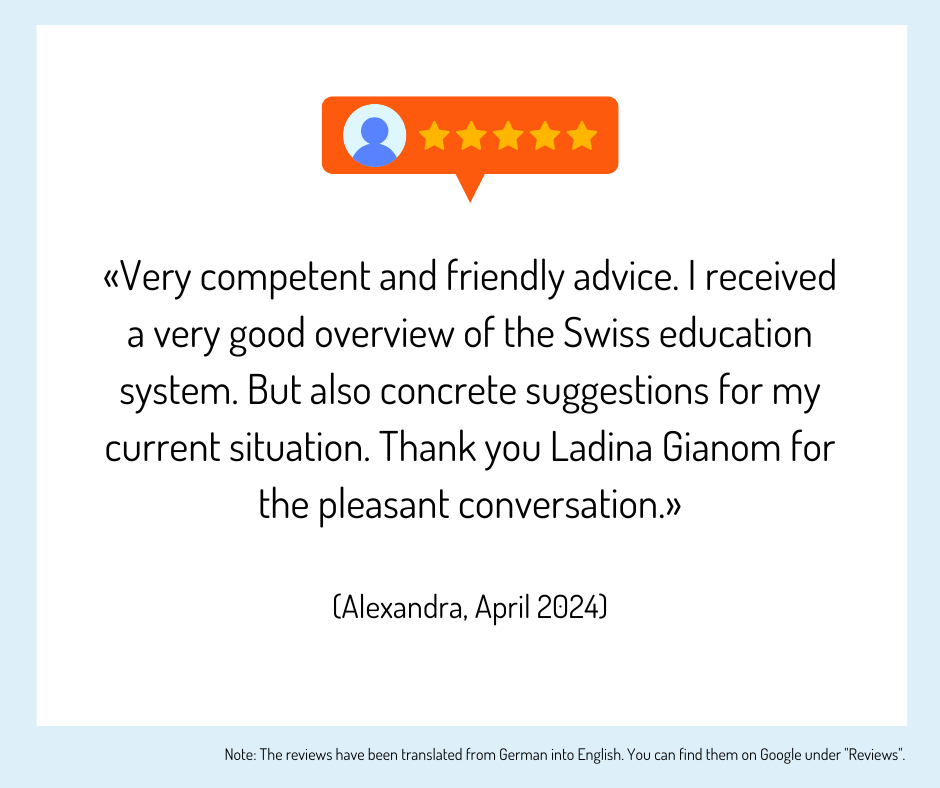
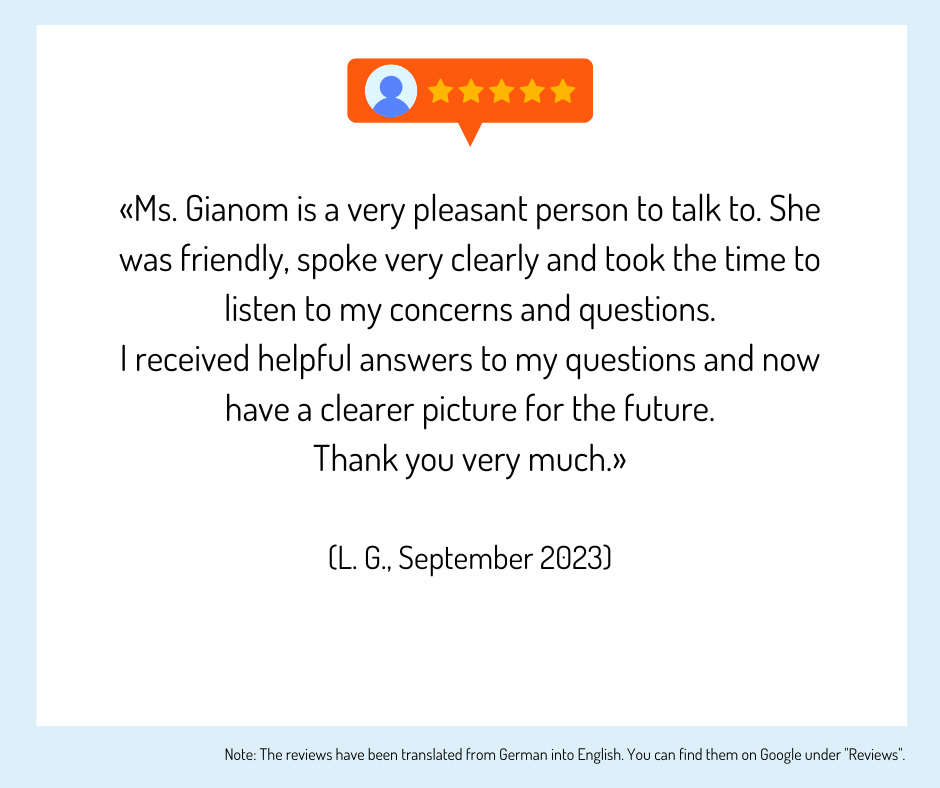
 Experiences, evaluations and opinions on training / further education
Haven't found the right training or further education yet? Benefit from educational advice now!
Further training is not only important in order to maintain or increase professional attractiveness, investing in training or further training is still the most efficient way to increase the chances of a pay rise.
The Swiss education system offers a wide range of individual training and further education opportunities - depending on your personal level of education, professional experience and educational goals.
Choosing the right educational offer is not easy for many prospective students.
Which training and further education is the right one for my path?
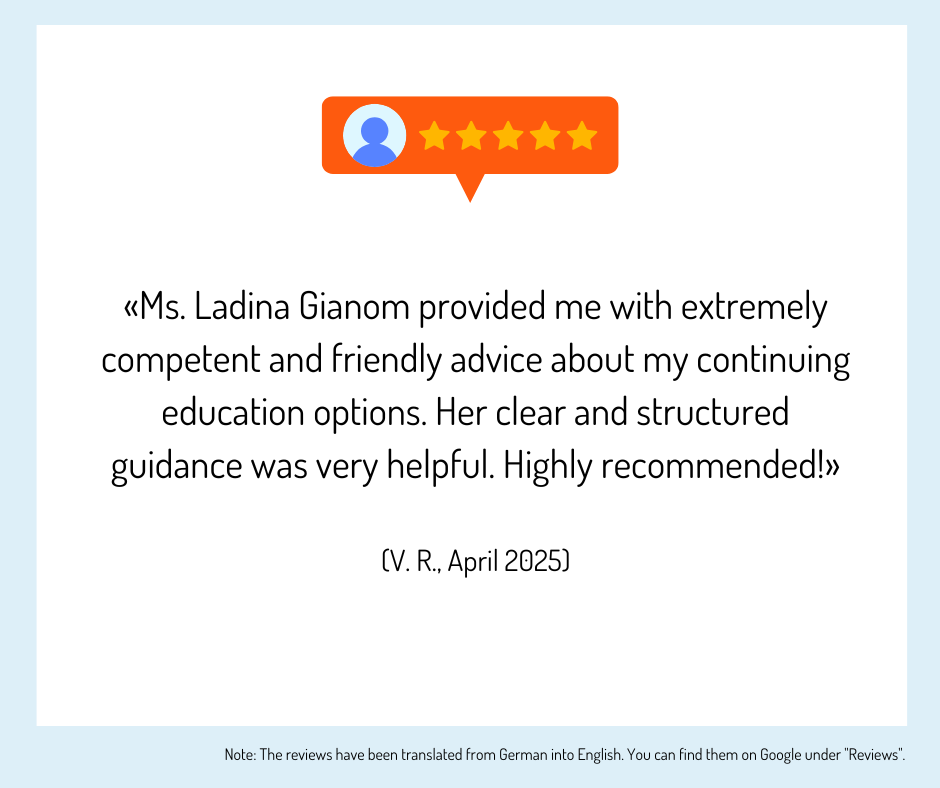
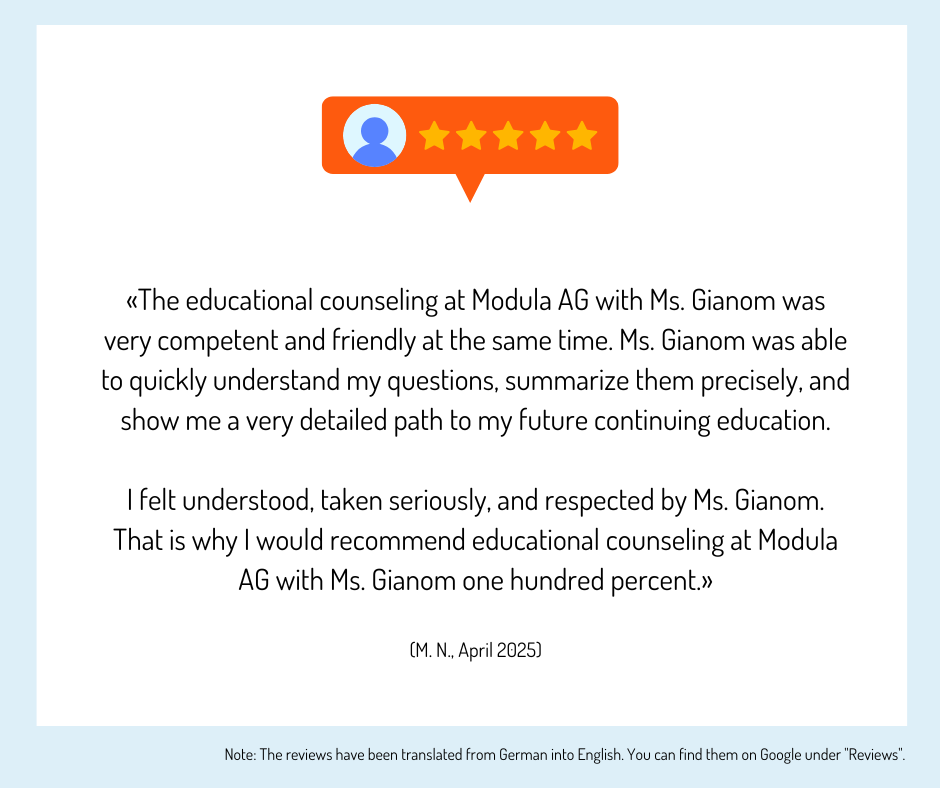
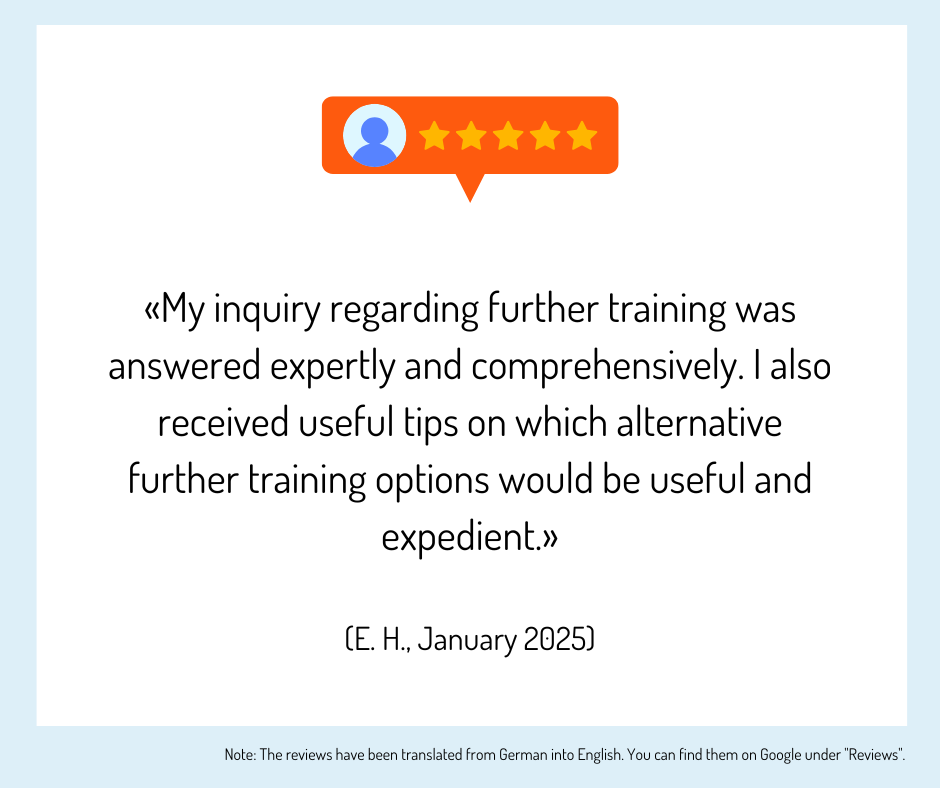
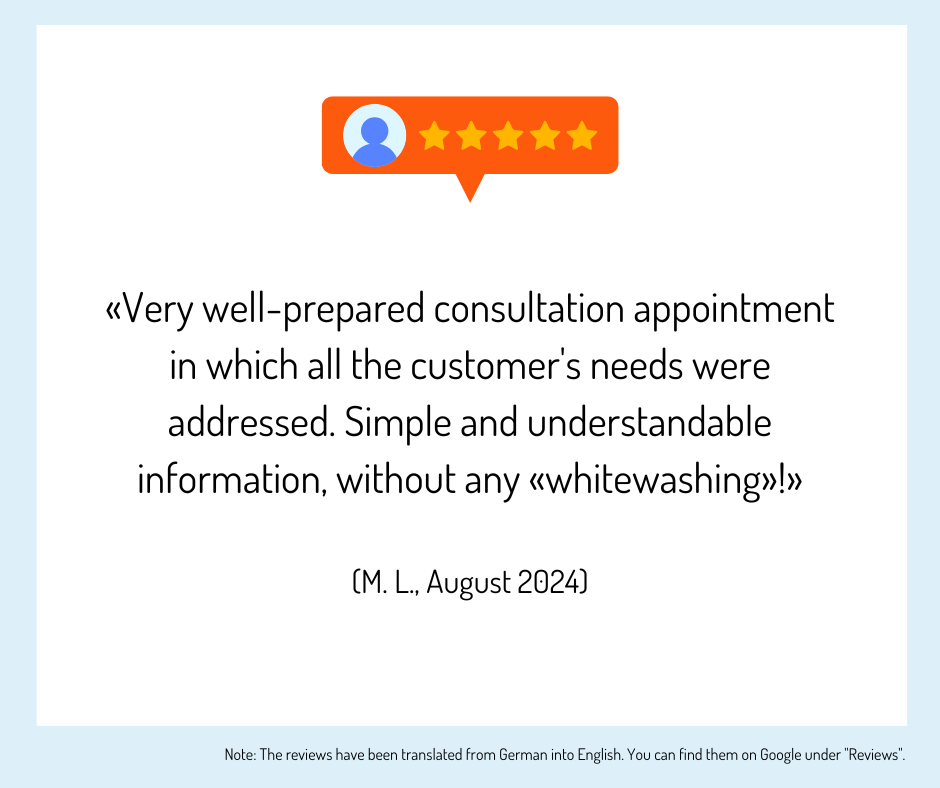
Our education advisory team will guide you through the "education jungle", providing specific input and relevant background information to help you choose the right offer.
Your advantages:
You will receive
- Suggestions for suitable courses, seminars or training programs based on the information you provide in the questionnaire
- An overview of the different levels and types of education
- Information about the Swiss education system
We offer our educational counseling in the following languages on request: French, Italian, English
Register now and concretize your training plans.
Immediately to the right training
Hofackerstr. 30
4132 Muttenz


Schools with certified educational counseling

Attraktive Services für Swisscom Mitarbeitende
Kostenlose Services
» Bildungsberatung (Wert: CHF 150.–)
Bildungs- und Businessratgeber (Wert: CHF 175.–)
» Rabatte
Attraktive Rabattierungen seitens der Bildungsanbieter.
» Massgeschneiderte Bildungsangebote
Ohne grossen Zeitaufwand den besten Trainer, Coach oder Schulungsanbieter finden
Bildungsangebot Schweiz
Aus über 700 Bildungsanbietern das richtige Bildungsangebot finden