Project Portfolio Management (Cert.) (Region Zentralschweiz):
1 Provider



Immediately to the right training
Hinterbergstrasse 9
6330 Cham
 Strengths:
PM reference books by Bruno Jenny, free access to the template collection, training in a time-saving blended learning approach (self-study and classroom teaching) and online courses.
Strengths:
PM reference books by Bruno Jenny, free access to the template collection, training in a time-saving blended learning approach (self-study and classroom teaching) and online courses.

 Download info
Schools with certified educational counseling

Questions and answers
What tasks does a project portfolio manager perform in a company?
A project portfolio manager coordinates and monitors all of a company's ongoing projects in terms of strategy, resources and priorities. The aim is to ensure that all projects are optimally aligned with the company's overarching objectives. A project portfolio manager evaluates risks, budgets and synergies between projects and makes prioritization decisions. He or she works closely with project managers, specialist departments and management. Analytical skills, strong communication skills and a sound understanding of the project are key. In larger organizations, this role is often part of a Project Management Office (PMO). If you want to qualify for this function, you should complete suitable continuing education, further training.
What is a project portfolio management tool typically used for?
A project portfolio management tool is used to monitor, evaluate and manage a large number of projects simultaneously. It supports the prioritization of projects, the optimal use of resources and the strategic alignment of the project portfolio. A good project portfolio management tool provides clear key figures, status reports and forecasts. Functions such as visualization, progress tracking, budget control and interfaces to other systems are central to this. Many tools can be individually adapted to the company's needs. Cloud-based solutions are also becoming increasingly important.
What does a project portfolio manager training course cover?
Project portfolio manager training focuses on the strategic management and evaluation of several projects within an overall portfolio. Topics such as prioritization, resource allocation, benefit maximization and risk management at portfolio level are covered. Project portfolio manager training is generally aimed at experienced project managers or PMO specialists. In addition to methodological knowledge, the focus is also on analytical skills, decision-making competence and communication. Depending on the provider, the use of PPM software may also be part of the course. The programs usually last several weeks to months and conclude with a certificate. Compare continuing education, further training in project portfolio management now or contact providers directly using our contact form.
What role does project portfolio management software play in business practice?
In business practice, powerful project portfolio management software is a key tool for the efficient management of complex project landscapes. It helps to maintain an overview of costs, schedules, risks and strategic goals at the same time. In many companies, project portfolio management software is closely linked to other systems such as ERP, controlling or HR tools. It enables fact-based decisions through up-to-date data and meaningful reports. A central platform for decision support is essential, especially in dynamic environments. Training on common tools is therefore integrated into many continuing education, further training courses.
How does project management training differ from a project portfolio course?
Project management training teaches methodological principles for planning, implementing and managing individual projects. The focus is on topics such as time management, budget planning, team leadership and risk management. In contrast, a project portfolio course deals with overarching topics such as the strategic management of several projects in an overall context. Project management training is therefore particularly suitable for prospective project managers, while portfolio training usually appeals to people with experience in the project environment. Both qualifications often build on each other. It is important to choose a course that matches your current level of experience.
What are the benefits of continuing education, further training in project management for experienced professionals?
Continuing education, further training in project management also offers experienced professionals the opportunity to deepen their knowledge and use current methods such as agile or hybrid approaches in a targeted manner. The focus is not only on project implementation, but also on topics such as change management, leadership and portfolio management. Continuing education, further training in project management promotes a strategic mindset and opens up new career prospects, for example as a project coach, PMO manager or portfolio manager. It is particularly relevant for specialists and managers who wish to take on project responsibility at a higher level. Many courses conclude with a recognized certificate. Company-specific content can also often be integrated.
What are the benefits of a project office in the context of project portfolio management?
A project office (often also referred to as a PMO) supports the project lead and management in the systematic control of the project portfolio. It ensures that standards are adhered to, resources are allocated efficiently and project goals remain aligned with the corporate strategy. The Project Office acts as a central coordination point for processes, tools, reporting and knowledge management. The structure varies depending on the size of the company - from operational support to strategic management. It makes a significant contribution to quality assurance and transparency in the project business. Especially in complex project landscapes, a professional PMO significantly increases the success rate. If you are interested in continuing education, further training, you will find suitable offers here.
What is project management training for beginners?
Project management training for beginners teaches the basics of project work - from planning to successful completion. The focus is on topics such as defining objectives, scheduling, resource management, teamwork and project documentation. The project management training course is particularly suitable for people who are new to a project role or would like to prepare for project work. Basic methods such as waterfall or simple agile techniques are also often introduced. The aim is to gain confidence in the project environment and to be able to take on initial responsibility. Depending on the provider, the courses last between a few days and several months.
When does continuing education, further training in project management make sense?
Continuing education, further training in project management makes sense if you already have some project experience and want to expand your methodological know-how. It helps to plan, manage and successfully complete projects more professionally. Continuing education, further training in project management is suitable both for career starters in the project environment and for experienced employees who want to qualify for management positions. Content can include classic, agile or hybrid methods - depending on the focus of the course. Soft skills such as communication, conflict resolution and leadership are also trained. Certificates such as IPMA, PMI or HERMES can also be included. Compare training courses by level and objective now or contact the schools directly using our contact form.
What characterizes good project portfolio management software?
Modern project portfolio management software helps companies to strategically select, prioritize and monitor projects. It offers functions such as resource planning, risk analysis, budget tracking and reporting at portfolio level. User-friendliness, scalability and interfaces to existing tools are important when choosing project portfolio management software. They often enable a central dashboard with real-time data to make informed decisions. Mobile access options and cloud integration are also increasingly in demand. The software is primarily used in organizations with several parallel projects. If you would like to learn more about the professional use of such solutions, you can find out about suitable training courses here.

 Error found? -
Experiences, evaluations and opinions on training / further education
Haven't found the right training or further education yet? Benefit from educational advice now!
Further training is not only important in order to maintain or increase professional attractiveness, investing in training or further training is still the most efficient way to increase the chances of a pay rise.
The Swiss education system offers a wide range of individual training and further education opportunities - depending on your personal level of education, professional experience and educational goals.
Choosing the right educational offer is not easy for many prospective students.
Which training and further education is the right one for my path?
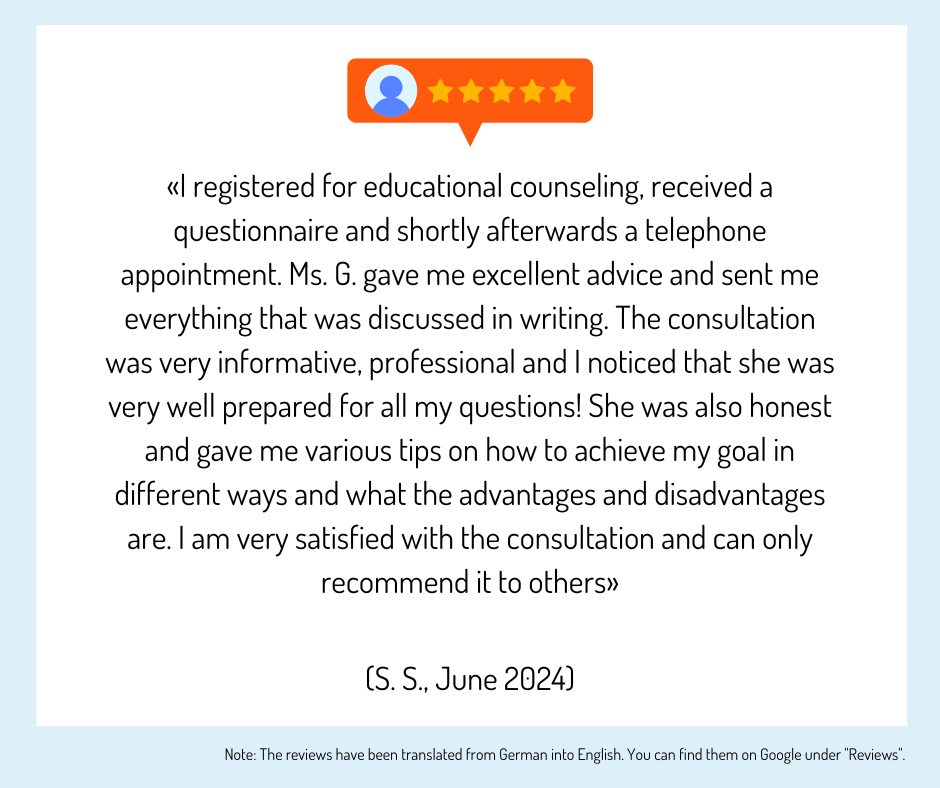
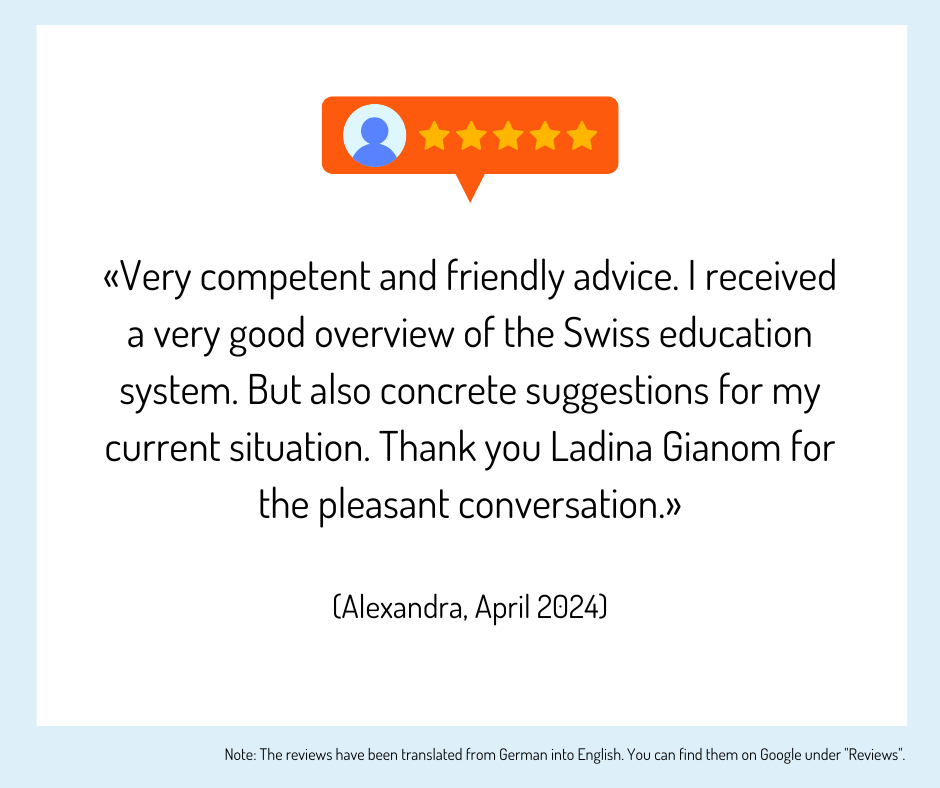
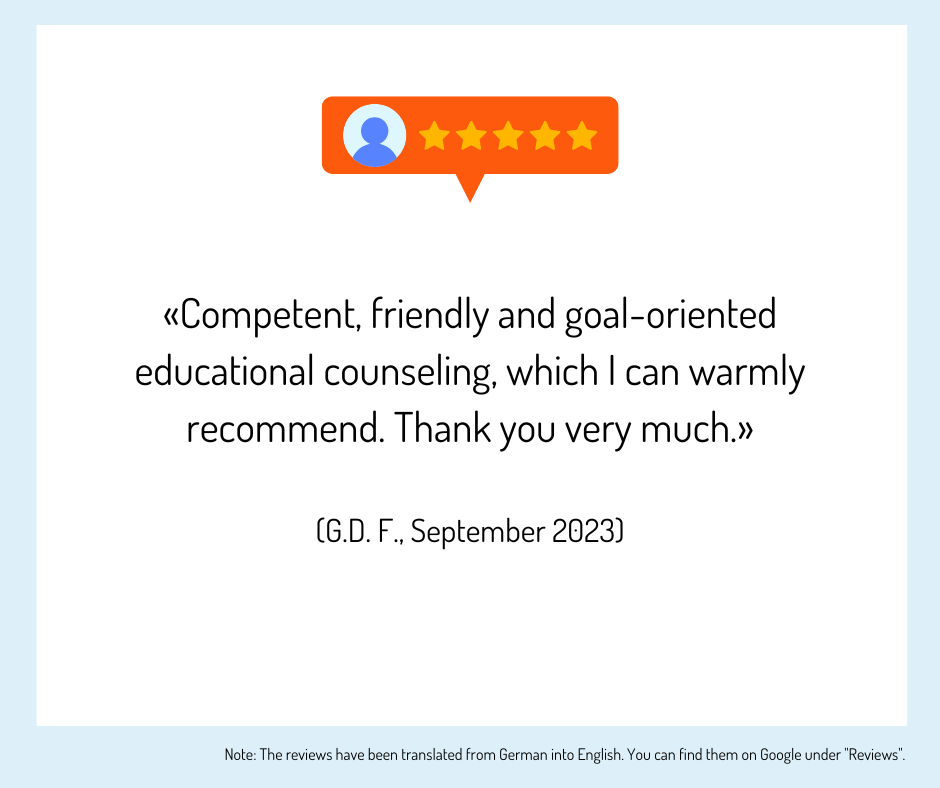
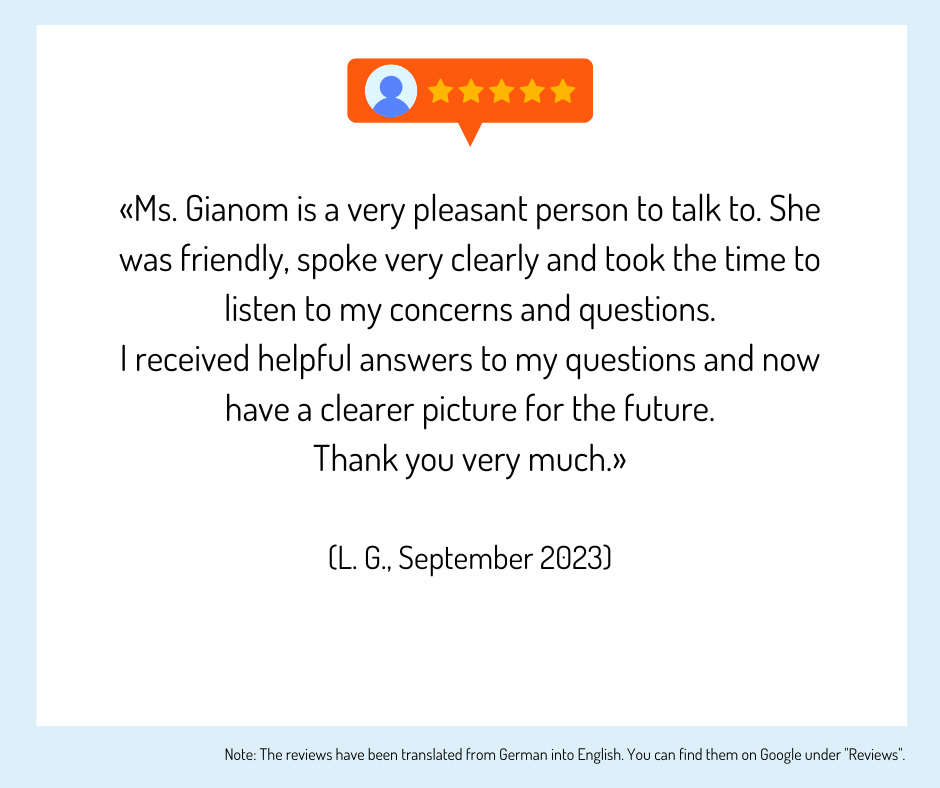
Our education advisory team will guide you through the "education jungle", providing specific input and relevant background information to help you choose the right offer.
Your advantages:
You will receive
- Suggestions for suitable courses, seminars or training programs based on the information you provide in the questionnaire
- An overview of the different levels and types of education
- Information about the Swiss education system
We offer our educational counseling in the following languages on request: French, Italian, English
Register now and concretize your training plans.
Attraktive Services für Swisscom Mitarbeitende
Kostenlose Services
» Bildungsberatung (Wert: CHF 150.–)
Bildungs- und Businessratgeber (Wert: CHF 175.–)
» Rabatte
Attraktive Rabattierungen seitens der Bildungsanbieter.
» Massgeschneiderte Bildungsangebote
Ohne grossen Zeitaufwand den besten Trainer, Coach oder Schulungsanbieter finden
Bildungsangebot Schweiz
Aus über 700 Bildungsanbietern das richtige Bildungsangebot finden