Financial planner (FPE) (Region Tessin):
1 Provider



Immediately to the right training
Neuengasse 20
3011 Bern
 Strengths:
High quality standards / Bilingual offering / Leading in the training of financial advisors
Strengths:
High quality standards / Bilingual offering / Leading in the training of financial advisors

 Download info
Schools with certified educational counseling

Questions and answers
For whom is the Federal Diploma of Higher Education in Financial Planning suitable?
The Federal Diploma of Higher Education in Financial Planning is suitable for employees from the financial services industry. The certificate qualifies them as specialists in comprehensive advice and support for private households in all insurance and financing matters.
Unsure whether participation is possible? We recommend contacting the provider directly - simply and without obligation using our contact form.
What do you learn about due diligence in continuing education, further training for financial planners?
The topic of due diligence plays a central role in continuing education, further training for financial planners. Participants deal intensively with the legal, ethical and professional requirements associated with the responsible management of client data and asset matters.
The focus is on the following topics, among others:
- Trust is the foundation: financial planners gain deep insights into personal financial circumstances
- Handling customer dossiers requires the utmost confidentiality
- It is important to take responsibility for careful and discreet action
- Legal requirements and professional duties of care must be consistently observed
- Developments on the financial markets and in the economy should be monitored on an ongoing basis and included in the advisory process
These topics form the basis for a professional and responsible activity in the field of financial planning.
As each school has its own slightly different focus beyond the guidelines of the examination organization, it is advisable to clarify this directly with the respective education provider. A question can easily be forwarded to the desired school via the contact form.
What activities do financial planners with a federal certificate carry out?
Financial planners with a federal certificate carry out the following activities:
- create an individual financial plan for those seeking advice based on a current life event (marriage, divorce, early retirement and real estate financing)
- Analyze the client's financial situation (income, expenses, assets, debts, taxes and life risks)
- Find out the customer's personal objectives, needs and problems
- show different products such as funds, life insurance, property and asset insurance or mortgages
- point out risks when buying a home and recommend additional protective measures
- present complex issues in an understandable way using graphics as a basis for finding solutions
- Achieve sales deals
- Clarify opportunities to create new assets and invest if interested
- More targeted organization of capital-forming and existing assets as well as pension provision - use for income generation and life risk cover
- check the flexibility of financial investments, their return, risk and liquidity
- Clarify the customer's disposal wishes
- Optimizing the tax and legal situation and determining the economic, ecological and social sustainability of financial investments
- Close cooperation with tax, insurance and legal experts
What leads prospective students to enquire about further training as a "Financial Planner (BP)"?
We have clarified this question about the financial planner course for you. According to a survey conducted by the education platform Ausbildung-Weiterbildung.ch, the reasons given by participants varied:
- 44 % read an online review
- 36 % already knew the school/s
- 20 % received a recommendation from a school for further training to become a financial planner
Further impacts are provided to us via text responses: "curiosity", "proximity to school" and "through job offer".
What are the admission criteria for continuing education, further training and Federal Professional Examination?
The admission requirements for the Financial Planner continuing education, further training with Federal Professional Examination are:
- Certificate of a vocational apprenticeship of at least three years' duration or an equivalent qualification and at least two years' professional experience in the financial services sector.
or
- Successful completion of two years of basic training and five years of professional experience, at least two of which must be in the financial services sector.
or
- At least five years of professional experience in the financial services sector.
and
- Proof of the following module qualifications or confirmation of equivalence as a financial planner up to 30 days before the start of the examination: asset formation, pension provision (personal and social insurance), insurance (property and asset insurance), real estate / financing. The module qualifications must not be older than 32 months.
The professional practice must be completed during the financial planner continuing education, further training until the start of the financial planner examination. The SFBI decides on the equivalence of foreign certificates and diplomas.
IAF Finanzplaner: Welche Module werden für den Fachausweis Finanzplaner geprüft?
Für den eidgenössischen Fachausweis Finanzplaner IAF werden verschiedene Module in zwei Stufen geprüft. Diese decken alle zentralen Themen des modernen Finanz- und Vorsorgewesens ab und bilden die Grundlage für eine ganzheitliche Finanzberatung.
- Stufe 1 – Grundlagenmodule
In der ersten Stufe werden die wichtigsten Fachgebiete der Finanzplanung vermittelt und geprüft:- Vermögensbildung
- Vorsorge (Personen- und Sozialversicherungen)
- Versicherung (Sach- und Vermögensversicherungen)
- Immobilien und Finanzierung
- Recht
- Steuern
- Stufe 2 – Vertiefungs- und Integrationsmodule
Die zweite Stufe baut auf dem Basiswissen auf und fokussiert auf die praxisorientierte Anwendung:- Vertiefung Vorsorge und Vermögen
- Integrierte Finanzplanung für private Haushalte
Die Prüfungen überprüfen, ob angehende IAF Finanzplanerinnen und Finanzplaner über umfassendes Fachwissen in den Bereichen Anlage, Finanzierung, Vorsorge, Versicherung und Steuerplanung verfügen. Zudem wird die Fähigkeit bewertet, komplexe Kundensituationen ganzheitlich zu analysieren und zu planen.
Hinweis:
Die Module und Prüfungsinhalte richten sich nach den offiziellen Vorgaben der Interessengemeinschaft für Ausbildung im Finanzbereich (IAF). Eine sorgfältige Vorbereitung auf alle Module – idealerweise über einen anerkannten Kursanbieter – ist entscheidend, um die Abschlussprüfung erfolgreich zu bestehen.
What skills does financial planner training teach?
Graduates of a financial planner training program with a federal certificate have the necessary expertise, particularly in the areas of asset accumulation, pension planning and retirement planning, to provide private households with comprehensive advice and support. Solid knowledge in the areas of taxes, law, insurance and real estate round off the competence profile.
Welche Unterrichtsform ist aktuell die beliebteste für die Ausbildung Finanzplaner IAF?
Eine aktuelle Befragung unter Interessierten an der Ausbildung Finanzplaner IAF zeigt, welche Unterrichtsformen derzeit am häufigsten bevorzugt werden:
- Ein Drittel der Befragten wünscht sich Präsenzunterricht vor Ort in den Schulen.
- Ein gutes Viertel bevorzugt Hybrid-Unterricht, also eine Kombination aus Präsenz- und Online-Lektionen.
- Ein Viertel möchte reinen Online-Unterricht, um orts- und zeitunabhängig lernen zu können.
- Der verbleibende Anteil hat keine klare Präferenz und entscheidet flexibel je nach Angebot oder persönlicher Situation.
Der Anteil der Befürworter des Präsenzunterrichts hat über die letzten Jahre leicht abgenommen. Gleichzeitig ist das Interesse am Hybrid-Unterricht etwas gestiegen, während der Wunsch nach Online-Unterrichtsowie die Gruppe ohne klare Präferenz leicht zugenommen haben.
Diese Entwicklung deutet darauf hin, dass Teilnehmende an der IAF Finanzplaner Ausbildung vermehrt Wert auf flexible und kombinierte Lernformen legen. Je nach persönlicher Lernweise und zeitlichen Möglichkeiten kann daher Präsenz-, Hybrid- oder Online-Unterricht die passende Wahl sein.
Create a financial plan: What can you do as a financial planner IAF and with a Federal Diploma of Higher Education?
As an IAF financial planner with a Federal Diploma of Higher Education, you can provide private individuals with comprehensive financial advice and support throughout their entire life cycle up to retirement as part of private financial planning. This means creating a financial plan for:
- Build-up planning (financial planning build-up) - personal financial plan or strategic financial planning
- Financial plan for house purchase
- Pension planning
The respective schools are happy to provide detailed information about the course content and the skills taught. Contact the right school quickly, easily and without obligation using our contact form.
Which further education course can be attended after completing the Federal Certificate in Financial Planning?
Graduates of the specialist certificate in financial planning are eligible to attend the SME financial expert course with a federal diploma.
IAF Finanzplaner Ausbildung: Welches sind die häufigsten Lerntypen?
Wer sich auf die IAF Finanzplaner Ausbildung vorbereitet, lernt am effektivsten, wenn die eigene Lernstrategie zum persönlichen Lerntyp passt. Eine interne Befragung von Interessierten auf dieser Bildungsplattform hat ergeben, dass sich die Teilnehmenden in vier Hauptgruppen einteilen lassen:
- Visuelle Lerntypen (32 %)
Lernen am besten durch Sehen und Beobachten. Grafiken, Schaubilder, Lernvideos oder farbige Lernkarten helfen, komplexe Finanzzusammenhänge zu verstehen. - Motorische oder kinästhetische Lerntypen (34 %)
Verstehen Inhalte am schnellsten durch praktisches Ausprobieren. Übungen, Fallstudien, Rechenbeispiele oder das Durchspielen realer Kundensituationen unterstützen diesen Lerntyp optimal. - Kommunikative Lerntypen (25 %)
Lernen am erfolgreichsten durch Austausch und Diskussion. Gruppengespräche, Lerngruppen oder das Erklären von Inhalten an andere fördern das Verständnis deutlich. - Auditive Lerntypen (9 %)
Prägen sich Informationen am besten durch aktives Zuhören ein – etwa beim Unterricht, beim Anhören von Podcasts oder durch laut vorgelesene Lerninhalte.
Die meisten Menschen sind übrigens Mischtypen, die von einer Kombination verschiedener Lernmethoden profitieren. Wer seine bevorzugte Lernweise kennt, kann die Vorbereitung auf die IAF Finanzplaner Prüfung gezielt optimieren – sei es durch Video-Lektionen, Gruppenarbeit, praktische Aufgaben oder Audio-Lernmaterialien.
Tipp:
Teste verschiedene Lernmethoden während deiner Ausbildung und beobachte, bei welchen du den grössten Lernerfolg erzielst. Eine bewusste Anpassung deiner Lernstrategie kann den Stoff nachhaltiger verankern und die Prüfungsvorbereitung deutlich effizienter machen.
What is the interest in training as a financial planner (BP)?
Interest in a "Financial Planner (BP)" training course is triggered for various reasons. According to the training survey conducted by Ausbildung-Weiterbildung.ch, this happens equally often for the following three reasons:
- 80 % as the financial planner qualification with a federal certificate is mentioned in many job advertisements and is required for corresponding jobs.
- 17 % to compare further training with their own wishes and needs.
- 3 % showed interest in this further training in financial planning because it was recommended to them.
Tips, tests and information on "Financial planner with Federal Diploma of Higher Education"
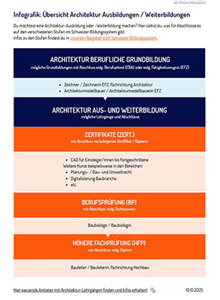


 Error found? -
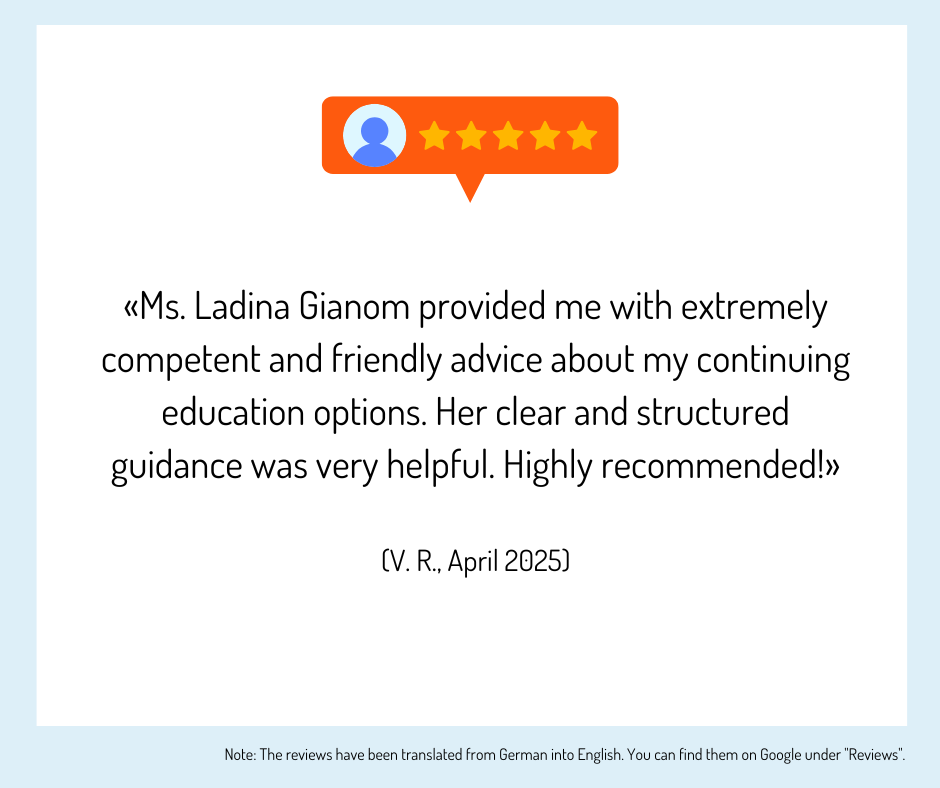
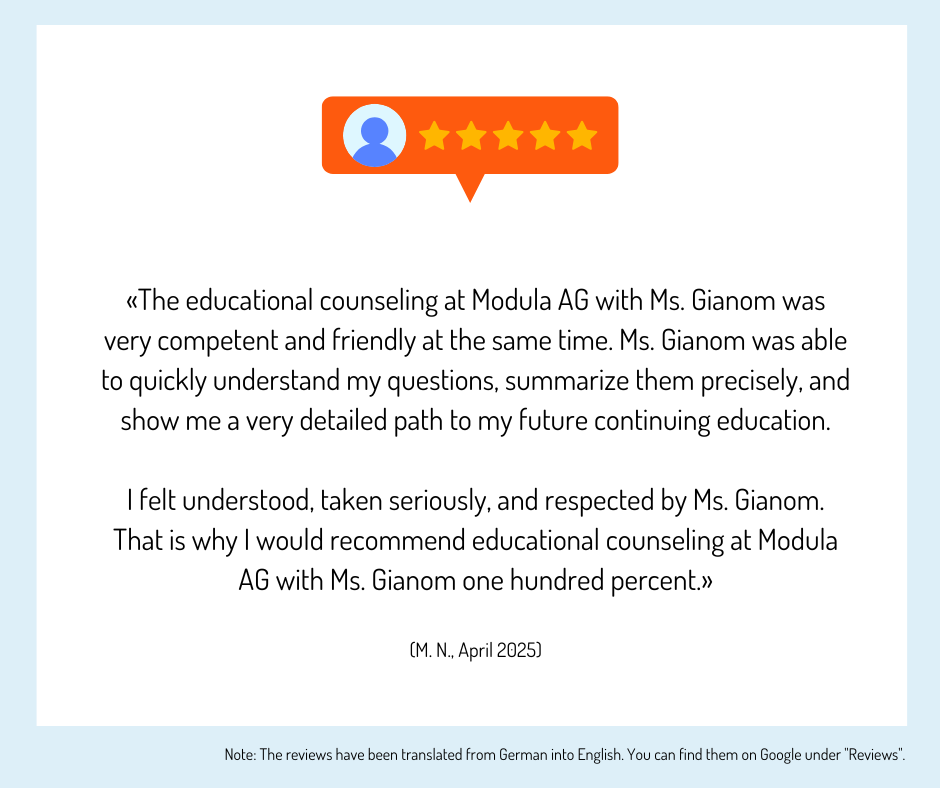
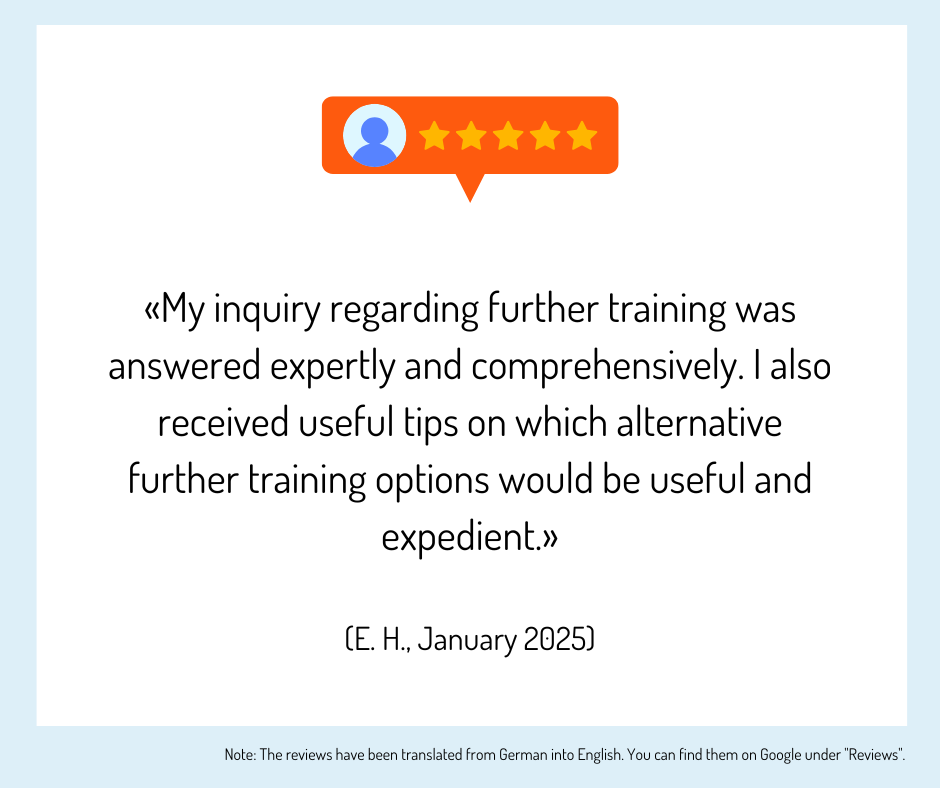
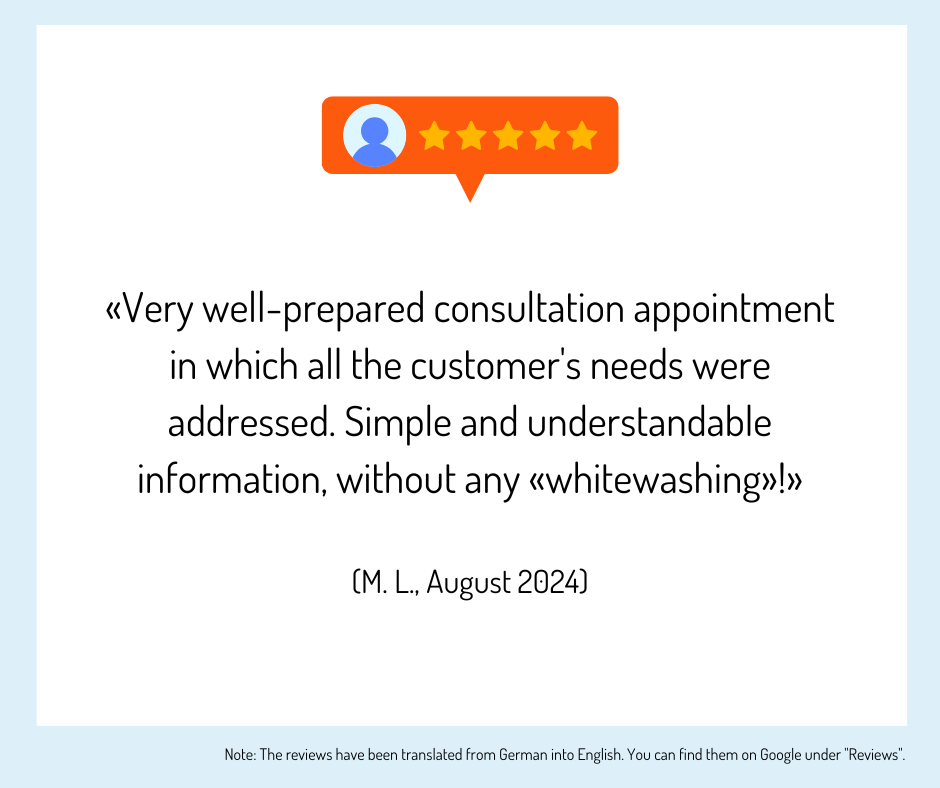
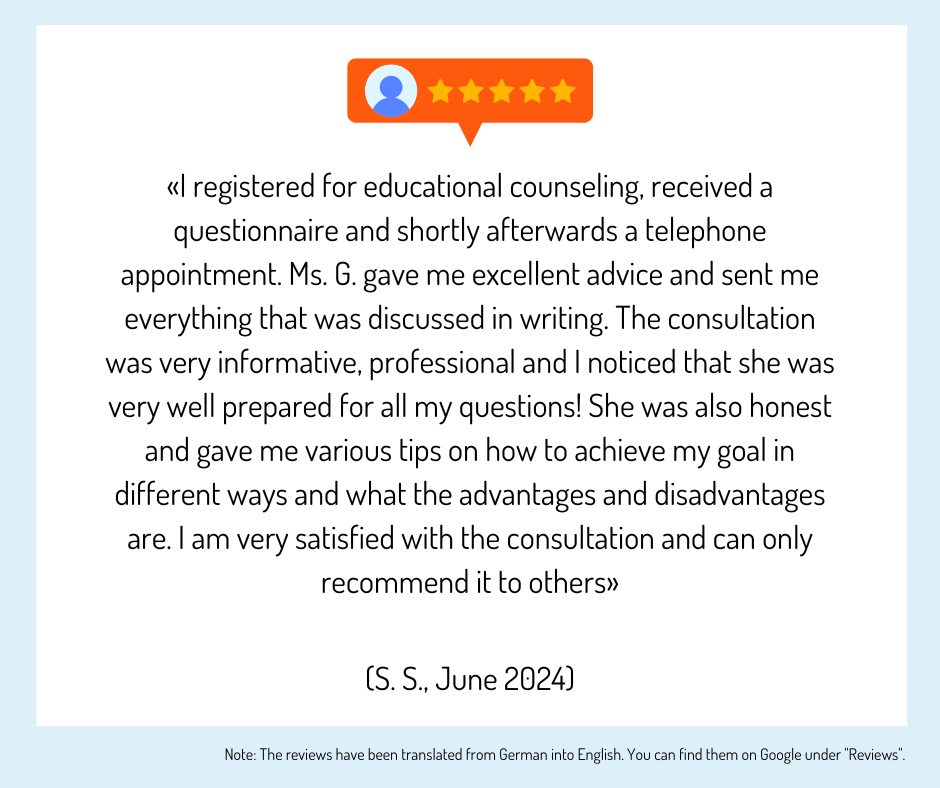
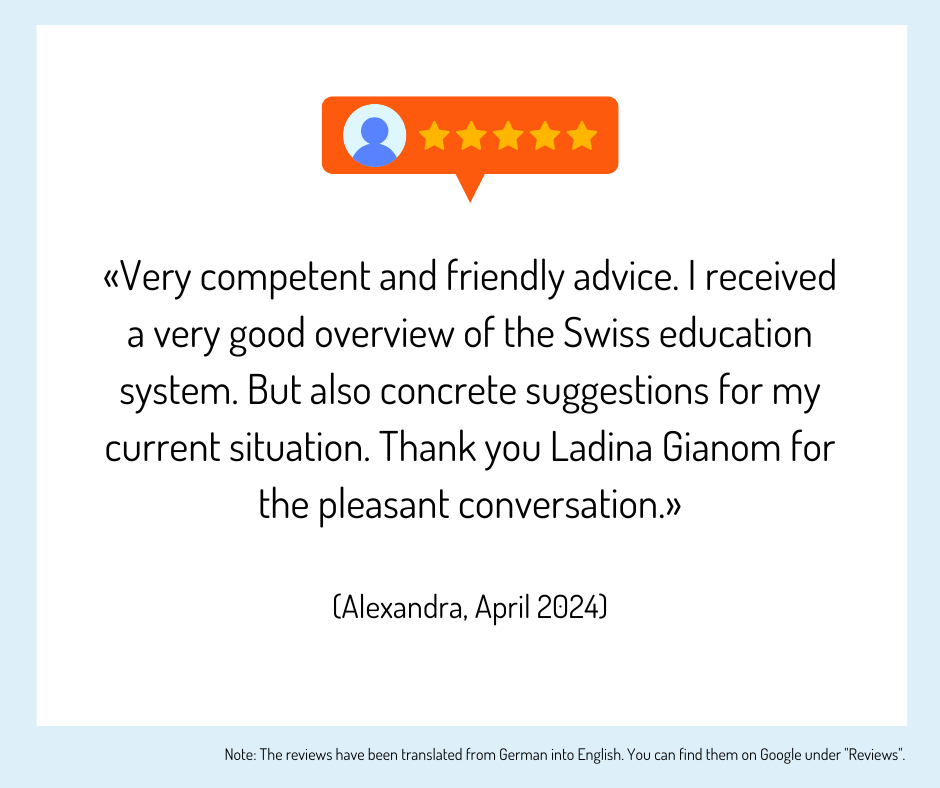
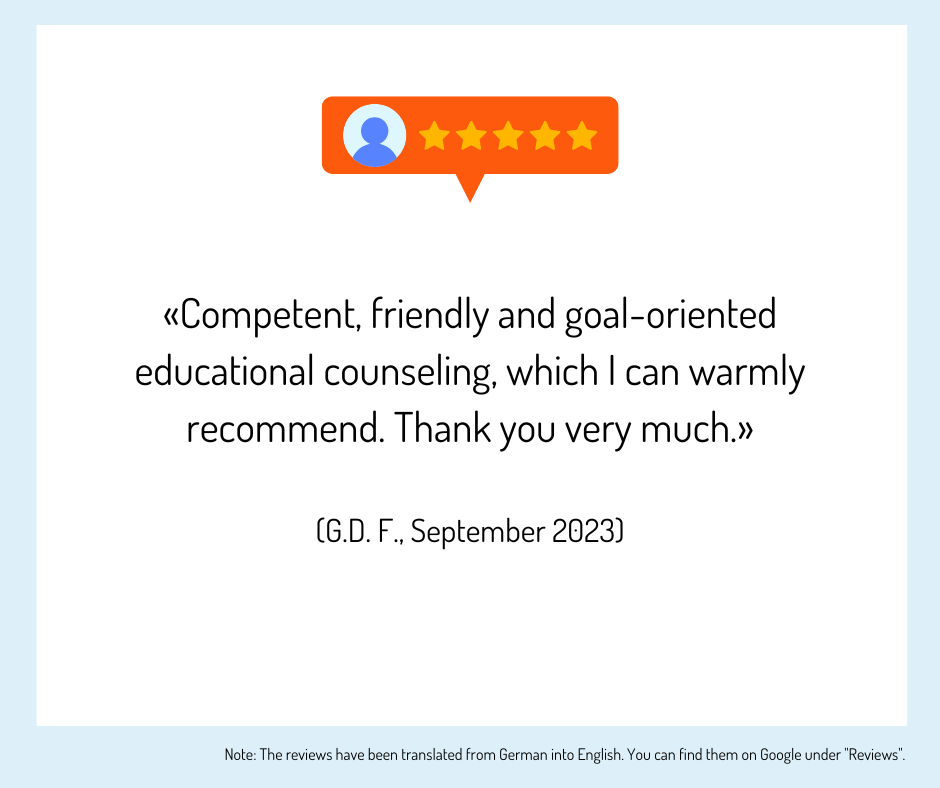
Experiences, evaluations and opinions on training / further education
Haven't found the right training or further education yet? Benefit from educational advice now!
Further training is not only important in order to maintain or increase professional attractiveness, investing in training or further training is still the most efficient way to increase the chances of a pay rise.
The Swiss education system offers a wide range of individual training and further education opportunities - depending on your personal level of education, professional experience and educational goals.
Choosing the right educational offer is not easy for many prospective students.
Which training and further education is the right one for my path?
Our education advisory team will guide you through the "education jungle", providing specific input and relevant background information to help you choose the right offer.
Your advantages:
You will receive
- Suggestions for suitable courses, seminars or training programs based on the information you provide in the questionnaire
- An overview of the different levels and types of education
- Information about the Swiss education system
We offer our educational counseling in the following languages on request: French, Italian, English
Register now and concretize your training plans.
Attraktive Services für Swisscom Mitarbeitende
Kostenlose Services
» Bildungsberatung (Wert: CHF 150.–)
Bildungs- und Businessratgeber (Wert: CHF 175.–)
» Rabatte
Attraktive Rabattierungen seitens der Bildungsanbieter.
» Massgeschneiderte Bildungsangebote
Ohne grossen Zeitaufwand den besten Trainer, Coach oder Schulungsanbieter finden
Bildungsangebot Schweiz
Aus über 700 Bildungsanbietern das richtige Bildungsangebot finden