Respiratory therapy: training, further training, seminar, provider, experience reports



Tips and decision-making aids for choosing an apprenticeship
Questions and answers
For which clinical pictures is the use of respiratory therapy suitable?
Breath therapy is used for physical and mental complaints, as well as in difficult situations,such as long-term illnesses or chronic pain. It can alleviate and treat many different complaints and disorders and positively change the attitude of those affected towards their life and their body.
TheBreathing therapy makes you awarethat every action we take, every breath we take, has an impact on our lives and our health.
Typical use cases:
- Psychosomatic diseases
- Gastrointestinal problems
- Respiratory diseases
- Tension in the muscles
- Posture errors
- Hormonal disorders and changes (pregnancy, puberty, menopause)
- Insomnia
- Eating disorders
- Quit smoking
- physical pain
- Cardiovascular complaints
- Burnout and stress
- depressive moods
Do all schools teach the same content in their respiratory therapy training?
No. In respiratory therapy there aredifferent directions. These differ in terms of their focus and therapeutic approach. It is up to the school to decide which direction(s) it offers and how it organizes the training in detail.
In addition to the direction of therapy, you must pay particular attention to whether the courses match yourdesired goalsguide. Do you just want to get to know breathing therapy? Do you want to expand your knowledge of complementary therapies to include breathing therapy? In both cases, various introductory or advanced training courses are suitable.
If youwork professionally as a respiratory therapistyou should choose a school where you can work with a method certificate in respiratory therapy and theIndustry certificate OdA KT(= organization of the working world of complementary medicine) with the respiratory therapy method. This can only be offered by schools whose courses are recognized by the OdA KT. The industry certificate is a prerequisite for admission to the Advanced Federal Professional Examination (AFPE) and theFederal diploma as a complementary therapist(with breathing therapy method).
In some cantons, the OdA KT industry certificate or the federal diploma in complementary therapy are a prerequisite for practicing there. Find out early on what the situation is like in your canton. Information on thecantonal professional licensesyou will findhere.
What knowledge do respiratory therapists acquire during their training?
The knowledge and skills that respiratory therapy graduates acquire during their training depend on the course offered. In principle, the training courses take place inTheoretical and practical breathing therapyand also deal with cross-methodProfession-specific basics for complentary therapy work.
The topics include, for example:
- Applied breathing theory
- Breath and movement
- Vowel breathing space formation
- Tone and sound
- Psychosomatics
- Anatomy, physiology and pathology
- Psychology
- Ethics
- Communication and interaction
- Understanding health
- Quality assurance and professional identity
Training that leads toIndustry certificate OdA KTin respiratory therapy follow the guidelines of the OdA KT (Organization of the Working World of Complementary Therapy). You can find details in ourGuide to naturopathy and complementary therapy.
Why are people interested in the "Respiratory Therapy (Cert.)" course?
We asked graduates of respiratory therapy training courses why they are interested in this therapy:
For 95% of respondents, the course content matched their personal needs, 4% showed interest based on a recommendation, and 1% were intrigued by information in a job advertisement.
With thepersonal needswe asked more closely andExcitingexperience:
- "As an opera/jazz singer and teacher, I would like to finally realize my wish to learn this profession as well."
- "I work in the field of singing bowls and yoga."
- "I would like it as an addition to my physiotherapy work at the hospice."
- "Because I'm incredibly interested in the topic, breath is our origin, our source of strength."
- "got to know the positive effects through self-awareness"
- "Professional reorientation"
- "I wonder how breathing affects the whole person."
- "I have the feeling that breathing therapy is very helpful for me personally and in my work with my patients."
- "Because I can help a lot of people with this training and also do it for myself. It is an opportunity that I would like to take." as reasons. This person seems to have really found their calling: "Respiratory therapy incorporates all my interests and strengths. I know the important and extensive effects of breathing. It was mentioned to me in my meditation. I already work a lot with breathing, meditation, relaxation... it suits me!"
How long does training in respiratory therapy take?
Training to become a respiratory therapist is not designed in the same way at all schools and educational institutions, but is generallypart-timeand lasts2 to 3 years.
For later registrationat the ErfahrungsmedizinischesRegister (EMR) the training must include at least 600 hours of training in respiratory therapy and at least 150 hours of training in basic medical principles; subsequent registration with theASCArequires at least 500 learning hours in respiratory therapy and also at least 150 learning hours in medical basics.
Short seminars and coursesThese courses, which last a few weeks or a few months, are not suitable for a solid basic training, but serve as additional qualifications for therapists who are already working and would like to receive further training on specific topics, or as continuing education, further training for people who would like to gain an insight into this field of complementary medicine for purely personal purposes.
Why do people interested in education enquire about continuing education, further training and certification as a respiratory therapist?
We asked people interested in education what prompted them to contact certain respiratory therapy education providers. Their answer:
People interested in education register with schools on the basis of
- Recommendations and evaluations of schools and/or courses
- good findability on Google and other search services
- Location of the school
- Reputation/experience/quality of the school.
Here are a few details:
Contacts based on recommendations and reviews:
- 82% were inspired to do so by online reviews.
- 15% asked for details of continuing education, further training at schools that had been recommended to them.
- 3 % already knew the school where he/she was interested in continuing education, further training.
The importance of the online presence of schools is shown by the following comments made in our survey:
- "Because I came across these training centers through a Google search."
- "found via Google search"
- "Internet", "interesting homepage"
- "I did some research and came across this"
(Many schools improve their online visibility by listing themselves on our platform).
Other answers show the importance of the location: "the school is near me" and "because it is close to where I live". Someone gave the following reason: "Because the school has decades of experience and was the first school to be recognized."
Testimonials and experiences from participants, lecturers and head teachers


 Error found? -
 Experiences, evaluations and opinions on training / further education
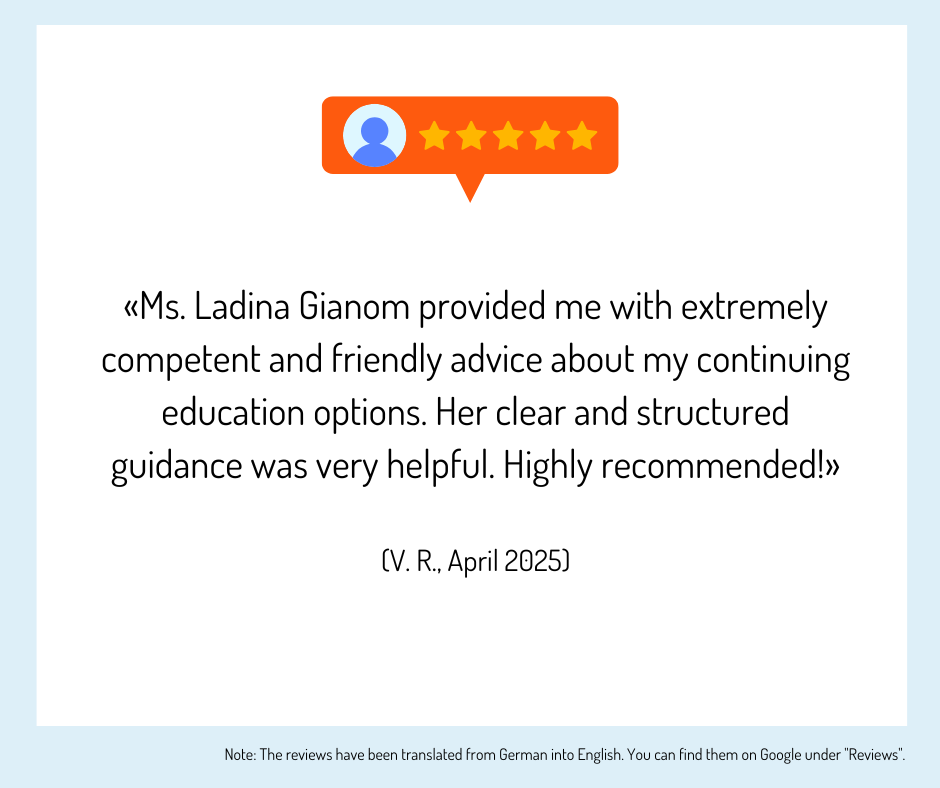
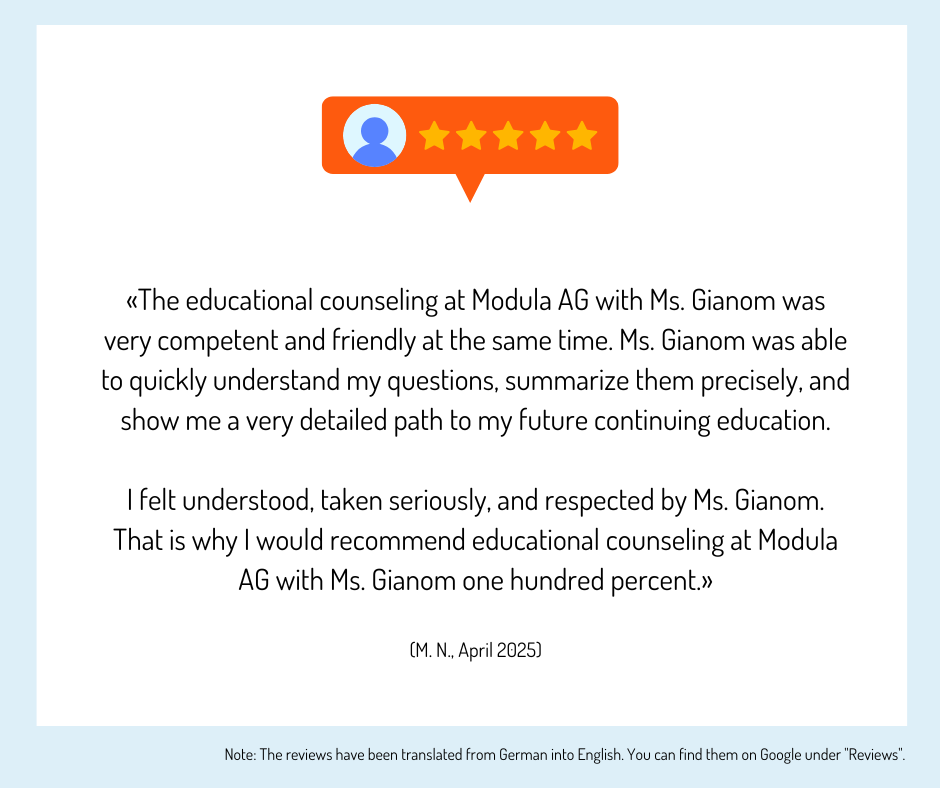
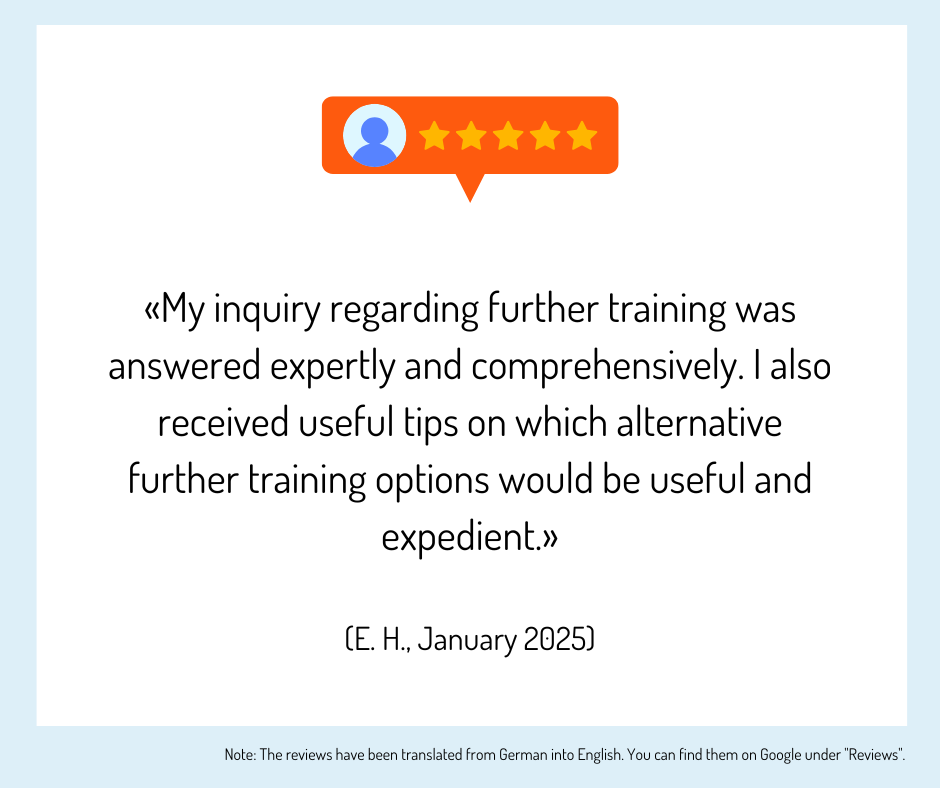
Haven't found the right training or further education yet? Benefit from educational advice now!
Further training is not only important in order to maintain or increase professional attractiveness, investing in training or further training is still the most efficient way to increase the chances of a pay rise.
The Swiss education system offers a wide range of individual training and further education opportunities - depending on your personal level of education, professional experience and educational goals.
Choosing the right educational offer is not easy for many prospective students.
Which training and further education is the right one for my path?
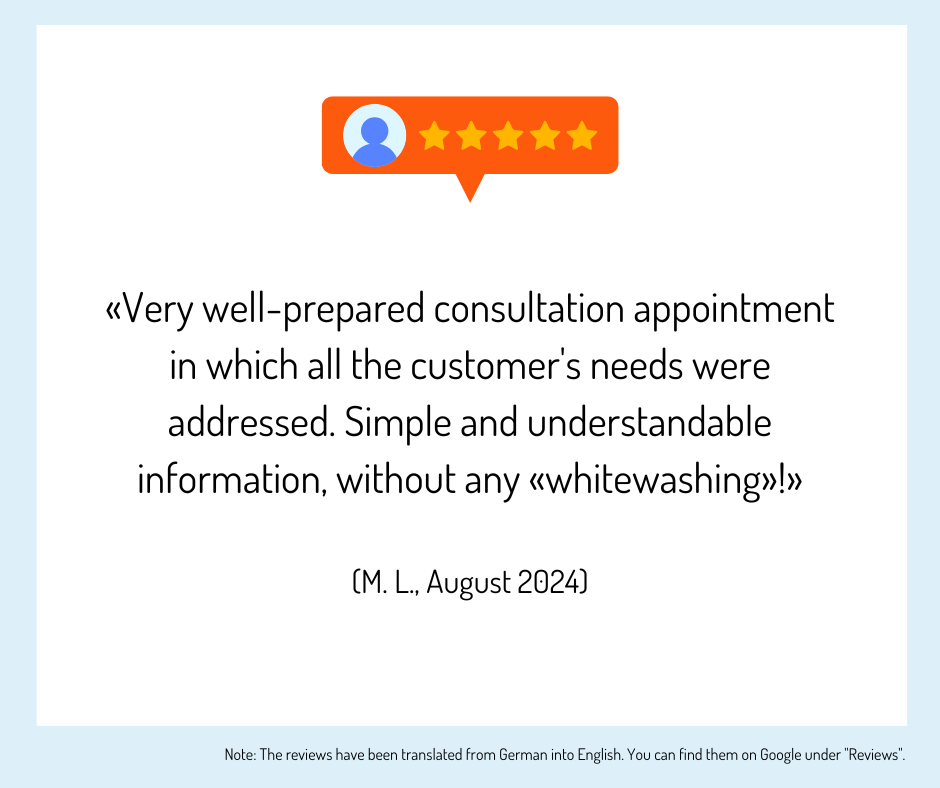
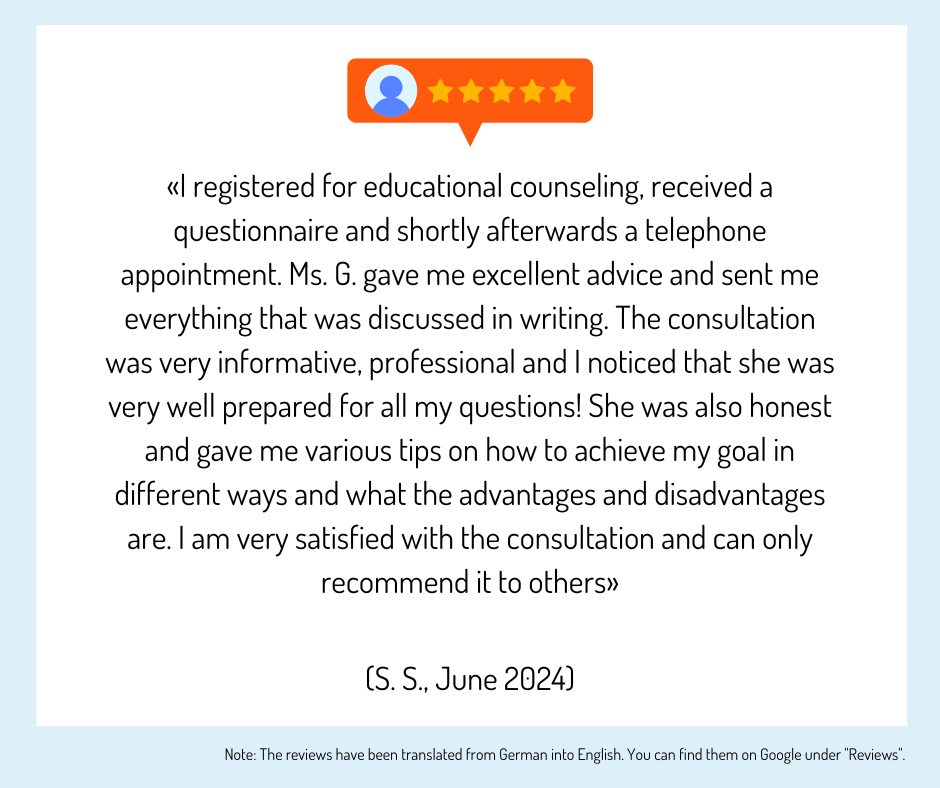
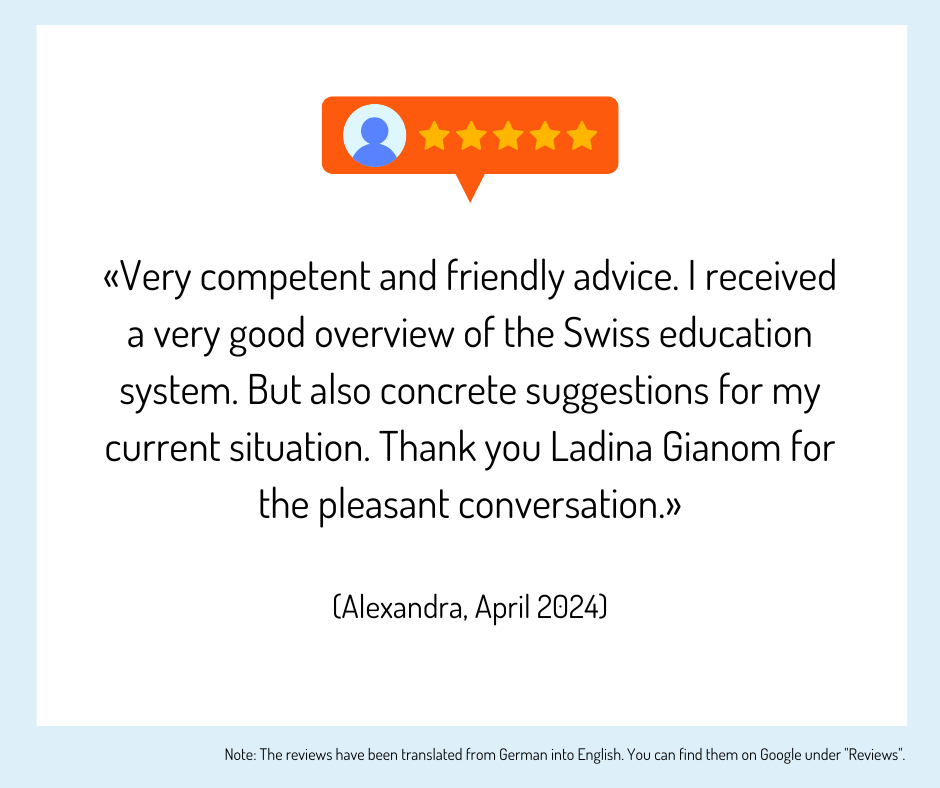
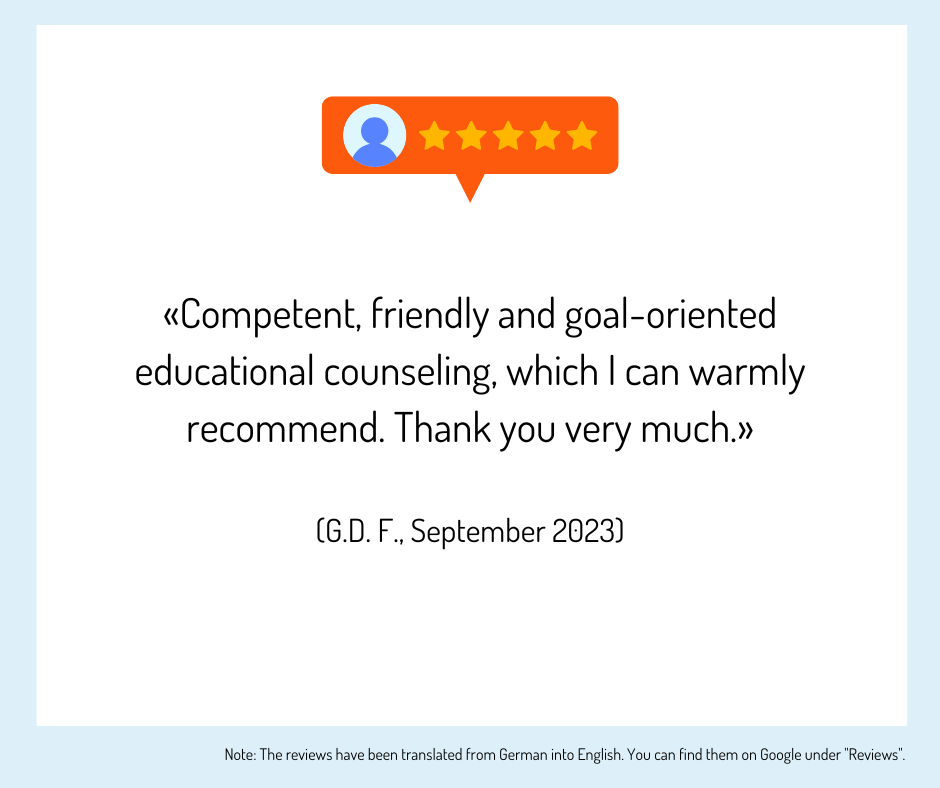
Our education advisory team will guide you through the "education jungle", providing specific input and relevant background information to help you choose the right offer.
Your advantages:
You will receive
- Suggestions for suitable courses, seminars or training programs based on the information you provide in the questionnaire
- An overview of the different levels and types of education
- Information about the Swiss education system
We offer our educational counseling in the following languages on request: French, Italian, English
Register now and concretize your training plans.
Immediately to the right training
Kanzleistrasse 17
8004 Zürich
 Strengths:
Training and continuing education, further training at IKP: scientific ▪ practice-oriented ▪ recognized
Strengths:
Training and continuing education, further training at IKP: scientific ▪ practice-oriented ▪ recognized
 Experiences of Swisscom employees about this course and this school.
» More info…
Experiences of Swisscom employees about this course and this school.
» More info…


Dorfstrasse 1
5233 Stilli b. Brugg AG
Strengths:
Beautiful training location by the river. Pleasant atmosphere in the seminar house. Qualified, experienced lecturers. Synergies of tradition and modernity as well as exciting offers.
 Download info
Schools with certified educational counseling

Attraktive Services für Swisscom Mitarbeitende
Kostenlose Services
» Bildungsberatung (Wert: CHF 150.–)
Bildungs- und Businessratgeber (Wert: CHF 175.–)
» Rabatte
Attraktive Rabattierungen seitens der Bildungsanbieter.
» Massgeschneiderte Bildungsangebote
Ohne grossen Zeitaufwand den besten Trainer, Coach oder Schulungsanbieter finden
Bildungsangebot Schweiz
Aus über 700 Bildungsanbietern das richtige Bildungsangebot finden