Biotechnology studies: Overview of offers and providers



Biotechnology studies at a UAS: specialists in the life sciences
Questions and answers
Is there a bioprocess engineering degree program?
There is currently no pure bioprocess engineering course. However, there are modules within a degree course focusing on "Bioprocess Development and Bioengineering". Here, students learn the most important process engineering working methods and basic operations in the process industry. They are familiar with the characterization of coarsely dispersed systems, mechanical separation and comminution processes, the mechanical combination of materials and the fundamentals of heat and mass transfer processes and can apply or transfer this knowledge correctly in the selection, evaluation and design of process engineering equipment, plants and processes in biotechnology. This also includes a practical course in bioprocess engineering.
Biotechnology degree course: How long does a biotechnology UAS degree course take?
The Bachelor of Science in Biotechnology UAS degree program comprises at least 180 ECTS, which are required for graduation. The duration in which you achieve this is of secondary importance, usually double the standard period of study is specified as the upper limit. Please ask the relevant University of Applied Sciences directly.
The standard period of study to become a biotechnologist is six semesters for full-time study and eight to ten semesters for part-time study. This means that if you study full-time, you will need to obtain 28 to 32 ECTS credits to complete the course within three years, which corresponds to a workload of around 30 lessons per week and approximately one hour of preparation and revision time per lesson. A biotechnology degree course can therefore take different lengths of time.
For detailed information, we recommend contacting the provider directly - with just a few clicks and without any obligation using the contact form. Alternatively, you can use the "Ask a question" button to get in touch directly with the right contact person.
What specializations are available in the Biotechnology Master's degree program UAS?
The UAS Biotechnology Master's degree program offers the following specializations:
- Pharmaceutical Biotechnology
- Applied Biosciences
- Molecular technologies
Biotechnologist UAS - What are the tasks?
A biotechnologist UAS usually carries out the following activities.
- use naturally occurring or genetically modified microorganisms, cell cultures and enzymes to produce products such as insulin or baker's yeast
- develop and produce a wide range of active ingredients and pharmaceuticals
- evaluate various production processes through to drug formulation
- transfer the knowledge gained in the laboratory step by step to the requirements of industrial production
- are responsible for approval and quality management in production
- develop and optimize biotechnological processes with microorganisms, animal and human cells and transfer them from the laboratory to industrial production facilities
- master and use the process steps of "downstream processing", with which the biotechnologically produced raw products are converted into a marketable form
- Bioanalytics, biosafety, research and development
- assume important functions between the management and the technical and production staff
Is there a distance learning program in biotechnology?
No, there is currently no pure biotechnology distance learning course. This is because it is difficult to learn all the course content on your own at home.
Biotechnology job prospects: Where can I work after studying biotechnology at UAS?
After completing a biotechnology UAS degree, a wide range of interesting career opportunities are open to you, for example in the cosmetics industry and research institutions, in hospitals and the pharmaceutical industry, in bioanalytical laboratories, engineering companies, at environmental agencies, in consulting, service and planning companies, at equipment manufacturers and suppliers of diagnostic and laboratory equipment as well as at regulatory and licensing authorities. The biotechnology job prospects are therefore very diverse.
What are the personal requirements for the Biotechnology Bachelor?
The following personal requirements are necessary for the Biotechnology Bachelor:
- Analytical-conceptual skills
- Precise working method
- Ability to develop, implement and control projects
- Interest in physical processes
- The joy of research
Biotechnology job market: Where can you work as a biotechnologist UAS?
According to the biotechnology job exchange, you can work as a biotechnologist UAS at the following locations:
- in biotechnology
- in the pharmaceutical sector
- in the food industry
- in the chemical, cosmetics and environmental sectors
They take on a variety of tasks and projects in the fields of engineering, plant construction, product and project management, production planning and coordination, fermentation, molecular and cell biology, quality management, environmental protection, research and development. The prospects on the job market are good. The employment opportunities in this field are very good and varied.
What subjects does a biotechnology degree program at a University of Applied Sciences include?
The Biotechnology degree program at a University of Applied Sciences includes the following subjects:
- Biology
- Microbiology
- Chemistry
- Mathematics
- Computer science
- Physics Technology and Communication
- Biochemistry
- Analytical chemistry
- Bioanalytics
- Pharmacology and toxicology
- Cell culture technology
- Cell biology
- Bioprocess, measurement and automation technology
- Molecular, cell, bioprocess and environmental technology
- Cell culture technology
- Pharmaceutical Technology
Do I also do internships during my studies in Biotechnology UAS?
During a Biotechnology UAS degree program, you will complete a variety of internships so that you receive comprehensive practical training. You will complete an internship in the following subject areas: Microbiology; Chemistry; Physics; Computer Science; Measurement and Automation Technology; Bioprocess Engineering; Bioprocess Technology; Protein Purification; Biochemistry; Analytical Chemistry, Cell Culture Technology; Molecular Biology; Cell Biology; Bioprocess Informatics; Project Planning; Bioprocess Technology; Biotechnology, Pharmaceutical Technology.
Studying Biotechnology: What requirements do I need to fulfill to study Biotechnology at a UAS?
A high school diploma is required for a Biotechnology UAS course; for foreign diplomas, the Universities will provide information on admission options.
If a biotechnology-related apprenticeship qualification with Federal VET Diploma, for example in a medical, technical, pharmaceutical, biological or chemical profession, direct admission to the course is usually granted.
In the case of another Federal VET Diploma, at least one year of work experience in the field of biotechnology is required.
If you have any questions, you can contact the provider directly - quickly and easily with just a few clicks using our contact form. Alternatively, you can use the "Ask a question" button to speak directly to the relevant contact person.

 Error found? -
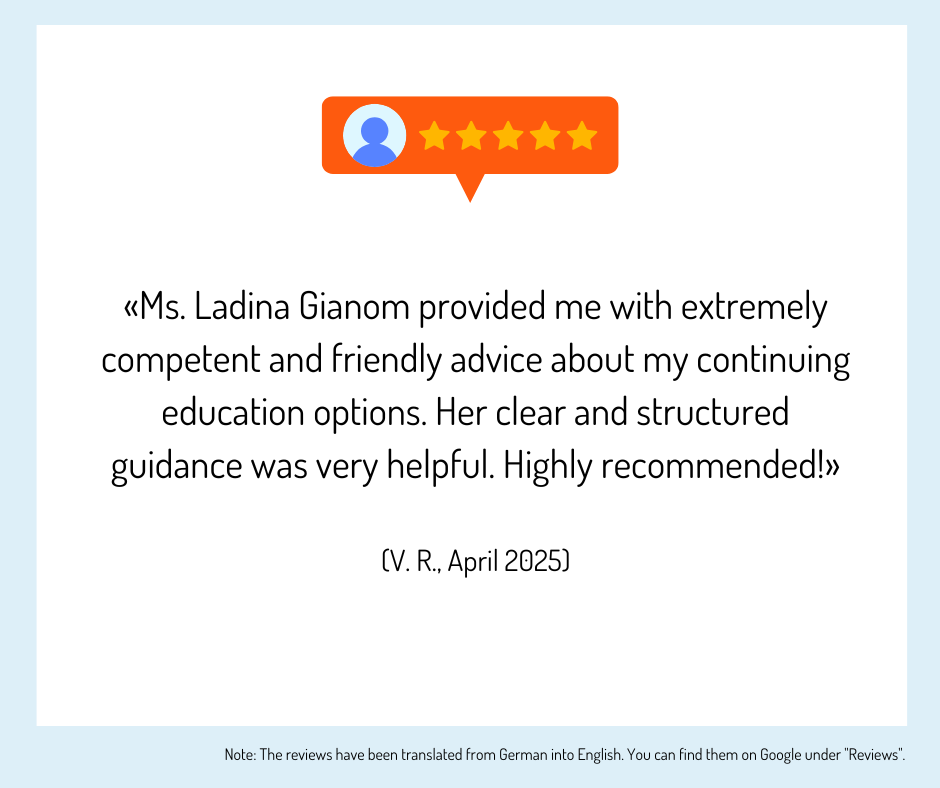
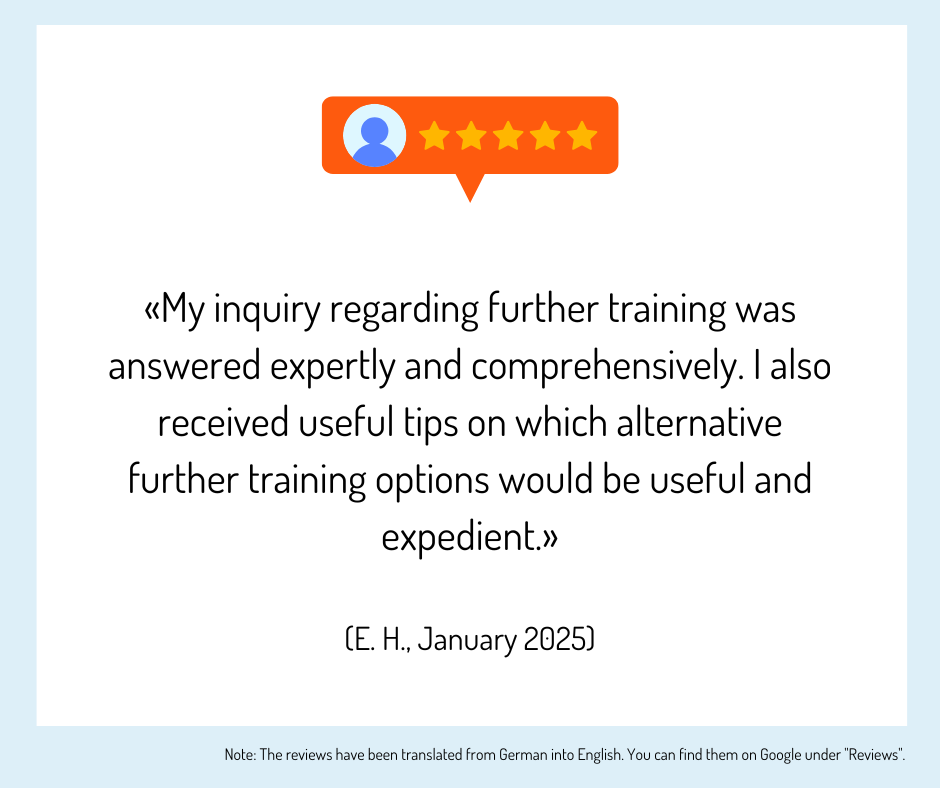
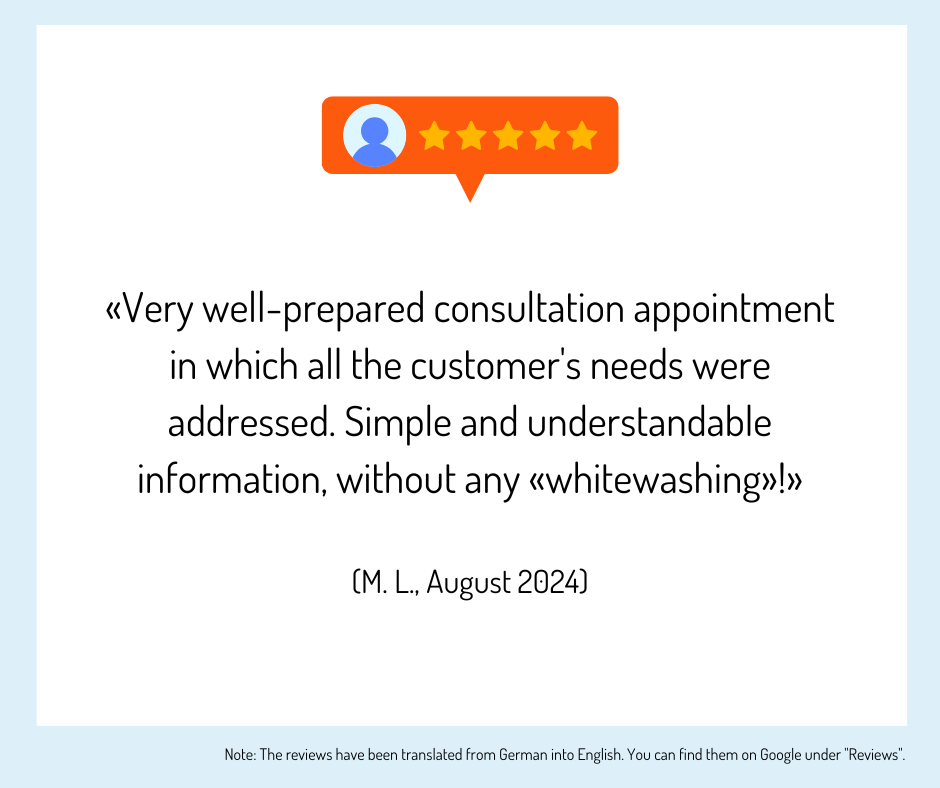
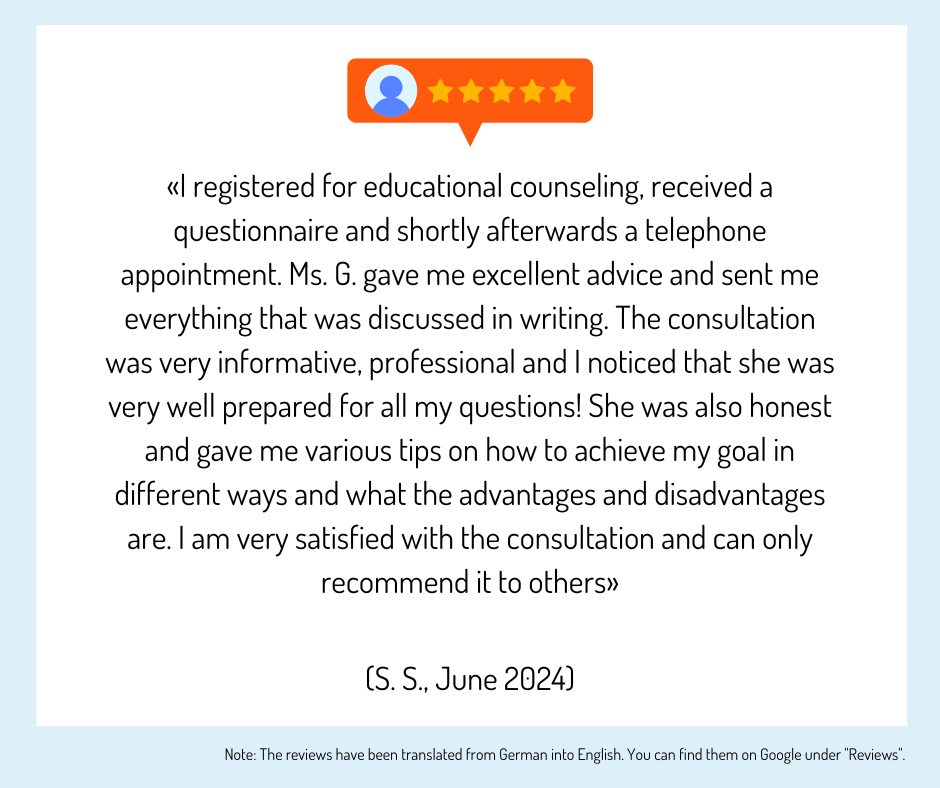
 Experiences, evaluations and opinions on training / further education
Haven't found the right training or further education yet? Benefit from educational advice now!
Further training is not only important in order to maintain or increase professional attractiveness, investing in training or further training is still the most efficient way to increase the chances of a pay rise.
The Swiss education system offers a wide range of individual training and further education opportunities - depending on your personal level of education, professional experience and educational goals.
Choosing the right educational offer is not easy for many prospective students.
Which training and further education is the right one for my path?
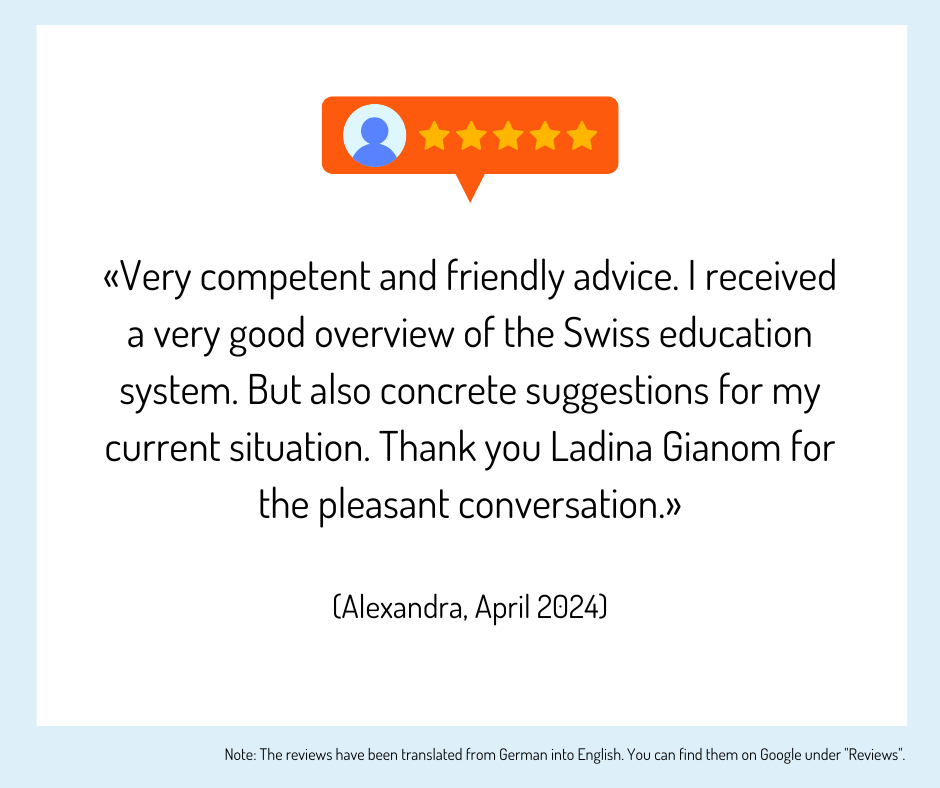
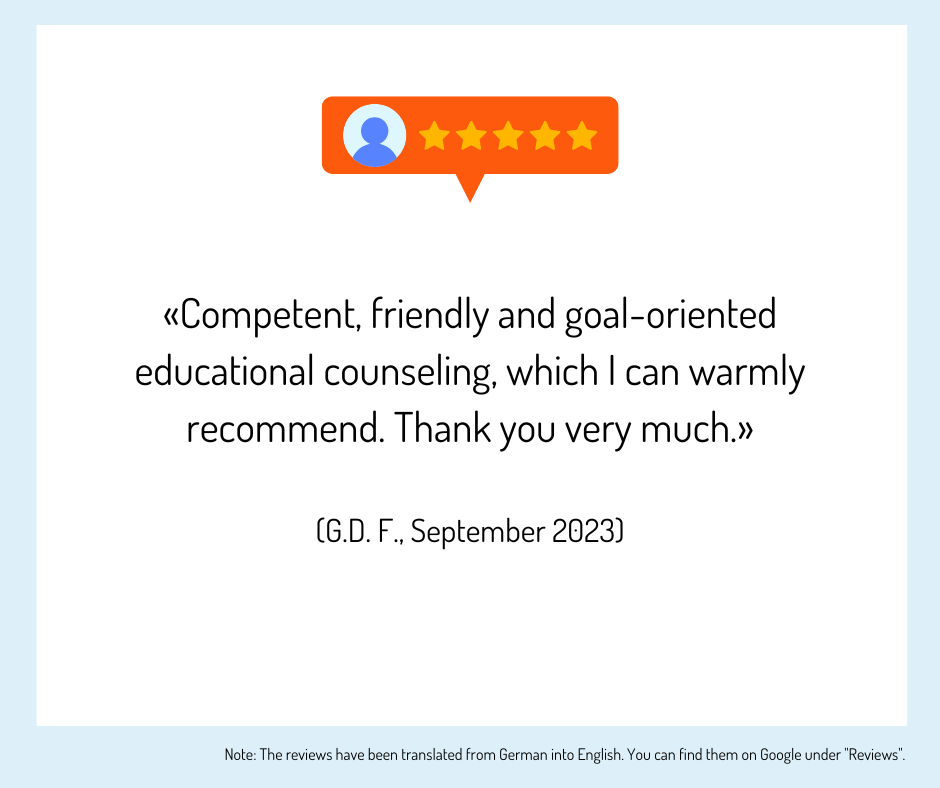
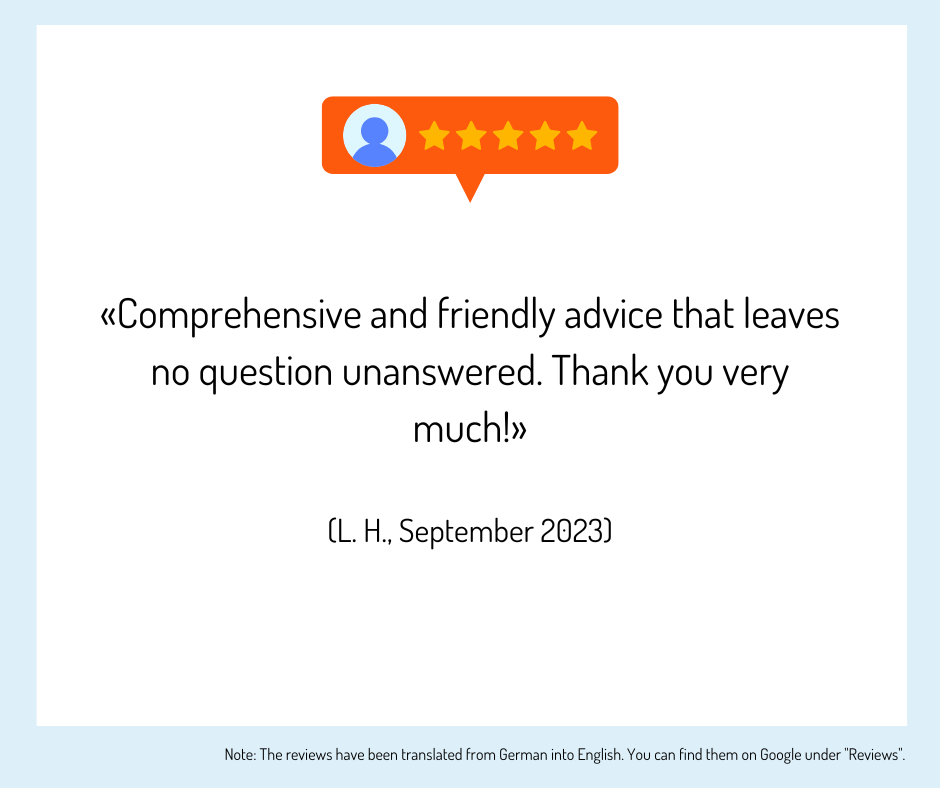
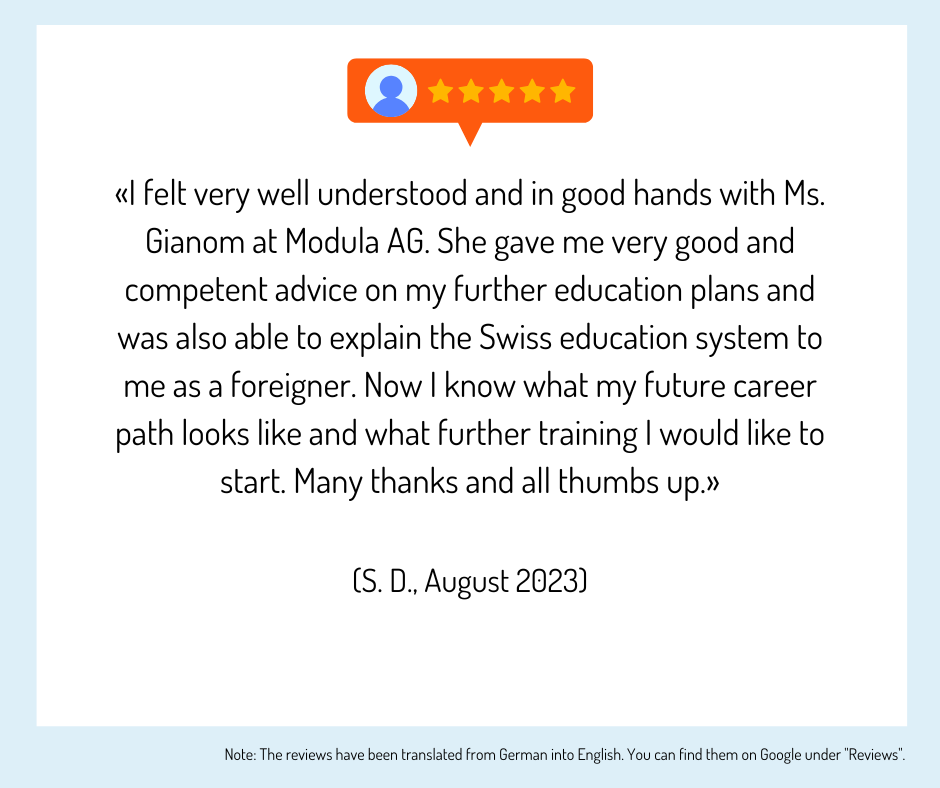
Our education advisory team will guide you through the "education jungle", providing specific input and relevant background information to help you choose the right offer.
Your advantages:
You will receive
- Suggestions for suitable courses, seminars or training programs based on the information you provide in the questionnaire
- An overview of the different levels and types of education
- Information about the Swiss education system
We offer our educational counseling in the following languages on request: French, Italian, English
Register now and concretize your training plans.


Immediately to the right training
Grüentalstrasse 14
8820 Wädenswil

 Download info
Schools with certified educational counseling

Attraktive Services für Swisscom Mitarbeitende
Kostenlose Services
» Bildungsberatung (Wert: CHF 150.–)
Bildungs- und Businessratgeber (Wert: CHF 175.–)
» Rabatte
Attraktive Rabattierungen seitens der Bildungsanbieter.
» Massgeschneiderte Bildungsangebote
Ohne grossen Zeitaufwand den besten Trainer, Coach oder Schulungsanbieter finden
Bildungsangebot Schweiz
Aus über 700 Bildungsanbietern das richtige Bildungsangebot finden