Nursing specialist (CHE) (Region Aargau):
2 Provider


The following list shows you suitable providers of College of Higher Education in Nursing:
Südallee 22
5001 Aarau
 Strengths:
Practical - varied - modern teaching methods - committed teaching staff - federal diploma - cantonal tuition fees - blended learning - attractive career prospects
Strengths:
Practical - varied - modern teaching methods - committed teaching staff - federal diploma - cantonal tuition fees - blended learning - attractive career prospects

 Download info
Ziegelstrasse 4
4632 Trimbach b. Olten
Download info
Schools with certified educational counseling

Questions and answers
What personal requirements are important as a nursing specialist?
Nursing professionals need empathy, resilience and a sense of responsibility.
The job requires both social and technical skills, as you work with people every day.
Typical requirements:
- Empathy and communication skills
- Physical and mental resilience
- Sense of responsibility
- Ability to work in a team
Conclusion:
The job requires a high level of social competence and commitment in dealing with people.
Nursing professionals: How is a lateral entry possible?
In principle, a lateral entry into the nursing profession is possible. Training to become a qualified nurse CHE takes 3 years full-time or 4 years part-time. The following admission requirements must be met in order to start the course:
- Federal Diploma of Vocational Education and Training (VET Diploma), vocational, technical or Baccalaureate, technical secondary school certificate or equivalent qualification
- Passed aptitude test
The admission requirements vary depending on the school and can be stricter, for example some schools require a Federal VET Diploma in the healthcare sector or they carry out admission procedures. This must be clarified on an individual basis.
CHE part-time nursing: Does part-time training as a nurse take longer than full-time training?
Continuing education, further training to become a qualified nurse CHE can be completed either full-time or part-time - as a part-time CHE nursing degree. The duration of study depends on the chosen model and is three years for a full-time course and three to four years for a part-time course, depending on professional activity and school attendance. However, the prerequisite is a workload of at least 50% in nursing. The College of Higher Education also offers the option of a shortened training period of two years for people with a Federal VET Diploma as a healthcare specialist (FaGe).
Nursing training: Is it true that I can do a shorter training course to become a nurse with an apprenticeship as a healthcare specialist?
Yes, with training as a healthcare specialist (FaGe), it is often possible to shorten the entry period to CHE nursing.
The previous knowledge is credited for the nursing training, which can shorten the duration of the training (by up to 1800 hours - means only 4 instead of 6 semesters). The exact conditions vary depending on the school.
Conclusion:
The FaGe degree is a good introduction to nursing and can shorten the path to becoming a nurse. Find out about specific options from providers.
Nursing training: What are the reasons for an interest in further training as a "Nursing Specialist HF"?
We can answer this question with the results of a survey conducted by Ausbildung-Weiterbildung.ch among those interested in nursing training. According to these, 68% of respondents said "I would like to see if this course meets my needs". On the other hand, 21% stated that the HF nursing specialist course had been recommended to them. On the other hand, only 11% of survey participants stated that their interest was based on a mention of the HF nursing specialist course in job advertisements.
Of course, the interest in further training as a qualified nurse is also based on simply wanting to continue their education. Free text responses on nursing training also show this "I completed FAGE in 2016. Worked until now. Now I would like to continue my education...", "I work a lot in this field and would also like recognition", "I work in the hotel industry in a clinic", "To have more specialist knowledge and more skills", "I am interested in nursing in general", "Out of pure interest, it has always been a dream job", "To reorient myself professionally" and "I would like to expand my skills in Switzerland".
Other answers show the enjoyment of the job, the desire for change or a change of residence and a new activity as triggers for interest: "I worked as a paramedic and I really liked it", "on the way to becoming a paramedic....", "would like to change", "I have experience in this subject but abroad", "I have always been interested in it", "I would like to know what this training is like today", "would like to continue my education", "trained healthcare professional", "I have been interested in it for a long time, now it is time for a change", "improve my professional development", "because it interests me", "I like working with older people", "I am interested in the health sector", "I am interested in training with practice and theory", "I need to retrain due to an accident at work", "I would like to complete HF while working", "I enjoy dealing with various clients", "I would like to help other people, especially in crisis areas", "I would like to switch to the health sector.", "I love nursing", "Very motivated to work in this field", "Re-entry and professional qualification" and "Because I want to help people".
What does a College of Higher Education teach in continuing, further training as a nursing specialist?
The College of Higher Education in Nursing (CHE Nursing) provides sound knowledge and practice-oriented skills in the following areas as part of continuing education, further training in nursing:
- Nursing and nursing sciences: imparting theoretical and practical knowledge of professional nursing, supplemented by current nursing science findings.
- Clinical expertise: In-depth knowledge of clinical pictures, diagnostics, therapies and their application in different care settings.
- Human sciences: Fundamentals of psychology, sociology, ethics and pedagogy for the holistic care of people.
- Work processes in nursing: structured approaches in the nursing process, professional communication, efficient knowledge management and organization in nursing practice.
This course content is the ideal preparation for taking on complex nursing tasks independently and ensuring the quality of nursing care in the long term.
The exact content may vary depending on the school, as each institution sets its own priorities. To obtain specific information, our contact form can be used to forward specific questions directly to the desired school. Contact a school now and find out more!
What previous education is required for the College of Higher Education in Nursing?
Completion of vocational training or an equivalent qualification is generally required for the College of Higher Education in Nursing.
Practical experience in the healthcare sector may also be required. The requirements may vary depending on the school.
Typical requirements:
- Completed vocational apprenticeship Federal VET Diploma or Matura (shortened course of study if graduating as a health specialist Federal VET Diploma)
- Interest in the healthcare sector
- Partial professional experience in the care sector
- Aptitude assessment (various admission procedures: Letter of application, aptitude test regarding professional, methodological and personal competence, practical insight, submission of a portfolio, assessment interview and possibly health certificate)
Conclusion:
CHE nursing requires a solid basic education and motivation for the nursing profession.
Nursing professions in Switzerland: Where can I work after completing a College of Higher Education in Nursing CHE?
After completing your CHE nursing training, you can work in various healthcare facilities.
There is a wide range of possible applications, from hospitals to outpatient care.
Typical work locations:
- Hospitals and clinics
- Nursing homes
- Spitex organizations
- Rehabilitation centers
Conclusion:
The course offers a wide range of employment opportunities in the healthcare sector in Switzerland.
How much effort is involved in self-study for the HF nursing specialist course?
A survey of training graduates provides an idea of the time and effort involved in self-study for HF nursing specialists. According to this survey, graduates of continuing education courses spent the following amount of time per week:
- 1 percent less than one hour
- 8 percent one to two hours
- 20 percent three to four hours
- 18 percent five to six hours
- 19 percent seven to eight hours
- 11 percent nine to ten hours
- 8 percent eleven to fifteen hours
- 15 percent more than fifteen hours
What further development opportunities are there for female HF nurses / male HF nurses?
HF nurses have various opportunities for further development:
- Courses offered by hospitals, clinics, specialist organizations and professional associations, etc.
- Higher professional examination (HFP) as
- Specialist in infection prevention in the healthcare sector with a federal diploma
- Naturopath with a federal diploma
- Complementary therapist with a federal diploma
- At a university of applied sciences with a shortened course leading to a Bachelor of Science (FH) in Nursing
- Postgraduate level / specializations in related fields such as anaesthesia, intensive care, emergency care, long-term care and support, psychiatry, geriatric psychiatry, surgery, health promotion, nursing advice or palliative care
How high is my salary during my training at the College of Nursing (HF Pflege)?
The amount of your salary during your training at a higher vocational school for nursing is dependent on the salary recommendations of the OdA G, the organization of the health sector in the individual cantons. The placement company pays the monthly salary, which in Zurich, for example, is currently CHF 1,100 in the first year of training, CHF 1,300 in the second year and CHF 1,500 in the third year. The schools will also provide you with more detailed information on salary recommendations.
What is the difference between CHE and UAS in the nursing profession?
The difference between CHE and UAS in the nursing profession lies in the level of training and the focus.
The CHE is more practice-oriented and more focused on direct care. The UAS has an academic structure and also includes scientific content.
Differences:
- CHE: practical, part-time possible
- UAS: academic, more theoretical and scientific
- University of Applied Sciences opens up more opportunities for study and research
Conclusion:
Both paths lead to the nursing profession, but differ in the depth and focus of the training.
Nurse training Switzerland: Why do people ask schools for detailed information about the course "Pflegefachfrau HF / Pflegefachmann HF"?
A survey conducted by Ausbildung-Weiterbildung.ch among those interested in the HF Nursing Specialist course shows the triggers for inquiries to schools. Around 48% of respondents see an online assessment as the trigger for their school inquiries. For 39% of survey participants, a recommendation triggered the school inquiry. In contrast, 13% already know the school they are enquiring about. Another important trigger for enquiring about a school for nurse training in Switzerland is the location, as shown by optional comments in the survey: "because I was interested in the location of the schools", "close to France and Germany", "close to home", "it can be reached from my address", "close to me", "is close to my home", "close to home", "very easy to reach by public transport" and "is in my town". However, according to the respondents, coincidence or targeted research can also be involved in the school inquiry: "discovered it by chance", "came across it on the internet", "due to a colleague", "start of course" and "after own research". Or a goal such as "I would like to further my education so that I can work better in nursing" or "I would like to learn the profession in depth".
Qualified nursing specialist: What are the most common types of learner?
According to a survey conducted by this educational platform among those interested in the "Certified Nursing Specialist" course, the following frequency of learning types emerged:
- 34 percent Visual learner who learns by seeing
- 33 percent Motor learner who learns by doing
- 25 percent Communicative learner who learns through conversations or discussions with others
- 8 percent Auditory learner who learns by listening
Become a nurse: Do I have to work part-time if I am studying part-time for a HF nursing degree?
You must be able to prove that you are employed at least 50 percent of the time during the Higher Vocational School of Nursing (HF Pflege) course in order to be admitted to this part-time course. It is important that you are not working in just any job, but that you can prove that you are employed in an institution recognized by the HF Pflege. You can find out everything you need to know about this directly from the higher vocational colleges. You will then know how you can become a nursing specialist.
Tips, tests and information on CHE nursing for "CHE nursing specialist"



 Error found? -
Experiences, evaluations and opinions on training / further education
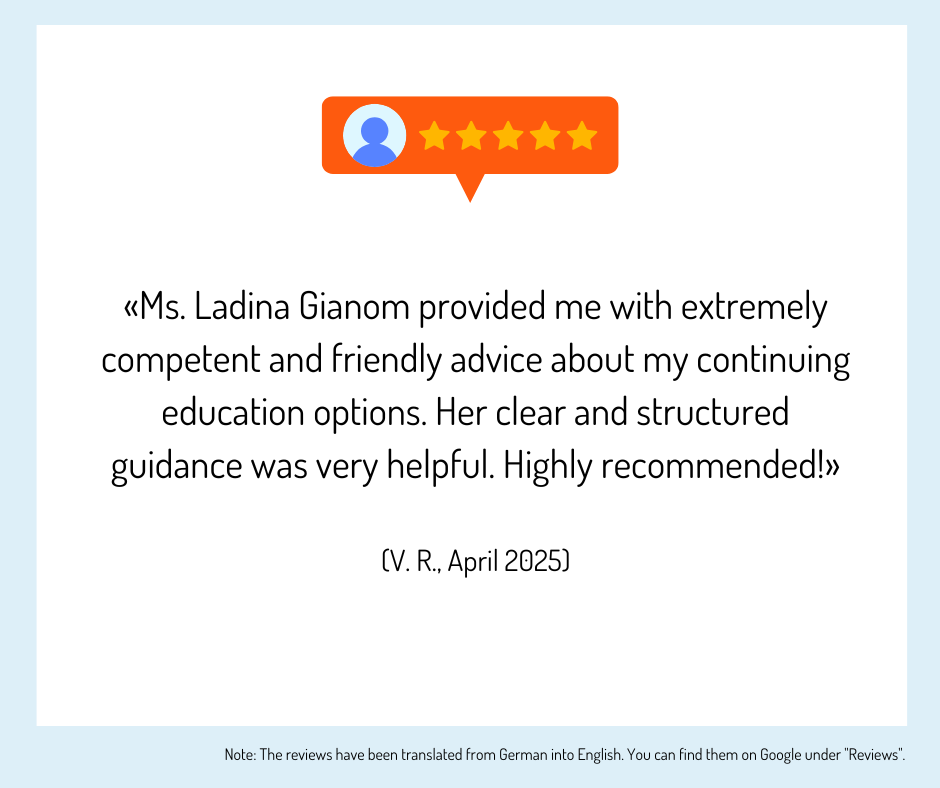
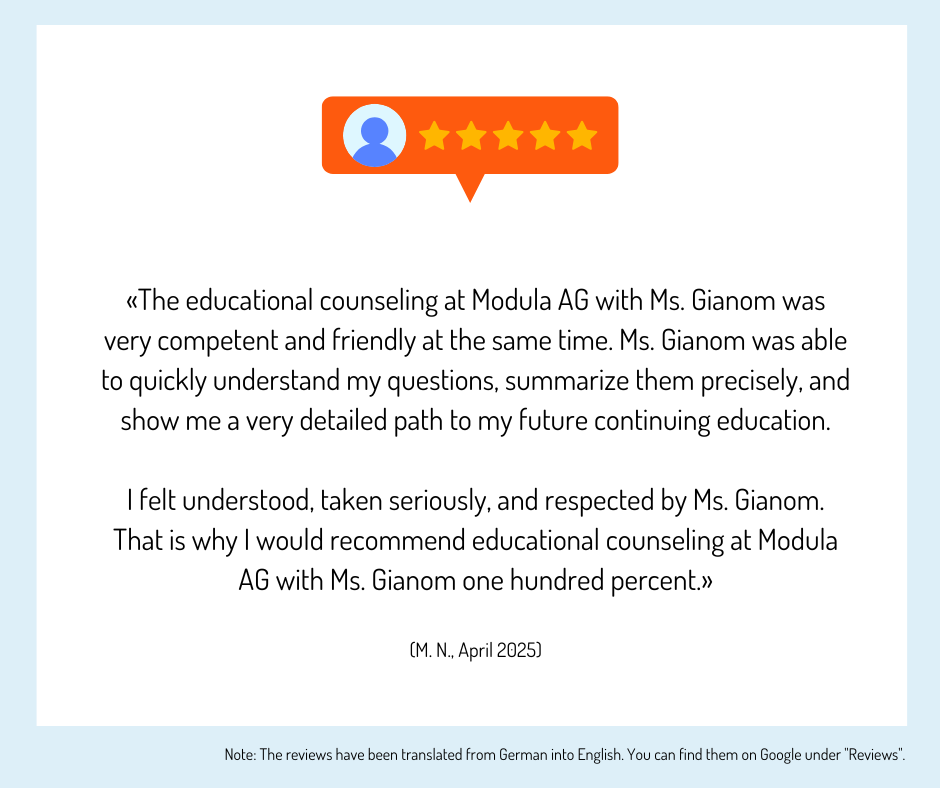
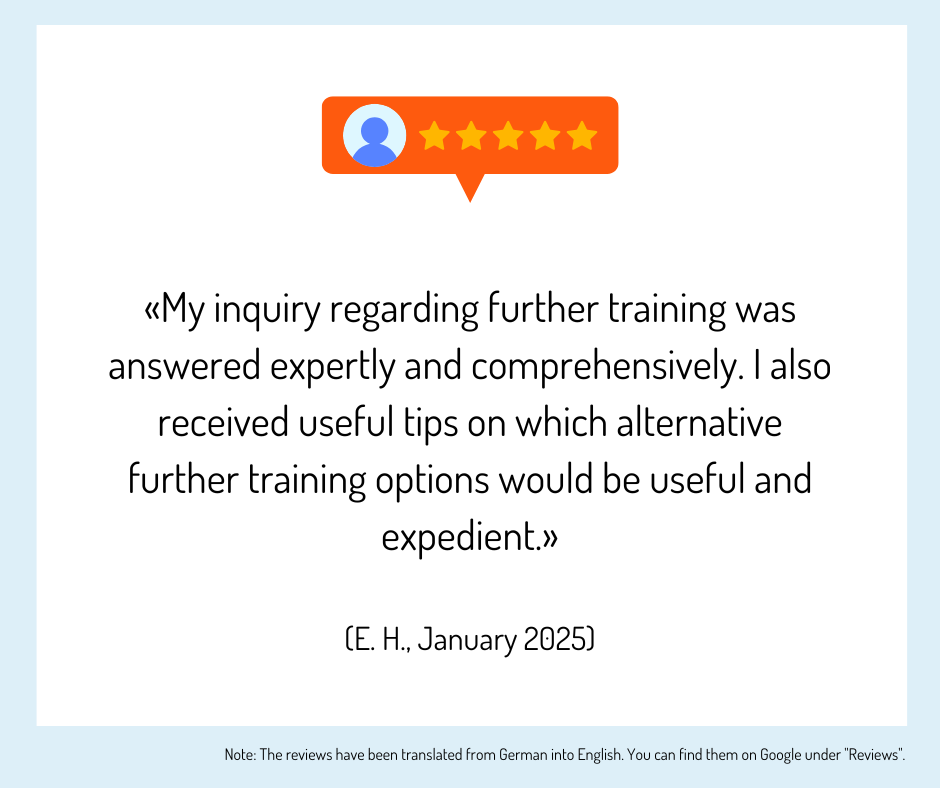
Haven't found the right training or further education yet? Benefit from educational advice now!
Further training is not only important in order to maintain or increase professional attractiveness, investing in training or further training is still the most efficient way to increase the chances of a pay rise.
The Swiss education system offers a wide range of individual training and further education opportunities - depending on your personal level of education, professional experience and educational goals.
Choosing the right educational offer is not easy for many prospective students.
Which training and further education is the right one for my path?
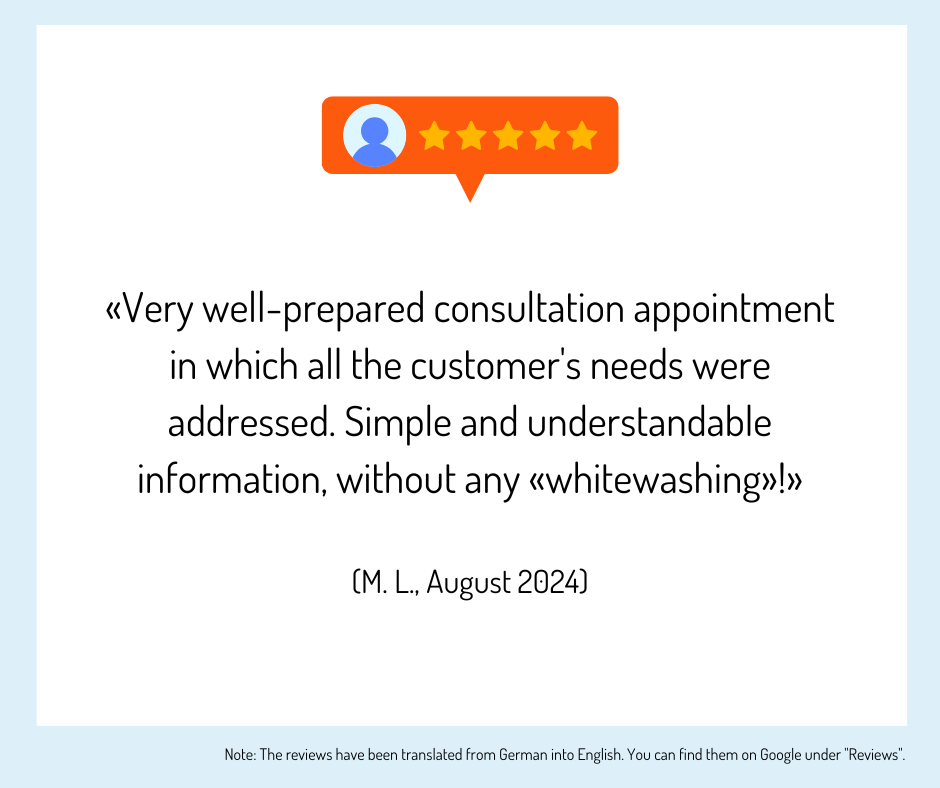
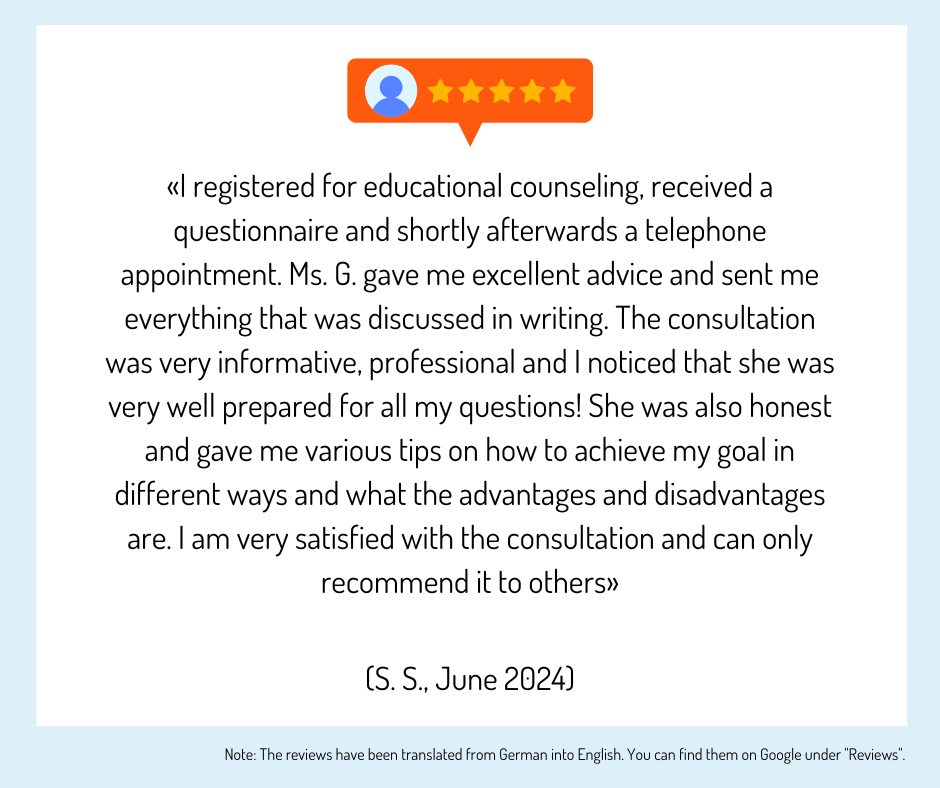
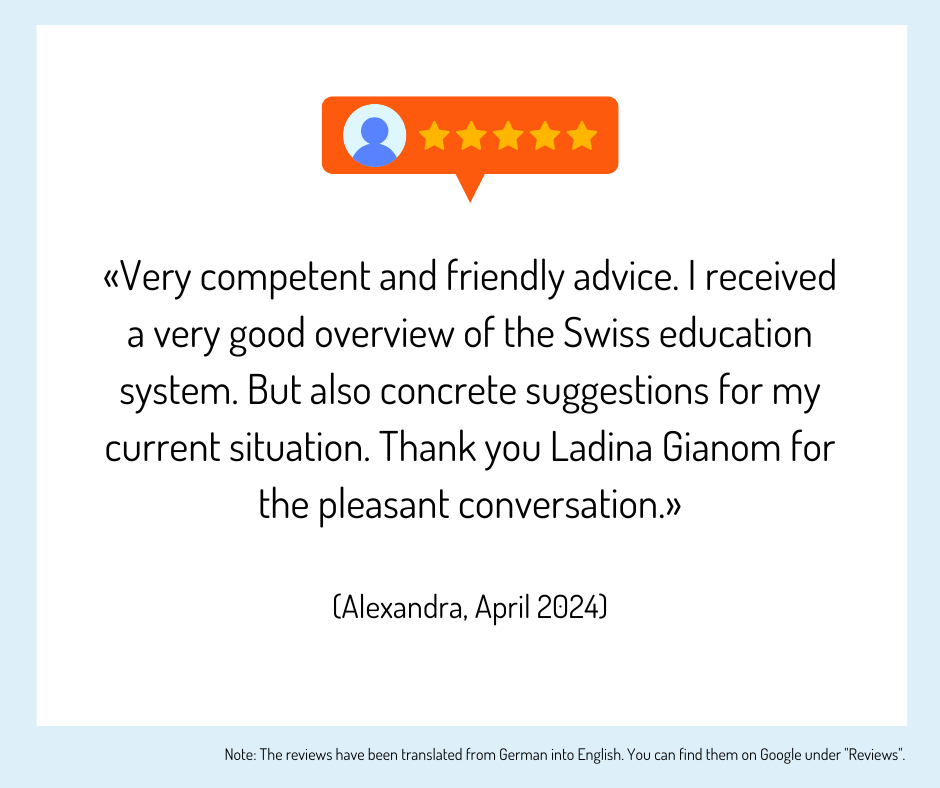
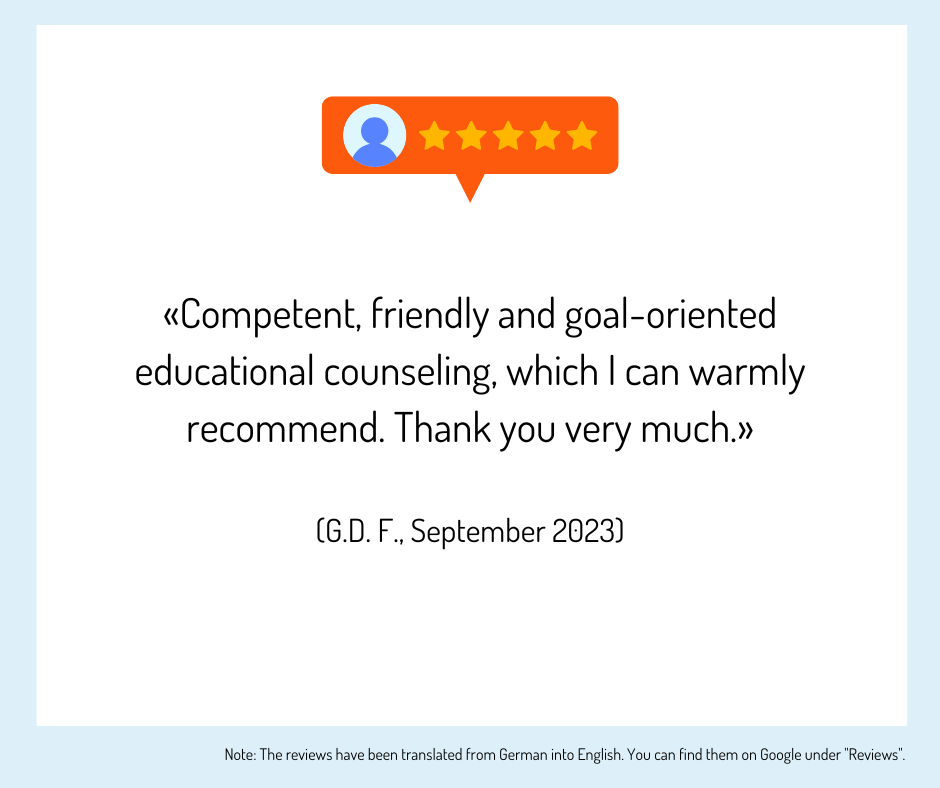
Our education advisory team will guide you through the "education jungle", providing specific input and relevant background information to help you choose the right offer.
Your advantages:
You will receive
- Suggestions for suitable courses, seminars or training programs based on the information you provide in the questionnaire
- An overview of the different levels and types of education
- Information about the Swiss education system
We offer our educational counseling in the following languages on request: French, Italian, English
Register now and concretize your training plans.
Attraktive Services für Swisscom Mitarbeitende
Kostenlose Services
» Bildungsberatung (Wert: CHF 150.–)
Bildungs- und Businessratgeber (Wert: CHF 175.–)
» Rabatte
Attraktive Rabattierungen seitens der Bildungsanbieter.
» Massgeschneiderte Bildungsangebote
Ohne grossen Zeitaufwand den besten Trainer, Coach oder Schulungsanbieter finden
Bildungsangebot Schweiz
Aus über 700 Bildungsanbietern das richtige Bildungsangebot finden