Returning to work: providers, information, tips, FAQs



Take the step back with a return to work
Questions and answers
What are the advantages of returning to work after maternity leave?
Returning to work after maternity brings you both professional and personal benefits. Targeted re-entry after maternity continuing education, further training or a re-entry course can also help you to get back into the job market more quickly.
The most important advantages include:
- Financial independence: own income and more security in everyday life
- Professional development: you can continue or realign your career in a targeted manner
- Updating knowledge: you stay up to date professionally
- Social contacts and networking: exchanging ideas with colleagues and building new professional relationships
- Personal fulfillment: many experience the return to work as invigorating and motivating
Continuing education, further training or a course on returning to work after maternity additionally supports you with application coaching, refresher courses and often flexible learning models. This makes the transition back into working life more structured and secure.
Conclusion: Returning to work after maternity leave offers you the chance to get your career back on track and actively shape your future. Find out about suitable courses or request non-binding documents to help you plan your return to work.
Are there only counseling sessions or also courses for re-entry into working life?
In addition to individual coaching sessions, there are also seminars designed to make it easier for you to return to work. These cover a wide range of topics and teach you various methodological, social and personal skills. You will carry out a location analysis, formulate your goals and wishes and determine your further training needs, learn how to rewrite your CV and make contacts. As each seminar in the area of professional reorientation or professional re-entry has a different focus, you should definitely obtain detailed information about the objectives of the course, the target group, the duration and the methods before registering. Simply use our contact form (free of charge and without obligation) and you will receive all the information by email or post.
How can I plan my return to work properly?
A successful re-entry requires good preparation and planning, even if you are returning to a familiar job.
Tips for your planning:
- Refresh your specialist knowledge: Attend courses, seminars or internships to acquire up-to-date knowledge.
- Realistically assess your work profile: Show employers your strengths and experience.
- Make motivation and commitment visible: Show that you have taken active steps, e.g. continuing education, further training or internship.
- Analyze your prospects: Think about which roles and industries are exciting for you and plan your return specifically.
- Use your professional experience: The knowledge and experience you have already gained remains a clear advantage.
This will increase your chances of a successful re-entry and find suitable new career prospects.
How can a housewife return to work?
Returning to work after taking time out as a housewife can be challenging, especially balancing work and family life. In Switzerland, statutory protection against dismissal ends 16 weeks after giving birth, after which there are no special protective regulations.
Tips for a successful return to work:
- Show self-confidence and recognize your own potential
- Realistic assessment of your own skills
- Use soft skills, e.g. communication skills, organizational talent, conflict resolution, reliability and professional experience
- Look into part-time opportunities, but bear in mind that pay and promotion prospects are often lower
- Consider your own motivation: Variety, self-realization and confirmation play an important role
Especially after a short break, women returning to work often bring with them valuable experience and skills that set them apart from younger female career starters.
Does it make more sense to return to work part-time or full-time?
Whether you return to work part-time or full-time depends on many different factors, such as your personal situation and available time, your role, the industry you worked in and want to return to and your career goals. Unfortunately, it is not yet possible to obtain part-time employment in higher positions in all industries and companies, but in less qualified professions it is easily possible. It is therefore always up to you to decide which employment relationship is sensible and realistic for you personally. Advice on returning to work can be helpful when considering and implementing your goals.
I'm already over fifty and would finally like to return to my old job after more than 20 years. Is it that easy?
Returning to work after a long absence can sometimes be quite problematic, especially in professions that require specialized knowledge, which develop quickly and are continuously adapted to the current state of knowledge. Depending on the profession you worked in, a 20-year absence can therefore make it difficult to return to your old position and often requires further training to (re)acquire the necessary skills and competencies. In many professions, however, returning to work is less problematic, for example in retail, hospitality or construction. Career counseling that discusses your goals and opportunities with you, shows you ways forward and works with you to implement them is highly recommended in such cases.
Is a seminar on "Returning to work" only aimed at women after a maternity leave?
Returning to work affects many people - not just women after parental leave. Although numerous offers are aimed specifically at mothers who want to return to work after taking time out to raise a family, a seminar on the topic of "returning to work" is generally open to anyone who has been out of work for a certain period of time.
Possible reasons for a career break could be
- a prolonged illness or chronic health restrictions
- Caring for relatives
- a burnout or other psychological stress
- a longer stay abroad
- a professional reorientation
- other personal or family circumstances
Re-entry coaching or appropriate advice can provide targeted help to facilitate entry into the job market - regardless of personal background or the reason for the break. Individual coaching sessions in particular are geared towards the participant's current life and professional situation. This does not involve working with blanket solutions, but with concrete steps towards professional integration that are tailored to the respective starting situation.
What does such coaching actually offer?
Re-entry coaching can cover the following topics, among others:
- Positioning and target definition
- Strengthening self-confidence and motivation
- Support with your application and job search
- Support with professional reorientation
- Advice on continuing education, further training or retraining
The content of the seminar on the topic of "Returning to work" varies depending on the provider and can be individually adapted.
Note:
The exact content and requirements for seminars, coaching or counseling services may vary depending on the school or institution. We recommend contacting the desired educational institution directly for more information. You can use our contact form to conveniently forward your inquiry to the relevant school with the seminar on the topic of "Professional re-entry".
What is important when returning to work after illness?
A return to work after illness should be well planned and gradual so that you can keep your health stable and find your way back into everyday working life in the long term. Continuing education, further training or a return to work course can also help you to regain your professional and organizational footing.
The following points are particularly important:
- Medical clarification: only start if the health situation is stable
- Gradual return: increase your workload slowly instead of starting full-time immediately
- Open communication: talk to employers about opportunities at an early stage
- Realistic workload: adjust tasks and scope of work
- Self-management: consciously managing breaks, energy levels and stress
A continuing education, further training or re-entry course after illness also helps you to boost your self-confidence, reactivate work routines and close any gaps in your knowledge. Topics such as time management or job application training are also often integrated if a new start in your career is necessary.
Conclusion: A well-planned return to work after illness increases your stability and long-term ability to work. Find out about suitable offers or request non-binding documents to help you plan your return to work in a safe and structured way.
Tips and information on returning to work

 Error found? -
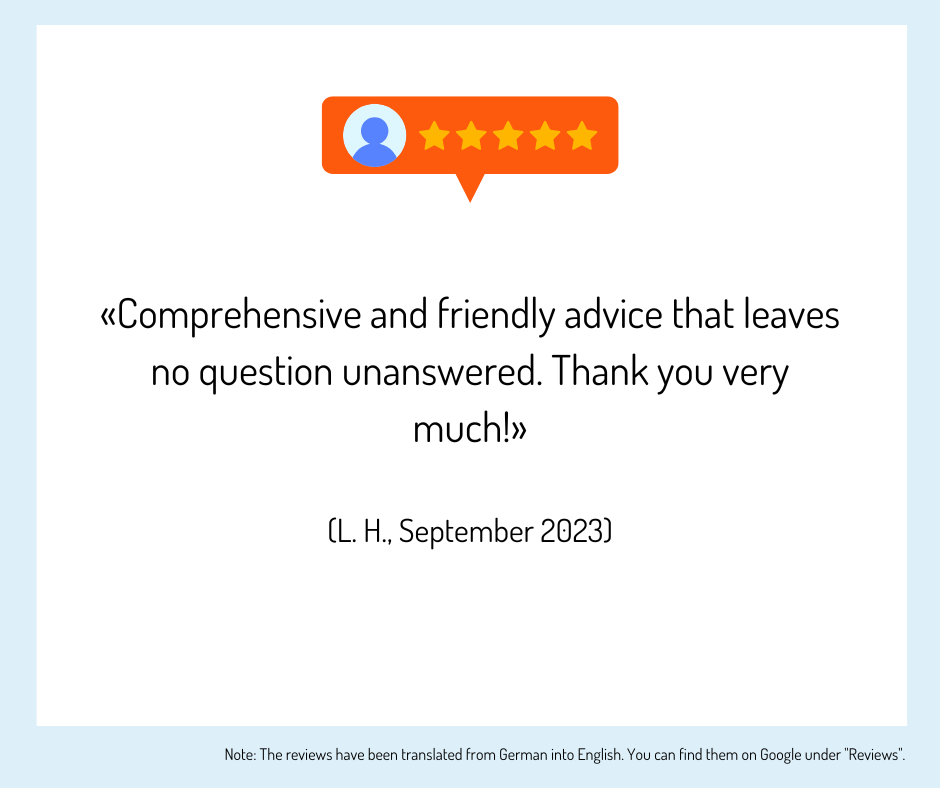
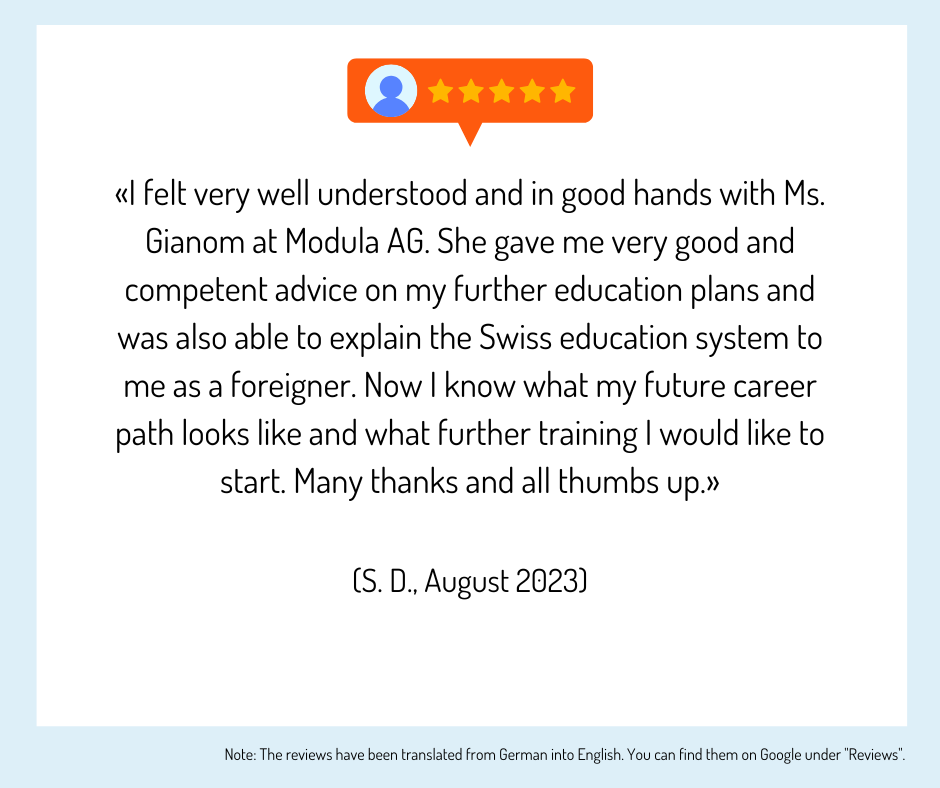
 Experiences, evaluations and opinions on training / further education
Haven't found the right training or further education yet? Benefit from educational advice now!
Further training is not only important in order to maintain or increase professional attractiveness, investing in training or further training is still the most efficient way to increase the chances of a pay rise.
The Swiss education system offers a wide range of individual training and further education opportunities - depending on your personal level of education, professional experience and educational goals.
Choosing the right educational offer is not easy for many prospective students.
Which training and further education is the right one for my path?
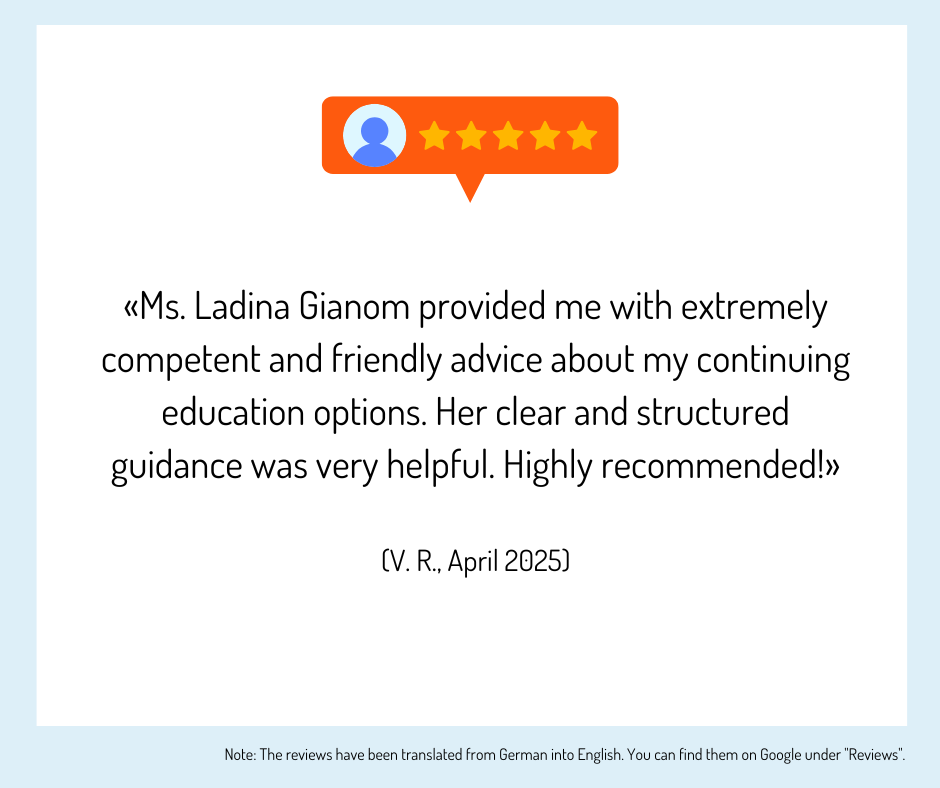
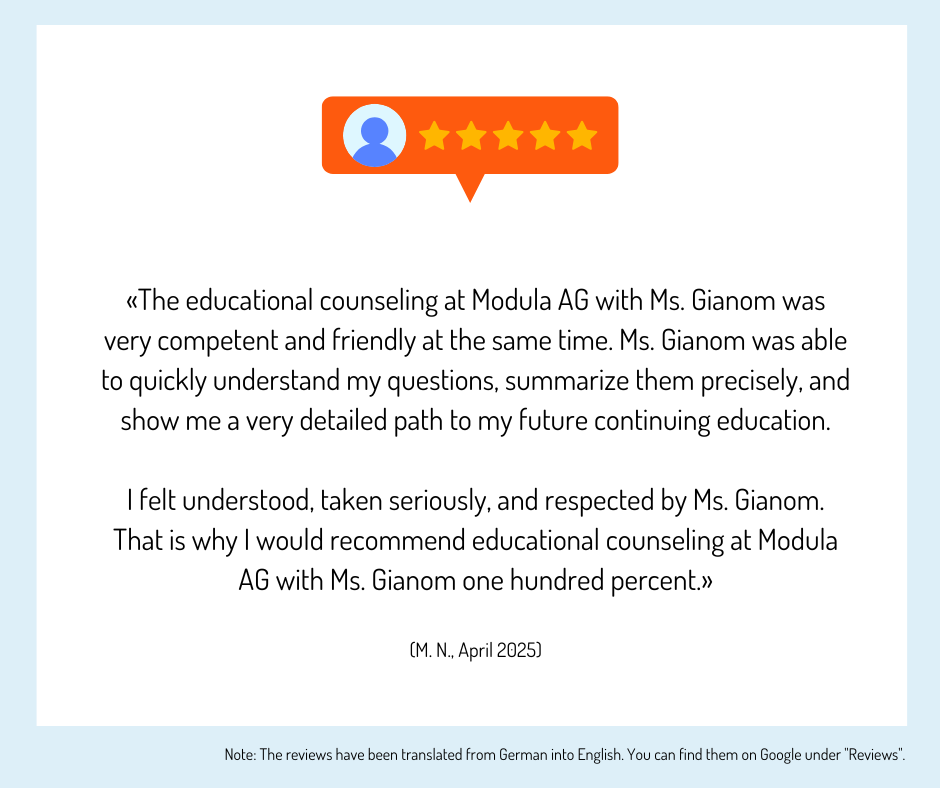
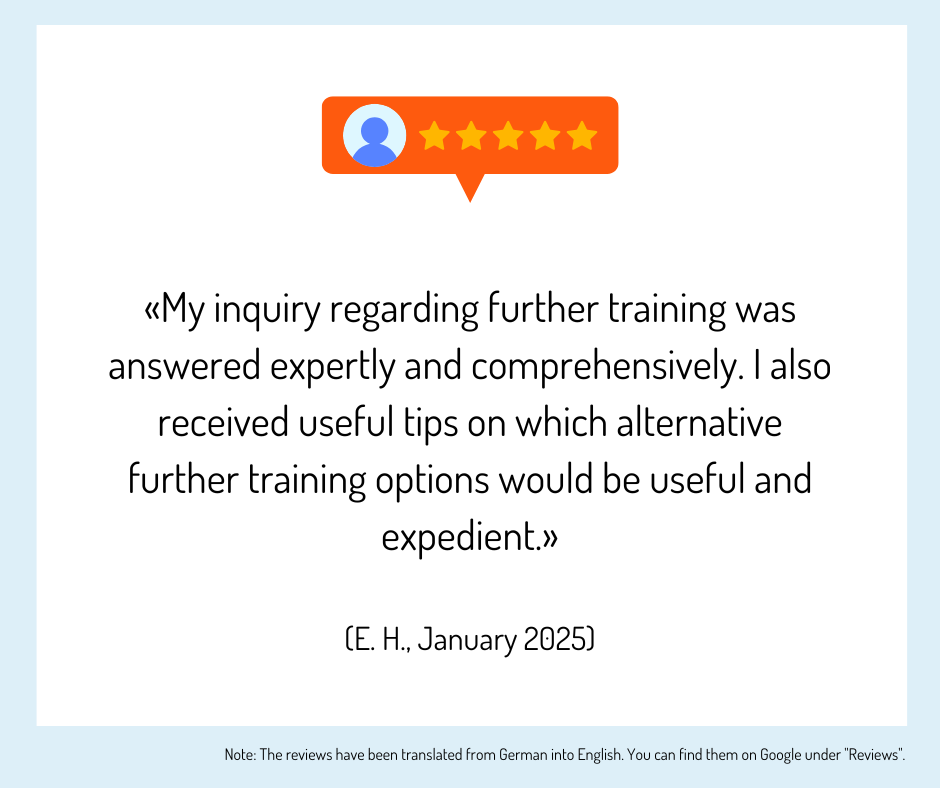
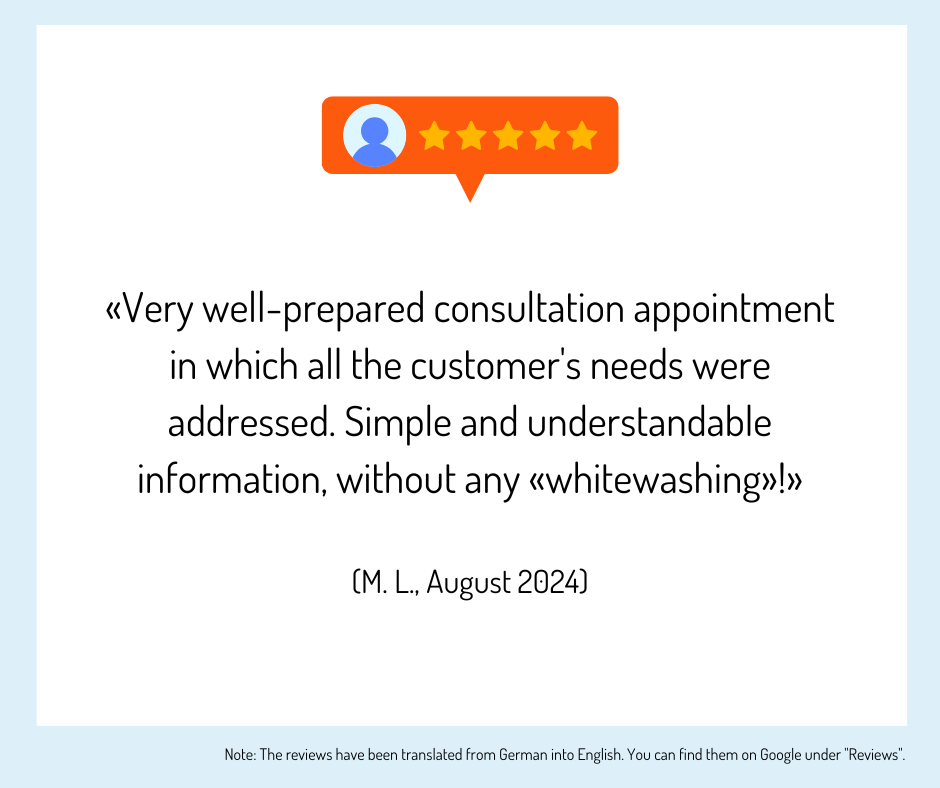
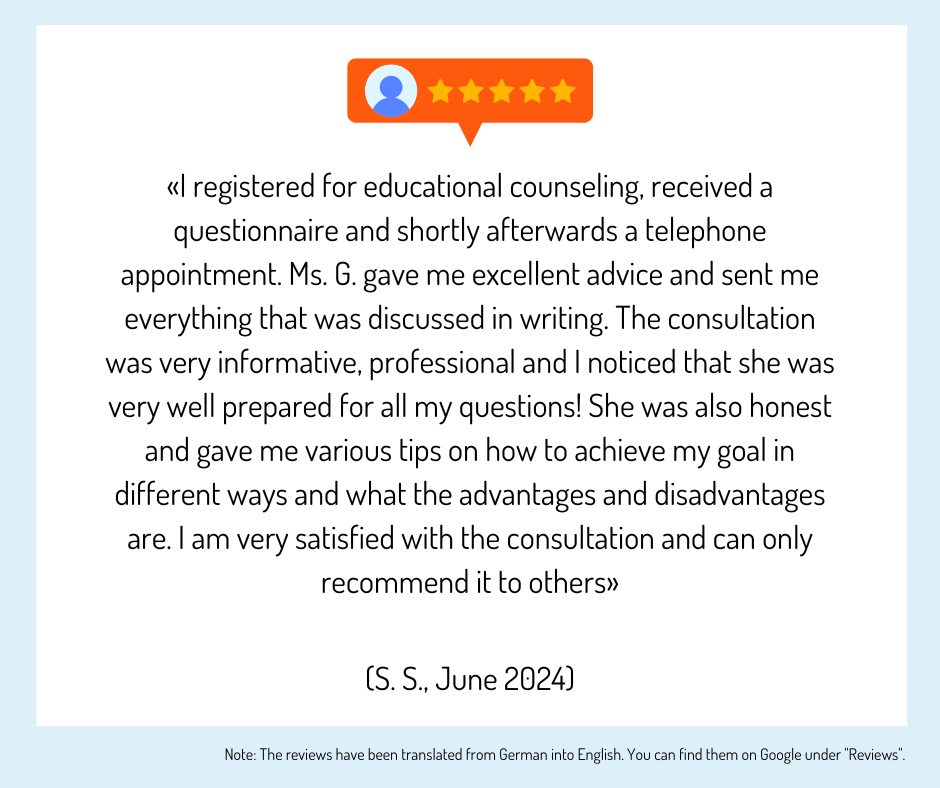
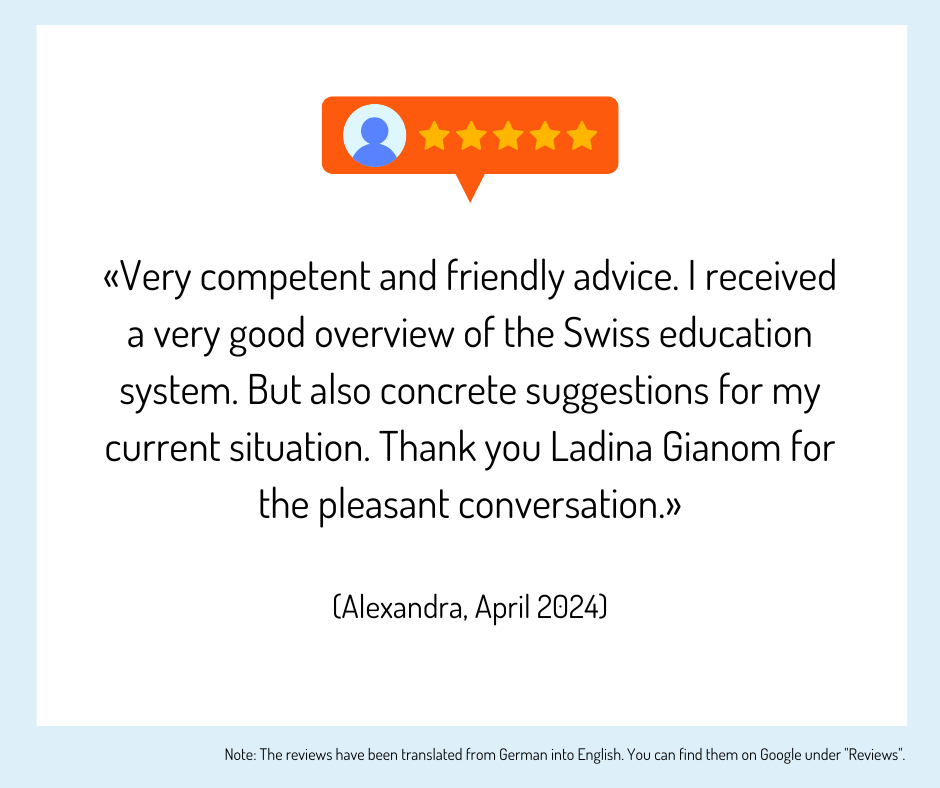
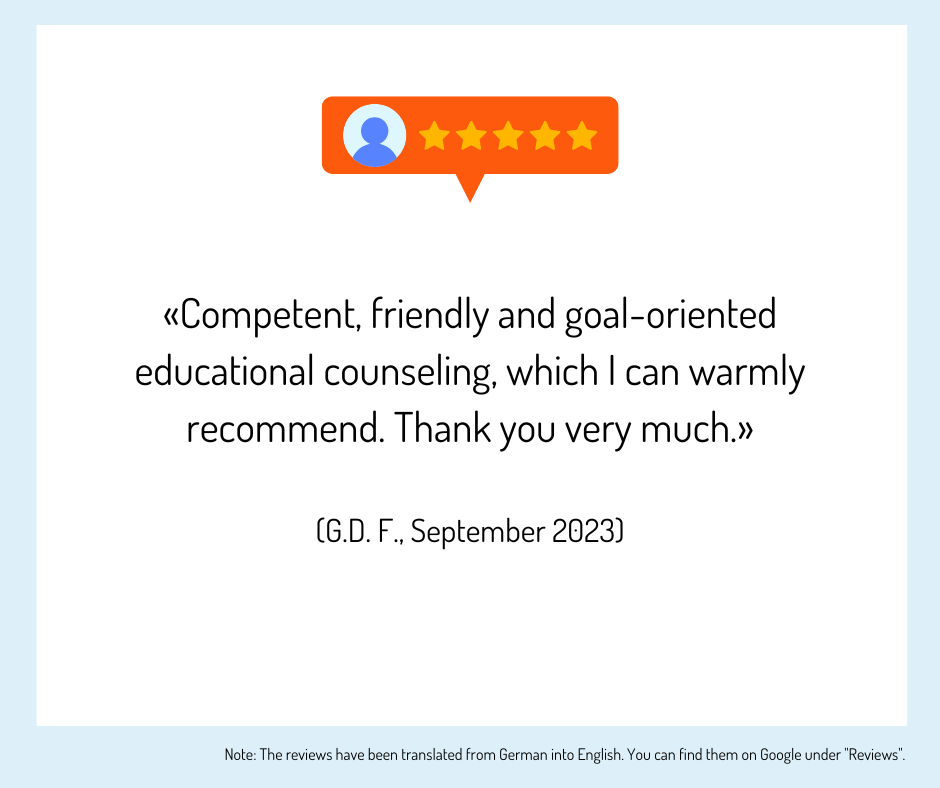
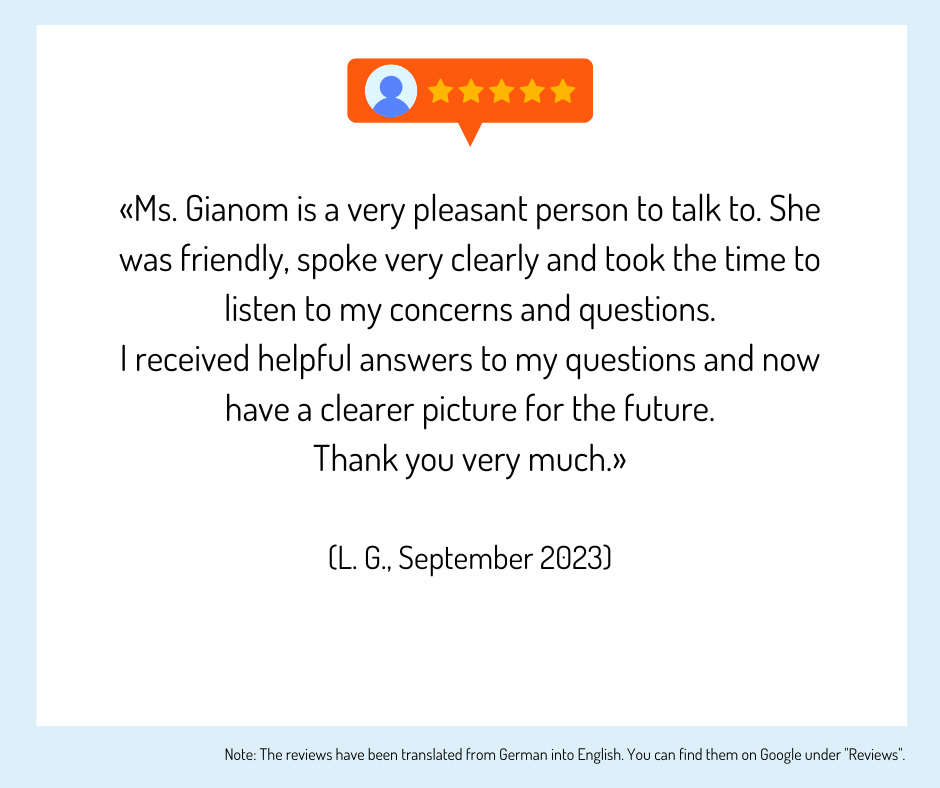
Our education advisory team will guide you through the "education jungle", providing specific input and relevant background information to help you choose the right offer.
Your advantages:
You will receive
- Suggestions for suitable courses, seminars or training programs based on the information you provide in the questionnaire
- An overview of the different levels and types of education
- Information about the Swiss education system
We offer our educational counseling in the following languages on request: French, Italian, English
Register now and concretize your training plans.
The following list shows you providers of suitable courses and advice:
Tösstalstrasse 37
8400 Winterthur
 Strengths:
Personal, practical and high-quality - these are our values.
Strengths:
Personal, practical and high-quality - these are our values.

 Download info
Schools with certified educational counseling

Attraktive Services für Swisscom Mitarbeitende
Kostenlose Services
» Bildungsberatung (Wert: CHF 150.–)
Bildungs- und Businessratgeber (Wert: CHF 175.–)
» Rabatte
Attraktive Rabattierungen seitens der Bildungsanbieter.
» Massgeschneiderte Bildungsangebote
Ohne grossen Zeitaufwand den besten Trainer, Coach oder Schulungsanbieter finden
Bildungsangebot Schweiz
Aus über 700 Bildungsanbietern das richtige Bildungsangebot finden