Self-Assessment: Is the “Mechanical Engineering (CHE)” program the right fit for me?
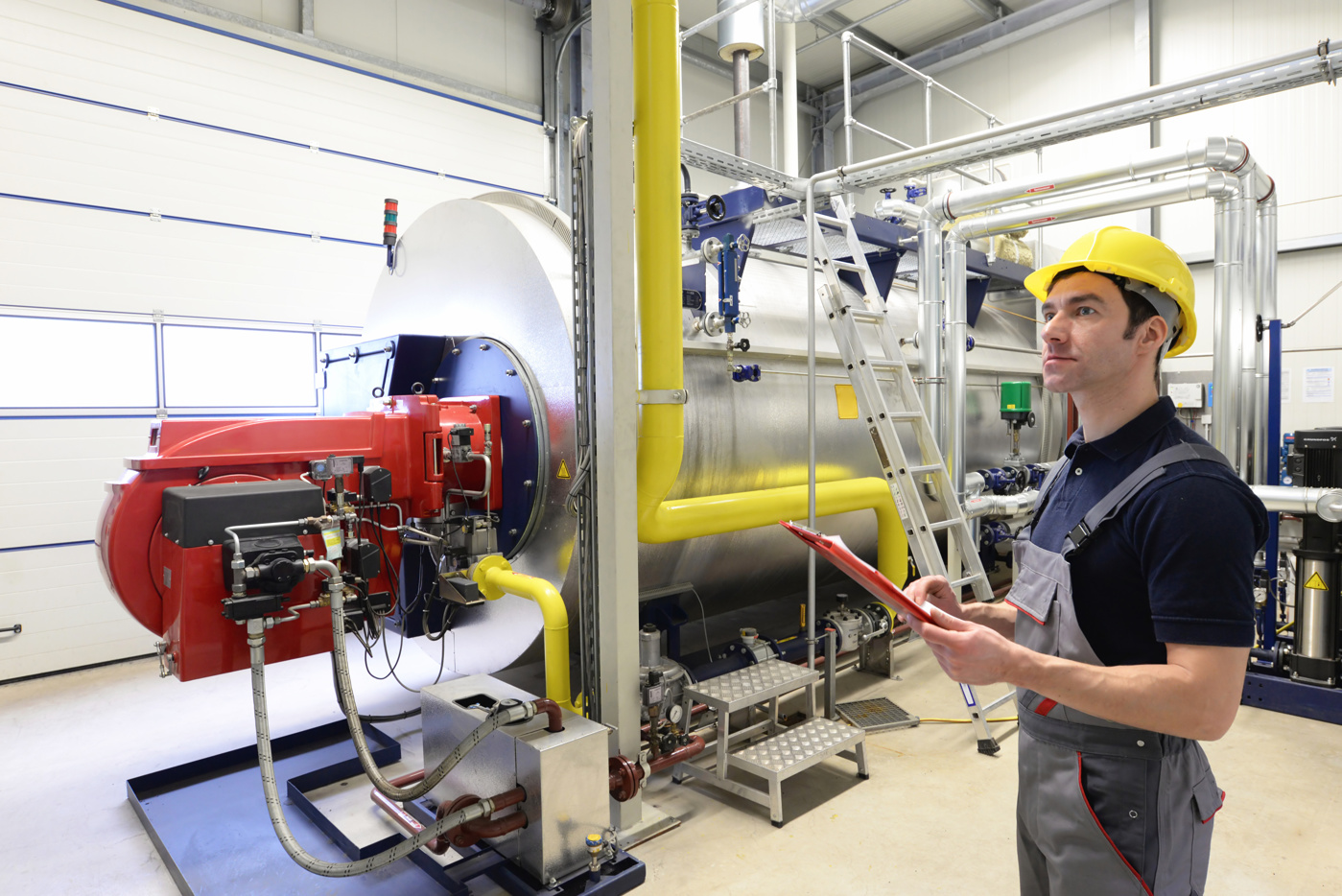
An expert with a degree in mechanical engineering from a CHE is inspecting an industrial machine.

Take our free self-assessment to find out if a career as a mechanical engineering technician at a College of Higher Education (CHE) aligns with your interests and skills. Discover whether a practice-oriented mechanical engineering program at a College of Higher Education (CHE) is the right step for your professional future.

Note: Since fall 2022, new framework curricula and job titles have been in effect for the individual CHE specializations. The previous program “Mechanical Engineering Technician CHE” is now called “Mechanical Engineering Technician CHE.” The former areas of specialization—such as design engineering, production engineering, plastics engineering, automotive engineering, and aerospace engineering—are no longer listed separately in the framework curriculum. However, individual schools may continue to offer their own areas of specialization.

Start

What is a typical workday like for a mechanical engineering technician with an Advanced Federal Diploma of Higher Education (Achtung: Engl. gleich wie eidg. Dipl. HFP)?

As a mechanical engineering technician (CHE), you’ll work in a variety of areas, including planning, design, production, manufacturing, and assembly. You’ll develop and calculate machines, components, and systems based on customer requirements, or optimize existing products in terms of functionality, quality, and efficiency.

For technical planning and design, you’ll use modern CAD software and simulation programs. Using prototypes, you’ll verify that the developed solutions work and meet the technical specifications. In the manufacturing department, you’ll assemble and program machines and systems, commission them, and oversee production processes.

As a mechanical engineering technician (CHE), you can also train employees in the operation of equipment or apply your expertise in technical sales, marketing, and customer service. Depending on the company, you may also take on responsibilities in project coordination and technical consulting.

Note: The responsibilities and their weighting vary depending on the role, job description, company size, and industry.

Question 1:

Do the job duties described here match what you're looking for? Would you like to work as a mechanical engineering technician CHE (formerly mechanical engineering technician CHE)?

Target Audience and Skills: Who is the CHE Mechanical Engineering program to become an CHE Mechanical Engineer suitable for?

The mechanical engineering program at a College of Higher Education to become a mechanical engineering technician CHE (formerly mechanical engineering technician CHE) is suitable for

  • Professionals in technical or skilled trades who wish to pursue continuing education and expand their skills in the design and construction of machines
  • Ambitious professionals in the mechanical engineering industry who are seeking executive positions or technical leadership roles
  • Individuals with a technical or trade Federal VET Diploma who wish to advance their careers in mechanical engineering, expand their knowledge and skills in this field, and thereby improve their career prospects
  • Individuals with professional experience in the mechanical engineering industry who wish to enhance their professional appeal—and thus their earning potential—by earning an Advanced Federal Diploma of Higher Education (Achtung: Engl. gleich wie eidg. Dipl. HFP)

Mechanical Engineering Technicians (CHE) should possess the following personal qualities and skills:

  • Technical understanding
  • Sense of responsibility
  • Independent and reliable way of working
  • analytical and conceptual skills
  • Ability to work in a team
  • Planning skills
  • Leadership and organizational talent
  • Customer and service orientation

Question 2:

Do you belong to one of the target groups for this continuing education, further training and do you have the necessary personal qualities?

Admission Requirements for the CHE Mechanical Engineering Program:

Each College of Higher Education (CHE) makes its own decisions regarding the admission process for the CHE Mechanical Engineering Technician program. The schools set forth their admission requirements in their academic regulations, taking into account the applicable legal framework. Therefore, the requirements may vary depending on the educational provider.*

To begin a mechanical engineering program leading to a degree as a Mechanical Engineering Technician CHE (formerly Mechanical Engineering Technician CHE), you must generally meet one of the following admission requirements:

  • Completion of relevant vocational education and training leading to a Federal Diploma of Vocational Education and Training (EFZ)**

or

  • Completion of at least three years of vocational education and training (VET) in another field, as well as relevant professional experience (typically at least 1 year) in a technical or skilled trades field

or

  • A Baccalaureate or a diploma from a Specialized School, as well as relevant professional experience (typically at least 1 year) in a technical or skilled trades field

Further conditions:

  • Many schools require students enrolled in a part-time CHE program to hold a job in a technical or skilled trades field for at least 50% of full-time hours.
  • Depending on the school, you may have to take an entrance exam and/or attend a preparatory course, such as one in mathematics.
    Note: In some cases, you can have previously earned academic credits applied toward your degree. Please contact the College of Higher Education of your choice directly for more information.

* The educational programs at Colleges of Higher Education (CHE) are based on framework curricula that are developed jointly by educational providers and industry associations and approved by the State Secretariat for Education, Research, and Innovation SERI. Federally recognized CHE programs lead to a protected Advanced Federal Diploma of Higher Education (Achtung: Engl. gleich wie eidg. Dipl. HFP).

** You can find a list of the relevant Federal VET Diplomas in the officialFramework curriculumfor Mechanical Engineering Technicians (CHE) / Female Mechanical Engineering Technicians (CHE).

Question 3:

Do you meet the requirements for admission?

Subject matter and content of continuing education, further training

In general, the curriculum for the CHE Mechanical Engineering program for CHE Mechanical Engineering Technicians is based on the “Mechanical Engineering CHE” framework curriculum. The responsible body consists of Swissmem, Swissmechanic, and the SVFB (Swiss Association of Aerospace Companies) as representatives of the working world, as well as the Conference of Colleges of Higher Education (KHF-T) as the representative of educational providers. They are responsible for developing the framework curriculum and periodically reviewing it to ensure it remains up-to-date and of high quality.

Nevertheless, the Colleges of Higher Education have a certain degree of flexibility in designing their programs for future mechanical engineering technicians (CHE) (formerly mechanical engineering technicians, CHE). The specific course content covered and how it is structured may therefore vary from one College of Higher Education to another. For example, Colleges of Higher Education may also offer specialization tracks.*

Typically, the following topics are covered in mechanical engineering degree programs, continuing education, further training, and vocational training programs at the College of Higher Education:

  • Mathematics, Statistics
  • Physics
  • Computer science
  • Communication, Marketing
  • Business Administration
  • Finance and accounting
  • Law
  • Human Resources Management, Leadership
  • Mechanics
  • Electrical engineering
  • Skills Training
  • Machine Safety, Machine Components
  • Industry 4.0
  • Design Theory
  • Quality management
  • Project management
  • Production Planning and Control
  • Maintenance

*Such in-depth study may account for no more than 10% of the total number of instructional hours devoted to specific areas of focus or in-depth study. The protected title “Certified Mechanical Engineer CHE” remains unchanged.

Question 4:

Are you interested in this content and would you like to acquire knowledge in these subject areas?

Costs and financing of continuing education, further training

Costs vary depending on the provider, location, and program model. In general, students should expect the following costs for the 6-semester CHE mechanical engineering program:

  • Tuition:Tuition fees vary depending on the school and the canton where you reside. Students residing in the canton where they are studying* can expect to pay between CHF 16,600 and CHF 24,300. The costs for exams and the thesis are generally included in the program fees.
  • Additional costs:Some institutions charge additional fees for enrollment and student ID cards, preparatory courses (optional), course materials, specialized software, licenses, lab exercises, internships, training materials, exams/theses, and retakes. Check directly with the CHE of your choice to find out about these additional costs.
  • Acquisition of additional qualifications:For additional certifications, such as an internationally recognized English certificate, you should expect to incur extra costs for preparation and the external exam.

* Courses at Colleges of Higher Education (CHE) are financially supported by the cantons. Students from outside the canton pay higher tuition fees. The following conditions apply in order to receive cantonal funding:

  • at least two years of residence in the canton
  • The course is listed on the EDK (Swiss Conference of Cantonal Ministers of Education) list of eligible courses (you will find the link to the list in the reply texts).

Question 5:

Are you able to cover the upfront costs of approximately CHF 16,600 – CHF 24,300 for your studies and the exam/thesis?

Duration of study, number of lessons and learning effort

  • Duration of study:The CHE mechanical engineering program leading to a diploma as a Certified Mechanical Engineer CHE (formerly known as Technician CHE in Mechanical Engineering) has a modular structure and lasts 6 semesters (part-time) (full-time: 4 semesters).*
  • Number of lessons:The program consists of 3,600 learning hours for students with a relevant Federal VET Diploma. For programs without a relevant Federal VET Diploma, the number of learning hours generally increases to 5,400; please contact the school of your choice for more information. The professional experience (practical experience in a relevant professional field) during the part-time CHE Mechanical Engineering program counts toward the training period, up to a maximum of 720 hours (with a relevant Federal VET Diploma) or up to a maximum of 1,800 hours (without a relevant Federal VET Diploma). Practical training (internships in a practice-oriented or real-world work setting supervised by qualified professionals) in the full-time program amounts to at least 720 hours (with a relevant Federal VET Diploma) or at least 1,800 hours (without a relevant Federal VET Diploma). Learning hours also include classroom instruction (with qualified supervision), guided self-study, individual self-study, and qualification assessments (e.g., semester exams, midterm exams, diploma exams, diploma theses, or graded semester assignments). The distribution of these learning hours over time is defined in the framework curriculum.
  • Training models:The program is offered as a part-time and full-time option. Classes are held, for example, on two evenings a week, on one full weekday, or on Saturdays. This may vary from one CHE to another.
  • Teaching format:Many schools offer a mix of face-to-face and online courses (online, hybrid teaching, blended learning).
  • Learning effort:You should set aside enough time for preparing for and reviewing lessons, as well as for self-study—how much depends on your prior knowledge, work style, learning pace, and the training model you’ve chosen. We recommend setting aside at least 4–6 hours per week for the part-time model.

* At some schools, professionals with a Federal Vocational Baccalaureate can benefit from a shortened program. To find out more, contact the school of your choice directly.

Note: Some schools offer so-called “introductory lessons” or “trial lessons.” This gives you the opportunity to get a feel for the classes and the learning environment—important factors on the path to successfully completing the program. Take advantage of this opportunity and contact the school of your choice right away.

Question 6:

Can you find the time for lessons and self-study?

Degree, diploma and title

The program leading to a diploma in mechanical engineering (CHE) generally concludes with a practice-oriented thesis and oral or written exams. The details of implementation are governed by the respective CHE in its academic regulations. The final qualification process often proceeds as follows:

  1. The results of previous semester exams and/or graded semester assignments
  2. Thesis: The thesis is practice-oriented; it gives candidates the opportunity to demonstrate their knowledge, skills, and ability to think holistically. The thesis is written individually on a topic relevant to mechanical engineering. It is completed at the end of the program (though it may also be integrated into the 5th or 6th semester). Here, too, the timeframe is specified by the respective CHE in its academic regulations.
  3. The thesis will also be presented to a group of specialists (a panel of experts) and then defended during a discussion.

Diploma and title

Graduates of the program receive an Advanced Federal Diploma of Higher Education (Achtung: Engl. gleich wie eidg. Dipl. HFP) and are entitled to use the federally recognized and protected professional title “Certified Mechanical Engineer CHE.”

In French: “Certified Mechanical Engineering Technician (ES) / Certified Mechanical Engineering Technician (ES)”

In Italian: “Tecnica dipl. SSS in costruzioni meccaniche / Technico dipl. SSS in costruzioni meccaniche”

In English (recommended, but not a protected title): “Advanced Federal Diploma of Higher Education in Mechanical Engineering”

Question 7:

Do you think you can pass the College of Higher Education program and earn your Advanced Federal Diploma of Higher Education (Achtung: Engl. gleich wie eidg. Dipl. HFP)

Have you already made up your mind?
Or would you like to know more?

Show schools of course «Mechanical engineering (CHE)» and get information