Self-Assessment: Production Technician CHE Program (new: Mechanical Engineering Technician CHE): Is this program right for me?
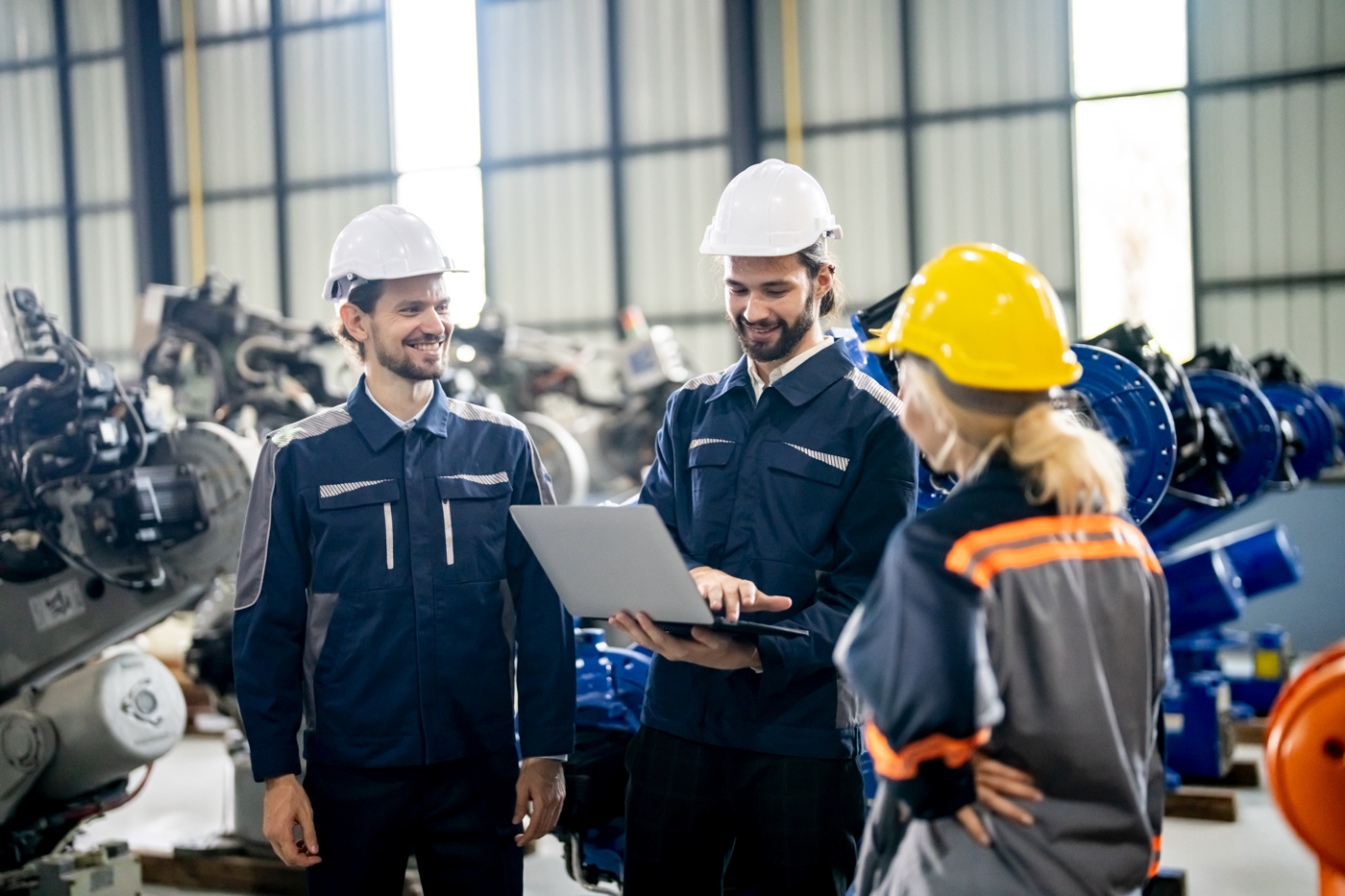
Mechanical Engineering Technicians (CHE) commission machines and equipment at customer sites.

Do you have ambitions to pursue further training to become a Production Technician CHE (new as of 2022: Mechanical Engineering Technician CHE)* and earn the Advanced Federal Diploma of Higher Education (Achtung: Engl. gleich wie eidg. Dipl. HFP)

Take our free, no-obligation self-assessment now to find out if a career in production engineering is right for you and whether pursuing a degree in production engineering is the right path for you.

Take advantage of additional information tailored to the respective response options: “Yes,” “Partially,” and “No.”
At the end of the self-test, you will receive the results.

Here you'll find an overview of suitable providers for the production technician training program leading to the Swiss Advanced Federal Diploma of Higher Education (Achtung: Engl. gleich wie eidg. Dipl. HFP), as well as helpful tips on how to find the right school.

* In the fall of 2022, the CHE Technician programs (formerly “CHE Technician [Specialization]”) received a separate framework curriculum for each specialization, as well as a new degree/title. The “Technician CHE in Production Engineering” and “Technician CHE in Mechanical Engineering (Specialization in Production Engineering)” programs were discontinued as of 2022 and are now called “Mechanical Engineering Technician CHE.”

Start

Production Technician: What is a typical workday like for you?

Certified Production Technicians (CHE) work in small to large national and international companies in the mechanical and plant engineering sectors, and often in related industries (such as transportation equipment manufacturing). Here, they typically take on specialized and managerial roles, starting at the lower management level (such as team leadership) and progressing to the middle management level (such as division or department management).
Production Technicians (CHE) are responsible for the development, construction, installation, operation, maintenance, and optimization of machines, devices, systems, and their components (e.g., screws and threads). These are needed in virtually all sectors of the economy and industry, such as transportation, medical technology, the food, chemical, and electrical industries, and aviation.
The industry is strongly driven by digital development processes and technological innovations, which female production technicians take into account in their work and decision-making. They also serve as a vital link between research and development, procurement, manufacturing, production, assembly, and sales.

Production Technicians (CHE) (current title: Mechanical Engineering Technicians (CHE)) are involved in the entire value chain. Their responsibilities are correspondingly diverse. Here is an overview:

  1. Develop projects commissioned by clients (identify clients’ needs, wishes, and expectations; analyze machine requirements; evaluate and select suitable materials and manufacturing processes; identify implementation options; calculate time and costs, etc.) and prepare a quote.
  2. Manufacture and assemble the necessary parts, or outsource these tasks and monitor the progress of the work. Typically, a prototype is created first. All necessary tests are then conducted on this prototype before the final product is manufactured and installed. This ensures that the final product actually meets the customers’ expectations.
  3. Create user manuals for the product; these should include not only the specific technical details but also the necessary safety precautions.
  4. Deliver machinery, equipment, devices, tools, or systems to customers; install them on site and commission them
  5. Offer and conduct training sessions for end users so that they can use and operate the product correctly.
  6. Throughout the entire planning and production process, they also monitor and adhere to budget guidelines.
  7. After all, they also maintain customer relationships.

The distribution of tasks (weighting and frequency) may vary depending on the task profile/job profile or function and company.

Question 1:

Do the duties described match what you're looking for? Would you like to work as a production technician (CHE)?

Target audience, personal traits, and skills: Who is the Production Engineering program for becoming a Production Technician (CHE) best suited for?

Do you thrive when working with machinery and equipment? Are you interested in production processes and would you like to play a key (leadership) role in everything from planning to implementation, maintenance, and optimization of equipment, machinery, tools, and technical systems? Are you also passionate about digitalization trends, technical innovations, and energy and environmental issues, and do you recognize their central importance for the economy, society, and the climate and nature? If so, you may be the ideal candidate for this degree program.

The Production Engineering program (formerly the “Mechanical Engineering Technician CHE, Specialization in Production Engineering” program, currently “Mechanical Engineering Technician CHE”) is designed for skilled and technically proficient professionals in the field of mechanical engineering who wish to lay a solid foundation for their professional future through a practice-oriented, broadly focused program.

Production Technicians (CHE) should possess the following personal qualities and skills:

  • Technical understanding
  • Technical and practical/craftsmanship skills
  • Systematic and solution-oriented thinking
  • Spatial imagination
  • A passion for motorized equipment and machinery
  • Quick comprehension
  • Leadership and Assertiveness
  • Sense of responsibility
  • Organizational talent
  • Communication skills
  • Team player

Question 2:

Are you part of the target audience for this production engineering continuing education program, and do you possess the necessary personal qualities?

Requirements for admission to the production engineering program at a College of Higher Education, with the goal of earning the degree of Production Engineer CHE:

The following requirements* generally apply for admission to the CHE program for Production Technician CHE (formerly “Mechanical Engineering Technician CHE, Specialization in Production Engineering,” currently “Mechanical Engineering Technician CHE”):

  • Completion of a relevant vocational education and training program (apprenticeship) leading to a Federal VET Diploma** (for example: automation technician, design engineer, agricultural machinery mechanic, polymechanic, watchmaker)

Or

  • A Federal VET Diploma in another field, or a high school diploma (Matura), a vocational secondary school diploma, or another equivalent credential, along with several years of relevant professional experience in the field of production engineering or mechanical engineering.

And

  • During the part-time degree program, students must be employed at least 50% of full-time hours in a field related to their studies.***

In addition:

  • Admission “based on a review of the applicant’s background”: At some schools, admission is also possible based on a prior individual assessment of the applicant’s professional background. Detailed information is available from the respective school.
  • Depending on the school: an entrance exam or aptitude assessment and/or completion of a preparatory course, such as in mathematics. In some cases, a recognized English language certificate (Level B1/B2) is also required.

Note: In some cases, it is possible to have prior academic achievements credited. The school of your choice can provide detailed information on this.


* Colleges of Higher Education (CHE) make their own decisions regarding the admissions process. As a result, there may be differences between providers. The admissions process is set forth and regulated in the academic regulations of each CHE. It must comply with the relevant legal requirements. More information on this can be found in the answers.

** A list of the relevant Federal VET Diplomas can be found in the “Mechanical Engineering” framework curriculum.HereYou can download the framework curriculum in PDF format here.

*** In a full-time educational program, work experience and the application of specialized training to real-world practice are facilitated through internships. As part of the Production Technician CHE program with a relevant Federal VET Diploma, students must complete a 720-hour internship; for a Production Technician CHE program without a relevant Federal VET Diploma, the internship consists of 1,800 hours.

Question 3:

Do you meet the requirements for admission?

Subject matter and content of continuing education, further training

In general, the course content and (practical) competencies taught in the Production Technician CHE program are based on the “Mechanical Engineering” framework curriculum*.

Nevertheless, Colleges of Higher Education have a certain degree of flexibility in designing their production technician training programs. Which topics are ultimately covered—and how they are structured and explored in depth—can therefore vary from one College of Higher Education to another. For example, Colleges of Higher Education may also offer specialized tracks.**

Below is a list of topics that are often covered in a production engineering program at a College of Higher Education:

  • Business Administration, Economics
  • Finance and accounting
  • Project management
  • Corporate management
  • Mathematics
  • Measurement technology
  • Mechanics
  • Devices and tools
  • Production processes
  • Electrical and drive technology
  • Communication
  • English
  • Data management
  • Digitalization (Industry 4.0)
  • Maintenance
  • Energy and environment

The following skills are taught in the CHE Production Technician training program:

  • General Competencies:Designing and taking responsibility for corporate and leadership processes; tailoring communication to the situation and making it effective; reflecting on and advancing personal development.
  • Job-Specific Competencies: Among other things, effectively applying development methods for problem-solving and innovation in mechanical engineering; planning, managing, executing, and evaluating mechanical engineering projects; developing innovative products; designing assemblies and machines; planning and optimizing production; and assembling, commissioning, operating, and maintaining equipment.

Good to know:At some schools, the CHE program in production engineering is designed so that you can earn the Federal Diploma of Higher Education for Production Specialists after the first year. This means you’ll have two credentials in hand by the end of the program.


* The responsible bodies for the framework curriculum are as follows:

  • Organization of the Working World (OdA): Swissmem, Swissmechanik, SVFB Swiss Association of Aerospace Companies
  • Representation of Educational Providers: Conference of Colleges of Higher Education (KHF-T)

The responsible body is responsible both for developing the framework curriculum and for periodically reviewing it to ensure it remains up-to-date and of high quality.

** Educational providers may focus on specific subject areas or specializations for up to 10% of the total number of instructional hours. The specialization and the corresponding additional competencies must be described in the school curriculum. The protected title of the program—namely, “Certified Mechanical Engineer CHE” (formerly “Mechanical Engineer CHE, Specialization in Production Engineering”)—remains unchanged.

Question 4:

Are you interested in this content, would you like to acquire knowledge in these subject areas?

Costs and financing of continuing education, further training

The total cost of studying to become a production technician (CHE), or the actual costs you can expect to incur (including additional expenses, etc.), depends on the provider, the location of the program, and the training model, and may therefore vary.

In general, the following costs should be expected for the 4–6-semester CHE Production Technician program (formerly “CHE Mechanical Engineering Technician, Specialization in Production Engineering,” currently “CHE Mechanical Engineering Technician”):

  1. Tuition:Tuition fees vary depending on the school and the canton where you reside. Students residing in the canton where they are studying* can expect to pay an average of approximately CHF 19,300 to 30,000. The costs for exams and the thesis are generally included in the program fees.
  2. Fees for additional certificates: For example, in English or project management (IPMA), etc. Whether you can earn additional certificates while you're in school varies by provider.
  3. Other additional costs:Some institutions charge additional fees for registration and the student ID card, as well as for preparatory courses (e.g., in mathematics), teaching materials, specialized software, licenses, internships, training materials, exams/theses, and retakes. Check directly with the CHE of your choice to find out about these additional costs.

* Courses at Colleges of Higher Education are financially supported (subsidized) by the cantons. Students from outside the canton pay higher tuition fees. To receive cantonal funding, the following requirements must be met:

  • at least two years of residence in the canton
  • The course is listed on the EDK (Swiss Conference of Cantonal Ministers of Education) list of eligible courses (you will find the link to the list in the reply texts).

The cantonal subsidies are usually regulated by the school; these subsidies are usually already included in the tuition fees stated by the schools.

Question 5:

Are you able to cover the costs of approximately CHF 19,300–30,000 for your studies and the exam/thesis?

Duration of the program, number of study hours, program components, class times, class format, and time commitment

  • Duration of study:The degree programs leading to a Production Technician CHE (formerly “Mechanical Engineering Technician CHE, Specialization in Production Engineering,” currently “Mechanical Engineering Technician CHE”) are offered both on a part-time (while working) and full-time basis. In the part-time format, the program lasts 3 years; in the full-time format, it lasts 2 years (including internships).
  • Number of learning hours:There are different curricula for individuals with relevant professional experience and those in other fields, which consequently differ in the total number of hours. For those with a relevant Federal VET Diploma, the program comprises at least 3,600 learning hours. For programs without a relevant Federal VET Diploma, the number of learning hours generally increases to 5,400.
  • Educational Components:The course hours are divided into the following academic and practical components:
    • In-person learning: e.g., traditional classroom instruction, laboratory work, or supervised group work
    • Guided self-study: e.g., exercises, tutorials, assignments, reading assignments, research assignments
    • Independent study: e.g., preparing for and reviewing lessons, exam preparation, general study time
    • Qualification process: This includes assessments of learning progress and exams, as well as the thesis
    • Clinical Practice:
      • Practical Experience: This refers to practical work in a relevant field amounting to at least 50% (applies to part-time study programs)
      • Internship: This refers to work in a practical or real-world setting under the supervision of professionals (applies to full-time training)
  • Lesson times:The part-time Production Engineering program at a College of Higher Education is offered at various times, as the schools set their own schedules. Classes may, for example, be held on a full workday, on two evenings per week, or on individual half-days. In some cases, classes are also held on Saturdays.
  • Teaching format:Many schools offer a combination of in-person classes and online courses (online, hybrid, and blended learning). Please check directly with the provider to find out which formats they offer. You can find an overview of the various teaching formats, along with their advantages and disadvantages, athere.
  • Learning effort:You should allow sufficient time to prepare for and follow up on the lessons and for self-study - how much depends on your prior knowledge, working style, learning speed and chosen training model. We recommend that you allow at least 4-6 hours per week for the part-time model.

Note: Some schools offer so-called “introductory lessons” or “trial lessons.” These give you the opportunity to get a feel for the classes and the learning environment—important factors on the path to successfully completing your studies. Take advantage of this opportunity and contact the school of your choice directly.

Question 6:

Can you find the time for lessons and self-study?

Degree, diploma and title

During the course of study to become a Production Technician CHE, students must complete various qualification requirements, such as exams (semester exams, midterm exams), independent practical assignments (semester projects), and presentations. The grades for these assessments are factored into the final grades.

Students who have fulfilled all prerequisite requirements during their studies are admitted to the final qualification process. This consists of a practice-oriented thesis. The thesis addresses a topic within the field of study and must demonstrate practical or economic value. The thesis is written individually at the end of the program. Here, too, the timeframe within which the thesis must be written is specified by the respective CHE in its academic regulations. The thesis is presented to a panel of experts (a group of specialists) and then defended in a discussion.

The details of implementation are governed by the respective CHE in its academic regulations.


Diploma and title

Graduates of the program receive a CHE diploma and are entitled to use the federally recognized and protected professional title “Certified Mechanical Engineer CHE.” (formerly “CHE Mechanical Engineering Technician, Specialization in Production Engineering”)

In French: “Certified Mechanical Engineering Technician (ES) / Certified Female Mechanical Engineering Technician (ES)”

In Italian: “Tecnico dipl. SSS in mechanical engineering / Tecnica dipl. SSS in mechanical engineering”

In English: “Advanced Federal Diploma of Higher Education in Mechanical Engineering.” This is not a protected title, but merely a translation that appears in the diploma supplements.

Question 7:

Do you think you can successfully complete the College of Higher Education program leading to the Advanced Federal Diploma of Higher Education in Production Technology?

Have you already made up your mind?
Or would you like to know more?

Show schools of course «Production Engineering (CHE)» and get information