Self-test: Is a course in "Naturopathy with Advanced Federal Diploma of Higher Education (Achtung (HF))" right for me?

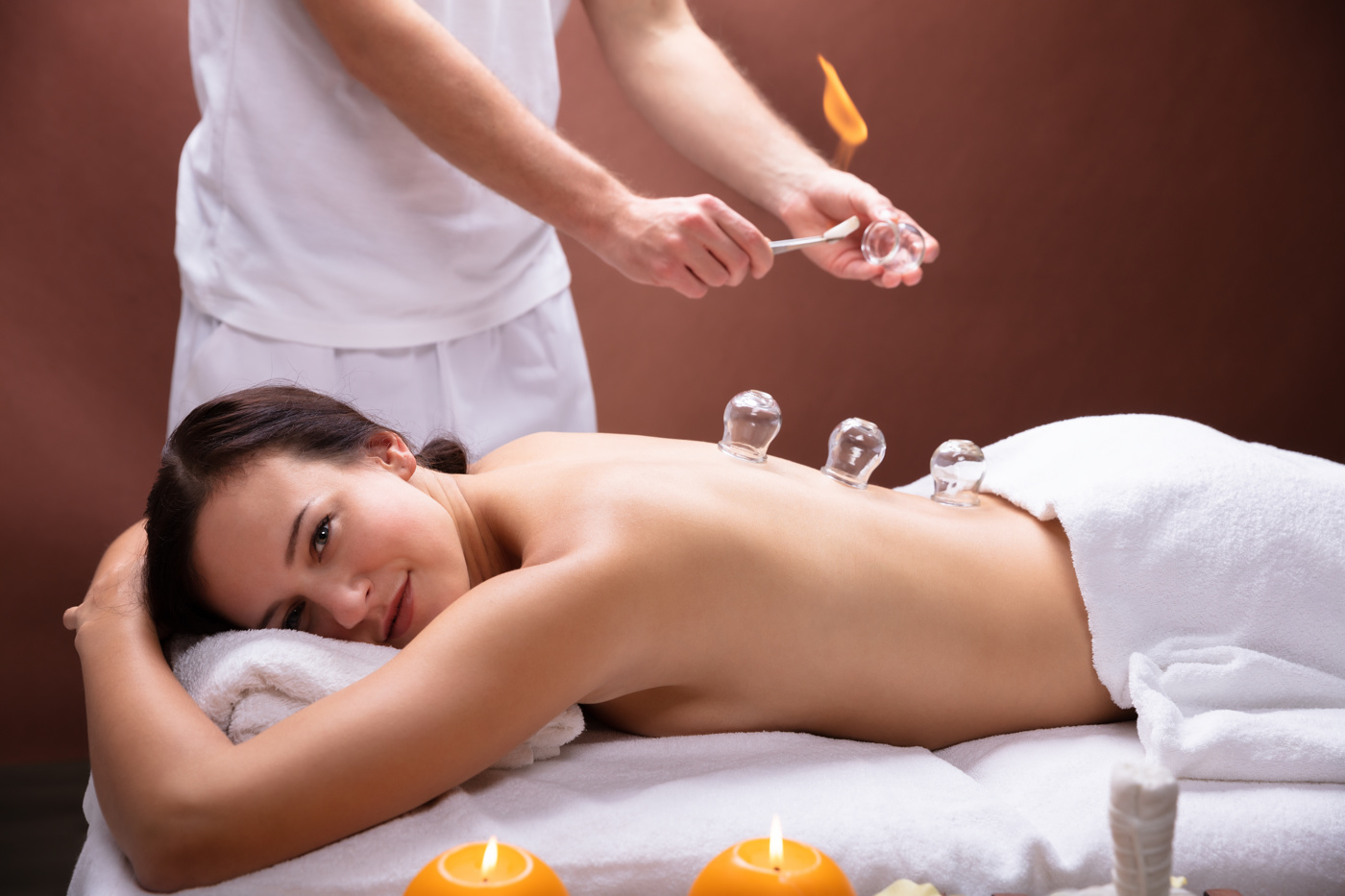
A naturopath with a federal diploma treats a patient with cupping, a proven healing method of Traditional Chinese Medicine (TCM).

Does working as a federally certified naturopath meet your expectations and needs? Take the free self-test and find out whether you are on the right path with a part-time course in this field.

ATTENTION: Are you looking for training to become a "naturopath"? - Then you should know: These designations are no longer permitted in Switzerland, as the word components "Arzt" and "Ärztin" are only permitted for people with a university degree and qualification. The term "naturopath", on the other hand, is just right for you.

Start

Naturopath: What does your day-to-day work look like?

Naturopaths examine, advise, support and treat people with health complaints using alternative medicine. They diagnose illnesses with the means of their specialty and treat their patients with the aim of alleviating the symptoms of illness and stimulating and strengthening the body's self-regulation and self-healing powers. The methods and remedies used differ depending on the chosen direction:

  • In theAyurvedic medicinea complete Ayurvedic diagnosis including pulse diagnosis is first made. Ayurvedic medicines, purification and cleansing therapies, massage and other manual treatments, nutritional regulation and special harmonization procedures are then prescribed for treatment.
  • In theHomeopathythe patient's state of health is recorded in detailed anamnesis interviews. The patient is then treated with potentized homeopathic remedies of plant, animal or mineral origin.
  • From theTraditional Chinese Medicine (TCM)Acupuncture is the best-known treatment method, other forms of treatment include Chinese medicinal therapy, Tuina massage, Qi Gong and nutrition according to the five elements. All aim to harmonize the patient's Qi flow and thus restore a healthy state of energy.
  • TheTraditional European Naturopathy (TEN)mainly relies on physical therapies, nutritional corrections, exercise therapies and so-called elimination procedures. The use of medicinal plants is also an important part of this, and more recently technology-supported therapy methods such as bioresonance, bioenergetics or magnetic field therapy have also been included.
  • TheTibetan medicineassesses the findings using her tongue and pulse diagnosis. Therapy is based on nutrition and dietary recommendations as well as meditation, cupping, compresses, medicinal herbs and moxibustion.

Naturopaths often work independently in their own practice, which means that they are also responsible for management, administrative activities, advertising/marketing measures, etc.

In most cantons, you need a professional license to work independently, which usually requires you to have completed training with the Advanced Federal Professional Examination (AFPE) and a federal diploma. With the "preliminary stage", the OdA AM certificate, you are allowed to practice under professional supervision.

You can obtain the federal diploma as a naturopath in the following specializations:

  • Ayurvedic medicine
  • Homeopathy
  • Traditional Chinese Medicine TCM
  • Traditional European Naturopathy TEN

Question 1:

Do the activities described meet your expectations? Would you like to work as a naturopath?

For whom is training to become a naturopath with a federal diploma suitable? What qualities and skills do you need?

In principle, training in naturopathy with a federal diploma appeals to the following groups of people:

  • Healthcare professionals who want to expand their skills
  • People who are interested in naturopathy and aspire to work professionally in this field
  • Alternative practitioners who wish to obtain a federal qualification

To be successful as a naturopath, you need the following qualities:

  • Understanding of medical contexts and holistic approaches
  • Skilled hands for practicing manual therapies, no fear of contact
  • Discretion and good reputation
  • Empathy and powers of observation
  • good communication skills
  • Sense of responsibility
  • Ability to run your own business
  • Willingness to engage in long-term training and continuing education, further training

Question 2:

Do you belong to one of the target groups and do you have the necessary personal qualities?

Requirements for admission to the naturopathic training course with Advanced Federal Diploma of Higher Education (Achtung: Englisch wie gleichg. Dipl. HF!):

Training courses to become a naturopath are generally open to all interested persons.

To be admitted to the Advanced Federal Professional Examination (AFPE), you must have a qualification at upper-secondary level (Federal Diploma of Vocational Education and Training or Matura) or an equivalent qualification.

Some schools set their own conditions for admission to training, for example:

  • Age of majority or minimum age of 20 years
  • good knowledge of German

Question 3:

Do you meet the requirements for admission?

Subject matter and content

The course material for the training of naturopaths is based on the specifications of the body responsible for the federal examination, the Organization of Alternative Medicine (OdA AM).

The following learning content is taught in several modules:

  • M1:Basic medical trainingScientific basics, biology, anatomy, physiology, pathology, psychopathology, medical and clinical examinations, medical emergency measures, pharmacology, placebo and nocebo effects, epidemiology, hygiene and infection control, referral practice and therapy concepts.
  • M2:SpecializationThe specific course content on the theory and practice of the chosen specialty (Ayurveda medicine, homeopathy, TCM or TEN).
  • M3:Health and ethicsInfluencing factors on health, mental hygiene, concepts for personal work-life balance, basics of resource management (self-awareness, mindfulness and self-responsibility), self-regulation, health promotion, disease prevention
  • M4:Work as a therapistBasic knowledge of communication, interaction structures and communication concepts, anamnesis interview, therapeutic conversation, importance of non-verbal communication signs, intercultural communication, communication with children, adolescents and parents, types of conversation
  • M5:Leading and managing operationsTools and methods of business administration (BWL), legal system and contracts, Swiss tax systems, insurance, accounting
  • M6:Practical trainingPractical work in the respective specialization in professional practices, clinics or school internship sites.
  • M7:Professional practice under mentorshipIndependent work and accompanied introduction to the profession by one or more mentors (accredited by the OdA AM).

Question 4:

Are you interested in this content and would you like to acquire knowledge in these subject areas?

Costs of continuing education, further training

The training costs are determined by the schools themselves. The costs therefore vary from provider to provider.

For theTraining up to the OdA AM certificatein one of the specialties TCM, TEN, homeopathy or Ayurveda medicine, you must expect the following costs:

  • Course fees: around CHF 35,000-60,000, of which you will only receive a maximum of CHF 10,500 back from the federal government on application (regardless of the result) after the Advanced Federal Professional Examination (AFPE)*.
  • Examination fee for the externally examined modules M1 CHF 1500 and M2 (depending on specialization) CHF 1420-1750
  • Some providers charge extra for training materials.

Who theAdvanced Federal Professional Examination (AFPE) for the Federal Diploma in Naturopathymust also reckon with the following major costs:

  • Costs for at least 60 supervision units (at least 30 in groups, at least 30 individually): at least CHF 4000-6500
  • Examination fee for the Advanced Federal Professional Examination (AFPE): CHF 2850 (as of September 2025)

Find out about the actual costs directly from the provider of your choice.

* Preparatory courses for Federal Professional Examination (FPE) and Advanced Federal Professional Examination (AFPE) are financially supported by the Confederation (so-called subject funding).

Question 5:

Are you able to raise CHF 45,000 or, if necessary, over CHF 70,000/80,000 for your education?

Duration of studies, training options, teaching format and learning effort

  • The training to become a naturopath with a federal diploma is completed on a part-time basis and takes between 5 and 8 years (approx. 3 years training up to the OdA AM certificate, 2-5 years mentoring).
  • It has a modular structure and therefore gives you leeway when determining the intensity. However, please note that module qualifications are often only valid for five years.
  • The six modules required to obtain the OdA AM certificate comprise a total of at least 3,550-4,450 teaching/contact hours:
    • M1- basic medical training: at least 1,500 hours.
    • M2 - Specialist training - depending on direction: at least 1,000-1,700 hours.
    • M3 - Health and ethics: min. 60 hrs.
    • M4 - Work as a therapist: at least 300 hours.
    • M5 - Managing a business: min. 90 hrs.
    • M6 - practical training - depending on direction: min. 600-800 hrs.
  • For M7, you must document at least 800 hours of treatment over a minimum of two years and a maximum of five years. In addition, you must complete 60 mentoring hours spread over the entire period (at least 3 hours per semester), either individually or in groups

The course is offered at different times and in different teaching models (some also online), so that you have the opportunity to combine continuing education, further training with family, work and free time.

Thanks to the part-time concept of continuing education, further training, you can apply and deepen your knowledge immediately in practice. Nevertheless, you should allow enough time to prepare for and follow up on the lessons and for your own learning - how much depends on your prior knowledge, working style and learning speed. We recommend that you allow at least 4-6 hours per week as a precaution.

For the phase after the OdA AM certificate, i.e. M7 (professional practice under mentorship), you should ideally be able to set aside 50% for your naturopathic work.

Question 6:

Can you find the time for the training?

Degree, diploma and title

Sector closing

Modules 1 to 5 conclude with a module examination. Module M6 contains the practical training (internship). If you successfully complete these six modules, you will receive the OdA AM certificate in the relevant specialty (TEN, TCM, homeopathy or Ayurvedic medicine).

With the OdA AM certificate, you can practice under mentorship in your own practice or in employment and thus fulfill module 7.

Advanced Federal Professional Examination (AFPE)

Those who have successfully completed all modules (M1-M7) of the naturopathic practitioner training program are admitted to the Advanced Federal Professional Examination (AFPE). The AFPE for naturopaths consists of four parts:

  • P1: Case study: written, prepared in advance
  • P2: Expert discussion on the case study: oral, 45 minutes
  • P3: Case work: oral, practical and/or written, 150 minutes
  • P4: Practical work: practical, oral, max. 180 minutes

Diploma and title

If you pass the AFPE, you will receive the federal diploma and are entitled to use the federally recognized and protected title "Naturopath with a federal diploma in [your specialty: Ayurvedic Medicine, Homeopathy, Traditional Chinese Medicine TCM or Traditional European Naturopathy TEN]".

Question 7:

Do you have the confidence to pass the naturopathic training course?

Have you already made up your mind?
Or would you like to know more?

Show schools of course «Naturopath (AFPE)» and get information